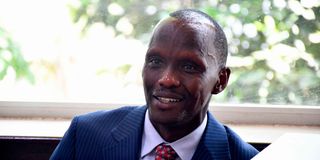
For Kenya Pipeline Company Managing Director Joe Sang, the arrest on Good Friday eve echoes a past he may have thought was firmly behind him.
Following the arrest, nearly two years after a court cleared him of wrongdoing in a high-profile corruption case, Sang once again found himself in the custody of the Directorate of Criminal Investigations (DCI).
This time, he is among senior government officials under investigation over the alleged importation of substandard fuel—an alleged scandal that has shaken confidence in Kenya’s petroleum supply chain.
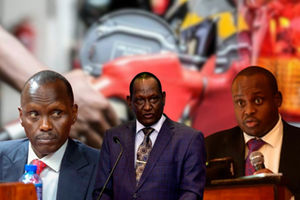
From left: Kenya Pipeline Company Managing Director Joe Sang, Petroleum Principal Secretary Mohammed Liban and Epra Director-General Daniel Kiptoo.
Photo credit: File | Nation Media Group
Also arrested were Petroleum Principal Secretary Liban Mohamed and Energy and Petroleum Regulatory Authority (EPRA) Director General Daniel Kiptoo, in what authorities describe as a widening probe into possible collusion and regulatory failure.
For Sang, however, the arrest is more than just another legal battle. It revives a narrative that has followed his career, a sense of déjà vu, of a jinx that seems to shadow his leadership at KPC once again.
On December 7, 2018, Sang was arrested alongside other senior KPC officials over the controversial Kisumu oil jetty project. In the case, which dragged through the courts for years, Sang and other officials were accused of irregularly approving payments for a project allegedly not properly planned, costing taxpayers Ksh1.9 billion.
But when the judgment finally came, it was not just an acquittal; it was a rebuke of the prosecution.
Senior Principal Magistrate Victor Wakumile ruled that the project had been conceptualised as early as 2006, long before most of the accused had joined KPC.
He went further, lamenting that the court had been forced to entertain a case that lacked merit.
“The evidence here is that they delivered what no local company had ever done,” the magistrate observed at the time, referring to the scale and ambition of the infrastructure project.
Instead of condemnation, the ruling painted Mr Sang and his colleagues as victims of a flawed prosecution—professionals who had executed a complex national project, only to be vilified.
For Sang, the acquittal marked vindication. It was, by all accounts, an emotional relief after years of legal uncertainty, reputational damage, and career disruption.
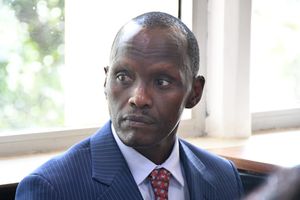
Kenya Pipeline Company Managing Director Joe Sang.
Photo credit: File | Nation Media Group
The 2018 arrest had come at a critical moment. Sang had already informed the KPC board that he would not be seeking renewal of his contract and planned to exit the company within four months.
He was dismissed from his position, while his co-accused colleagues were effectively locked out of their offices, their careers stalled by the weight of criminal charges.
Even after their acquittal, the scars of that episode lingered, raising questions about accountability, prosecutorial discretion, and the cost of prolonged legal battles on public servants.
This time, the allegations are different, but the optics are strikingly familiar.
DCI detectives from the Operations Support Unit arrested Mr Sang on Thursday evening, detaining him at the agency’s headquarters alongside other senior officials. Investigators say they are examining procurement processes, fuel supply chains, and possible regulatory lapses that may have allowed substandard fuel into the Kenyan market.
Yet, as details remain scant, the arrest has already triggered public debate not just about fuel quality, but also about governance, accountability, and the recurring entanglement of senior officials in scandal.
In the immediate aftermath of Mr Sang’s arrest, the Kenya Pipeline Company moved swiftly to reassure stakeholders.
Board Chair Faith Boinett announced the appointment of General Manager for Finance Pius Mwendwa as acting Managing Director, emphasizing that operations remain stable and unaffected.
Authorities are probing whether due process was bypassed in fuel procurement and whether regulatory oversight failed at critical points. The involvement of EPRA’s top leadership has only heightened concerns about enforcement gaps.
For Joe Sang, the unfolding saga is as much personal as it is institutional.
Twice arrested. Twice at the helm of one of Kenya’s most strategic state corporations. Twice facing allegations tied to multimillion- or billion-shilling projects.
As the investigation unfolds, Mr Sang’s fate once again hangs in the balance.