'IWD Give to Gain': Closing gender gap isn't charity; it's fair and smart!
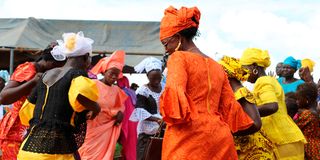
Kenya's Constitution promises equality, yet daily life often tells a different story.

What you need to know:
- IWD 2026’s “Give to Gain” theme urges Kenya to share power, pay fairly, and protect women for collective progress.
- Despite constitutional guarantees, Kenyan women face political exclusion, wage gaps, violence, and limited economic opportunities that slow national development.
For International Women's Day 2026, the global campaign theme is "Give to Gain," and it calls for action that's simple and bold. It emphasises that when people give support, time, and fair chances, everyone gains in return. Because equality grows through daily choices, the theme pushes leaders and communities to share power, credit, and resources. In addition, it highlights that giving isn't charity, it's a smart way to build safer, stronger workplaces and homes. Above all, "Give to Gain" frames progress as mutual, so no one has to lose for women to win.
However, Kenya's Constitution promises equality, yet daily life often tells a different story. Women hold only about 23 per cent of parliamentary seats, even after years of gender reforms. In the workplace, women earn about 17.7 per cent less per hour than men, which adds up fast in rent, school fees, and savings.
This isn't a blame story about women “not trying hard enough”. It's an argument for practical change, because systems shape outcomes. When leadership stays closed, pay stays unfair, and violence goes unpunished, the country pays the price.


Between 2021 and 2025, women held roughly 21.6 per cent to 23 per cent of parliamentary seats. That gap isn't just about ambition. Politics in Kenya often rewards big money, tough networks, and those who can campaign without fear. Meanwhile, women candidates face intimidation, smear campaigns, and harassment, both online and in public spaces. Party structures can also block newcomers, so the same gatekeepers pick the same “safe” names.
When leadership tables lack women's voices, budgets and laws can miss everyday needs, from safe transport to maternal health.
The hidden cost of running for office: money, safety, and party networks
Campaigns cost a lot, so candidates without wealthy backers start behind. At the same time, threats and election violence push many women to step back for family safety. Biased party nominations can sideline strong candidates. Unpaid care work also eats time, so evening meetings and travel become harder to sustain.
While in some regions, girls still face school dropouts tied to poverty, early marriage, and long distances to class. Later, the job market mirrors that early disadvantage. Women are less likely to be employed (about 60 per cent versus 70 per cent for men). Even when hired, women earn about 17.7 per cent less per hour and about 31.3 per cent less per month. In education, pay gaps can reach about 38 per cent less, even in a sector linked with women's work.
Access to credit, property, and inheritance also shapes who can start a business or expand a farm. Time spent on unpaid care limits overtime, training, and promotions.
When women can't inherit or borrow, families lose investment and stability
When land and assets pass to male relatives, women lose security and bargaining power. Without collateral, loans for stock, seed, or tools become harder to get. As a result, a drought shock or hospital bill can wipe out progress. School fees get delayed, and small businesses stay small.
GBV is not "private", it shapes safety, health, and freedom. Gender-based violence narrows women's choices long before a job interview or ballot. About 34 per cent of women ages 15 to 49 have experienced physical violence. Around 40 per cent have faced emotional, physical, or psychological intimate partner violence. Nearly a third of girls experiences sexual violence before age 18, and about 25 per cent become child brides.
Harmful practices like child marriage and FGM still persist in some areas, including parts of Asal counties, often protected by silence and social pressure. When violence feels normal, freedom becomes a privilege, not a right.
Why trust breaks down when police and courts don't act fast enough
Public frustration is clear: around four out of five citizens say police and courts should do more to protect women and girls from discrimination and harassment. Survivors often face stigma, slow cases, weak evidence handling, and fear of retaliation. Delays send a message that reporting isn't worth the risk.
What change can look like in real life, starting now
Progress needs rules that bite and services that work. Safer elections and stronger party nomination standards can reduce intimidation and backroom deals. The two-thirds gender principle must move from promise to practice. Employers can also act through pay transparency and fair hiring.
Credit products should fit women's realities, including those without title deeds. Protection orders and GBV cases should move faster, with survivor-centered care. Community leaders matter too, because norms change when respected voices stop excusing harm. Autonomy counts as well, since one in 3 women lacks decision power over health choices.
In the end, Kenya has strong promises on paper, yet leadership systems, the economy, and safety still punish women. governance. Government, courts, police, parties, employers, and communities all share the work, and both men and women have a role. The test is simple: will equality show up in wages, in councils, and in safer homes, not only in law books?
Surjit Singh Flora is a veteran journalist and freelance writer based in Brampton, Canada.


