'They left me for dead': Survivors of election violence rise to lead
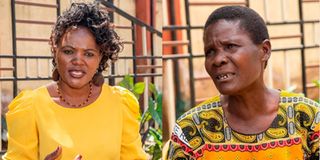
Post-election GBV survivors Branda Minayo and Evelyn Chelanga. They have since turned into anti-GBV champions.

What you need to know:
- After suffering brutal sexual violence during election unrest, Evelyn and Brenda faced stigma, rejection, trauma, and the absence of justice.
- Through counselling and community support, they rebuilt their lives and now lead GBV and peace-building initiatives that support survivors and strengthen community cohesion.
- A UN Women–led project has helped survivors in Western Kenya to be empowered to take leadership roles in peace-building.
The police officer was supposed to be restoring order. Instead, he followed Evelyn Chelanga into a dark alley in Mbale town and raped her.
It was 2007. Violence had erupted following the announcement of presidential election results, and people were fleeing in every direction. Evelyn, who had been selling clothes in town, ran for her life like everyone else. She was not lucky.
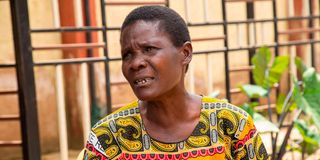
GBV survivor Evelyn Chelanga. A police officer raped her in Mbale town.

"The police officer followed me and wrestled me to the ground. He overpowered me and raped me, then left me for dead. It left me with deep trauma and pain," she tells Nation.Africa.
The assault was only the beginning of her ordeal. When her husband learned what had happened, he rejected her. "My husband wanted nothing to do with me. He moved out of our bedroom. My world came crumbling down," she says.
It took the intervention of CSO Network, which offered counselling to her husband, to help him understand what his wife had endured. But even as her marriage slowly mended, Evelyn faced stigma and discrimination from villagers who shunned her.
She was fortunate to receive Post-Exposure Prophylaxis (Pep) and medication to prevent sexually transmitted infections, including HIV. But justice remained elusive. She never reported the assault to the police, uncertain that the matter would ever be followed up. The mother of three has since rebuilt her life. With the help of well-wishers, she leased land and now farms maize. She also sells cooking oil and groundnuts. On a good day, she earns Sh400.
But it is her other work that defines her now. Evelyn has become a gender and human rights activist, focusing on sexual and gender-based violence. She is a GBV champion in Vihiga County, ensuring that other survivors do not suffer the injustice she did.
"I do not want survivors of sexual violence to lack justice as I did. I follow defilement and rape cases to their conclusion. Two of the cases I have followed have led to convictions, and the perpetrators are now serving jail terms," she says.
She also conducts awareness campaigns in her community alongside other gender activists, educating residents about the vice.
A pattern of violence
Evelyn's story is not isolated. Sexual violence has been a grim feature of Kenyan elections for nearly two decades.
In 2019, the Kenya National Commission on Human Rights (KNCHR) released a report titled Silhouettes of Brutality, documenting violations that followed the 2017 presidential election results. The findings were damning: police officers, tasked with maintaining law and order, were the leading perpetrators of sexual violence against women.
According to the report, 54 per cent of sexual and gender-based violations during the 2017 elections were perpetrated by police, compared to 45 per cent by civilians.
The government had deployed over 180,000 officers to provide security during the electioneering period, drawn from the National Police Service, Kenya Prisons Service, Kenya Wildlife Service, Kenya Forest Service, and National Youth Service.
Yet the commission's findings indicate that some officers took advantage of the chaos to raid homes indiscriminately, sexually violating women who were not even involved in the protests. Survivors described their attackers as men in jungle green uniforms, carrying AK47 rifles and teargas canisters. Apart from sexual assault and physical violence, some officers robbed victims of money and food.
The report notes that 80 per cent of survivors were unable to access medical care within 72 hours, including Pep to reduce the risk of HIV infection. The majority of survivors came from informal settlements where fierce protests were witnessed. Cases were recorded in nine counties: Nairobi, Kisumu, Vihiga, Kakamega, Migori, Siaya, Busia, Homa Bay, and Bungoma. Machakos and Uasin Gishu each recorded one case.
The pattern stretches back further. During the 2007/08 post-election violence, at least 1,133 people were killed and approximately 600,000 displaced. Officials indicate that at least 900 cases of sexual violence occurred. KNCHR alone compiled over 260 cases from the Rift Valley, Nairobi, and Coastal regions.
'They gave me two hours to leave'
Brenda Minayo was attacked in 2017 — not by police, but by political thugs. A Jubilee Party supporter living in a region that backed the National Super Alliance, she received a chilling phone call after the presidential results were announced, giving her two hours to evacuate. Before she could act, a gang descended on the shopping centre where she operated a posho mill.
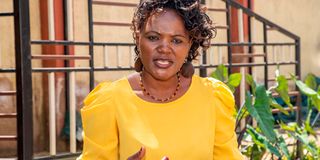
GBV survivor Branda Minayo. She was attacked in 2017.
"At around 7pm, scores of goons arrived at my shop. They vandalised everything and stole my entire stock, along with Sh230,000 that belonged to a chama I was treasurer for. Then three of them gang-raped me in turns and left me for dead," she tells Nation.Africa.
The attackers had been transported from a neighbouring county. She could not identify any of them. Brenda received medical treatment three days later, but the trauma pushed her into depression. She contemplated suicide. Her husband abandoned her, compounding her isolation.
"I suffered a mental health breakdown because of how society treated me. When my husband left, things became even worse. I withdrew completely and preferred my own company," she recalls.
She credits a survivor network with saving her life. Through counselling—offered to both her and her husband—she began to heal. Her husband eventually returned home. Like Evelyn, Brenda has transformed her pain into purpose. She is now a human rights defender and GBV champion, campaigning against gender-based violence and domestic abuse in her community. "I vowed to become the voice of the voiceless and help them get the justice I was never able to get," she says.
She has also rebuilt economically, establishing a small shop that she hopes will grow into a thriving enterprise. Beyond her GBV work, she serves as a peace actor in her area, mediating disputes and helping to resolve conflicts.
From victims to victors
Both women are beneficiaries of a project titled ‘Advancing Women's Leadership for Sustainable Peace and Inclusive Governance’, implemented by UN Women and funded by the Government of Ireland. The initiative is carried out in partnership with the Office of the United Nations High Commissioner for Human Rights (OHCHR) and Echo Network Africa Foundation.
The project seeks to enhance women's leadership, participation, and influence in peace-building — while ensuring they live free from violence. Beverline Ongaro, a Human Rights Officer at OHCHR, describes the initiative as an exemplar of human rights approaches in action.
"We have integrated within this project the human rights guarantee of public participation and facilitated access to information for women who are victims of human rights violations. This has enhanced their agency and amplified their visibility and voices," she tells Nation.
The results, she adds, are evident: women who once carried the trauma of violations have transformed from victims into victors, now participating in decision-making processes in their communities.
Betty Okero, Executive Director of CSO Network, says the project has given grassroots women a voice in leadership and peace-building.
"We now have a high number of women acting as peace actors involved in early warning of conflict. This has played a significant role in ensuring peace and security in the county," she says.
The involvement of women, she adds, has resulted in more peaceful and cohesive communities.
Antonia Sodonon, the UN Women Kenya Representative, says they are proud of the progress achieved through the Women’s Leadership, Peace and Security Project, implemented in partnership with CSO Network, Echo Network Africa Foundation and the Office of the High Commissioner for Human Rights with support from Ireland.
She notes that across Bungoma and Vihiga, the initiative has strengthened women’s leadership, advanced protection from gender-based violence, and expanded women’s participation in peace and political processes.
“From increasing women’s representation in local decision-making spaces, to supporting county efforts to operationalise GBV prevention and response structures, to shifting long-held perceptions about women in leadership, the impact is visible and inspiring. As we look towards the 2027 General Election, our commitment is to deepen this work by ensuring women have not only the skills, but also the resources, networks, and political support they need to lead,” Ms Sodonon says.
She observes that sustained investment in this agenda remains critical, particularly where county structures remain under-resourced. “UN Women stands firm with our partners, women leaders, and communities to ensure that no woman or girl is left behind in shaping a peaceful, inclusive, and equitable Kenya.”
Justice deferred
For Evelyn and Brenda, justice for their ordeals never came. They neither saw their attackers held accountable.
But in the work they now do—following cases to court, counselling survivors, mediating disputes, campaigning against violence—they are rewriting what justice looks like. "I do not want any woman to go through what I went through and have nowhere to turn," says Brenda.
In Vihiga, Evelyn continues her rounds, following up on cases, attending court hearings, and ensuring that perpetrators face consequences. Two convictions so far. More cases pending. The work continues.


