A mother and daughter’s fight: How violence, silence and law shaped Tsitsi Dangarembga’s activism

Zimbabwean author and feminist Tsitsi Dangarembga.

What you need to know:
- Susan’s experience of racism shaped her legacy, inspiring Tsitsi’s lifelong fight for women’s rights in Zimbabwe.
- From colonial injustice to modern activism, the Dangarembga story reflects resilience against racism, patriarchy, and political oppression.
Susan Ntombizethu Dangarembga was one of the first students to attend Goromonzi High School, which was established in 1946 near Salisbury (Harare). This was a time when government schools for black people were limited to teaching farming and industrial skills. During one school holiday, Susan was attacked by white boys in Umtali town (Mutare).
When she returned to school after the ordeal, they were told to write an essay about the holiday period. Susan described her brutal attack and was called to the white head teacher’s office. There, she was scolded for revealing racially violent incidents. She was deeply upset. The criticism stayed with her for the rest of her life. However, she used her frustration as motivation to become the first black female Zimbabwean academic.
Susan studied at the University of Fort Hare in South Africa and King’s College in London, becoming the first black woman to earn a bachelor’s degree in Zimbabwe. She later completed her master’s degree at University College London, where she studied English and Latin and became a respected graduate. She returned home in 1965, after British settlers had unilaterally declared independence from Great Britain.


Susan did not fully benefit from her academic success. The misogynistic and racist environment did not allow her to grow her income, business, economic interests, or invest in real estate. Her influence was limited by both history and the present, which continued to disadvantage African women.
Susan would share her struggles with her daughter, Tsitsi, who was born at a hospital in Nyadire, miles from Murewa District, where her parents taught at Murewa High School. The school had been established by an American Methodist Episcopal Church missionary in 1909 west of Salisbury.
In her memoir Black and Female, Tsitsi explains that she was born into a society that treated blacks as less than fully human. By the time she was a teenager, Ian Smith’s settler government had turned Zimbabwe into an apartheid state. Less than a decade after Zimbabwe became a self-governing colony, racist laws such as the Land Apportionment Act of 1930 firmly enforced segregation by giving fertile land to white settlers. Africans first pushed for independence through peaceful political efforts, and when these failed, they turned to armed struggle, which later led to a Zanu-PF government.
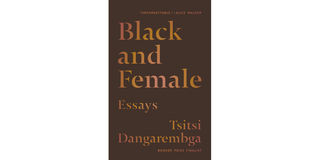
Cover of Tsitsi Dangarembga’s memoir Black and Female.
During the 1966–79 uprising, freedom fighters fought against the oppressive white regime, eventually leading to independence on April 18, 1980. Tsitsi says that although the fighters liberated the country, they did not hold people accountable for the rape and sexual abuse of black women in guerrilla camps. This shaped her strong opposition to oppression and the mistreatment of black women.
In her early 20s in the 1980s, as a student at the University of Zimbabwe (UoZ) in Harare, Tsitsi first heard the terms “misogynist” and “feminist” during women’s meetings, which helped form her feminist views and activist mindset.
In later years, she saw Zimbabwe make progress towards women’s rights. These changes included the 1982 Legal Age of Majority Act, which freed black women and made them equal to black men, at least under the law. This law briefly reduced the impact of the Theophilus Shepstone Act, which had treated black women as second-class citizens and prevented them from inheriting family property.
To Tsitsi’s disappointment, the feminist meetings at the UoZ, which had shaped her beliefs, ended suddenly when foreign feminist women left the country. Then, to their shock, the Supreme Court overturned the Legal Age of Majority Act in 1999. Zanu-PF then passed the Customary Law and Local Courts Act, which returned to Shepstone’s view of African women. It stopped female heirs from inheriting property and created a new type of court, called the Community Court, to apply customary law in rural areas. It firmly placed women in a subordinate role under patriarchy.
This law strongly fuelled Tsitsi’s activism and commitment to women’s rights. She became a fierce critic of political oppression and human rights abuses under Robert Mugabe’s rule. In July 2020, seven babies died the same day at Sally Mugabe Hospital because of Covid-19-related understaffing. Activists in the Zanu-PF women’s wing stayed silent.
In August 2021, a 14-year-old girl was defiled and became pregnant. Complications arose during childbirth. Her family’s religious sect did not allow medical treatment, so she was taken to a shrine and later died. Throughout this, the women’s league remained silent.
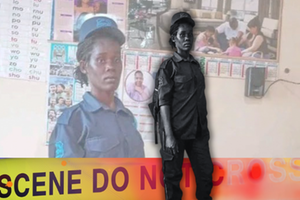
Tsitsi used her voice to criticise the Emmerson Mnangagwa government. At the height of Covid-19 on July 31, 2020, she was arrested and held at Borrowdale Police Station in Harare. In September 2020, she was found guilty of intending to incite public violence through her women’s rights activism and for holding a placard that read “we deserve better.” On May 8, 2023, her sentence was overturned after a successful appeal.
The writer is a novelist, Big Brother Africa 2 Kenyan representative, and founder of Jeff’s Fitness Centre (@jeffbigbrother).