At 85, scholar is breaking the silence on menopause
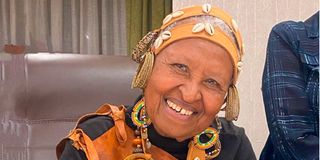
Dr Wanjiru Kamau during the launch of her book A Tapestry of Menopause.

What you need to know:
- On February 18, 2026, the Serena Hotel in Nairobi filled with scholars, cultural custodians, health practitioners, students and elders, both men and women, all gathered for the launch of A Tapestry of Menopause among Traditional Agīküyü Women.
- The story behind the book begins in 1988, when Dr Kamau, then 49, travelled to the US to pursue graduate studies at Pennsylvania State University.
Not long after arriving, something started happening to her body. Hot flashes. A racing heart. Mental fog.
She is 85 years old. And she has just published a book.
Not a memoir of a quiet life well lived, but a sharp, necessary piece of scholarship that asks uncomfortable questions about what African women have been taught, and not taught, about their own bodies.
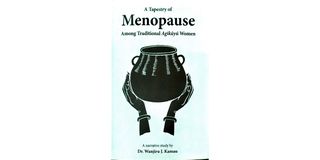
Cover of the book A Tapestry of Menopause by Dr Wanjiru Kamau.


On February 18, 2026, the Serena Hotel in Nairobi filled with scholars, cultural custodians, health practitioners, students and elders, both men and women, all gathered for the launch of A Tapestry of Menopause among Traditional Agīküyü Women. The author stood at the centre of it all, unhurried and unapologetic.
It started with a scare
The story behind the book begins in 1988, when Dr Kamau, then 49, travelled to the United States to pursue graduate studies at Pennsylvania State University. Not long after arriving, something started happening to her body. Hot flashes. A racing heart. Mental fog.
“I thought I had malaria. I thought I had contracted HIV. I had no preparation for menopause,” she recalls.
She was far from home, uncertain and frightened. She sought medical help. A gynaecologist confirmed through blood tests that she was menopausal and prescribed hormone replacement therapy. The Western medical model had a name for what she was going through: oestrogen deficiency. And it had a solution.
But the hormones made things worse. “My heart started running fast. I felt like I was losing control of my thinking,” she says. “I felt like I was going to die and leave my children.”
Sitting with that fear, she found herself thinking about her mother. About her grandmother. About all the women who had come before her and passed through this same stage of life without, apparently, falling apart. What had they known that she did not?
That question became the foundation of her research.
Going back to ask
Dr Kamau returned to Kenya and began seeking out traditional Agīküyü women, particularly those who had never been through formal education, and she asked them about menopause. What she heard stopped her in her tracks. “They told me, ‘There is nothing wrong with you. This is part of aging,’” she says.
She chose not to measure and prescribe, as the Western clinical model does. Instead, she listened. She documented lived experiences, gathered stories and examined the cultural frameworks through which these women understood their bodies. What emerged was a picture of menopause that looked nothing like what she had been given in a Pennsylvania consulting room.
In traditional Agīküyü society, menopause was not a medical event. It was a social one. It marked a woman's entry into elder-hood, the completion of her childbearing years and her transition into a role of counsel and authority. Post-menopausal women were mediators, advisers and keepers of communal wisdom.
Menstruation itself was treated as sacred, not shameful, a sign of fertility and continuity. And when it ended, the meaning did not disappear. It shifted. “They believed the blood moves upward to the mind, where a woman becomes a counsellor of the nation,” Dr Kamau says.
What modern life has cost women
Dr Kamau is not arguing that women should throw away their prescriptions. She is clear on that. Modern medicine explains what is happening hormonally, and that knowledge matters. But it tells only part of the story.
What traditional structures offered was context, she says. Girls moved through clearly defined life stages, puberty, marriage, pregnancy, motherhood and finally elder-hood, and at each stage there were midwives, mentors and communal support systems in place. “You were never neglected,” she says.
Today, many women experience menopause privately, quietly and often with shame. That silence, she argues, is not natural. It is the result of losing the social scaffolding that once made the transition meaningful.
“Perception is socio-cultural, religious and spiritual. How you perceive menopause determines how you experience it,” she says.
The book also touches on something more personal: identity. Dr Kamau reflects on being given the Christian name Josephine at baptism, a name she says felt detached from who she really was. That experience of dislocation, she suggests, mirrors what many African women carry more broadly, a disconnect from indigenous knowledge systems that once served them well.
“We tend to close off a whole spectrum of our lives. Who are we, in the final analysis?” she asks.
A challenge to younger scholars
Dr Kamau is not content to let her own community carry this conversation alone. Her book is a direct challenge to researchers across the region. What did Luo communities say about menopause? What did the Kamba or the Luhya teach their daughters? Why are African women still learning about their own bodies primarily from Western texts?
She is not calling for a return to the past. She is calling for a recovery of what was lost and a serious conversation about what remains useful.
What she wants women to know
If there is one thing she wants Kenyan women approaching menopause to hear, it is this: “First of all, it is not hormonal deficiency,” she says firmly.
She points to diet, exercise, community and stress management as the real foundations of wellbeing during this period. Traditional diets, rich in vegetables and seeds, moderate in quantity, supported women through this transition. Working in the garden was, in itself, a form of exercise. Strong social bonds, storytelling, singing and communal life all played protective roles that modern lifestyles have quietly eroded.
“Everything we are doing today is excessive,” she says, flagging high sugar intake, alcohol and heavily fried foods as particular concerns.
And she does not let men or society off the hook. “Menopause is part of society. It is not just a women's issue.”
The stage she has stepped into
Among the Agīküyü, the life stage Dr Kamau now occupies has a name: Nyakinyua. It means grandmotherhood. It means advisory authority, that the woman has seen enough to guide others.
At 85, she sees her publication not as a late achievement but as a responsibility that comes with this stage of life. “Once you stop menstruating, you become the person to help others go through,” she says.
She is doing exactly that.