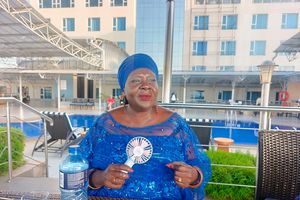
If you are reading this essay, you have probably seen someone, a woman, in a shop or matatu or an office or at the market holding a small fan. It may not have been so hot and you probably were wondering why the person had to carry a fan. Or, you may have been asked by your wife or mother to open the window because it is hot in the house.
Yet, by your estimation, it is not hot. How so? These are some of the most overt indicators of menopause around us. It is just that Kenyans don’t really talk about menopause. Indeed, many Kenyan men - even those in the andropause stage - may not know what menopause is all about.
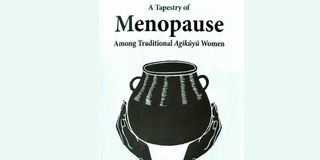
Well, what does menopause mean? Why should anyone else be bothered apart from those who experience it? Should people speak openly about this major change in the life of women of a particular age? Yes, according to Wanjiru Kamau, a counselling psychologist who wrote a thesis on menopause and has published a book on the subject, A Tapestry of Menopause among Traditional Agikuyu Women (2025).
Wanjiru had travelled to America to study in the early 1990s. Then one day she felt changes in her body that she could not immediately understand - a panic attack, instant body temperature changes from cold to intense heat, and sweating in the middle of winter. Did she have malaria or flu, she wondered? Was it HIV? Then the realization came, it “…was that time of life called menopause.” But even in a land where freedom of thought and action was celebrated, Wanjiru was shocked that “menopause was not an open subject in American communities.” She could not discuss much with her colleagues. Research did not lead her to an immediate solution. She ended up in a gynecologist's clinic and was given medication.
Unfortunately for Wanjiru, the medicine gave her palpitations and made her gain weight. She stopped taking the medication and was back to square one, in a manner of speaking. That is when she decided to find out how other women dealt with menopause beyond the medical option that defined it as a hormonal deficiency, a disease.
Wanjiru would make a life-changing decision: why not research how her own community, the people among whom she was born and grew up, dealt with menopause. She eventually ended up back home, researching menopause among Agikuyu women in Kiambu, Murang’a and Kirinyaga districts.
A Tapestry of Menopause among Traditional Agikuyu Women is many things. It is first an account of one’s life and how the person’s experiences influenced scholarship in psychology and counselling, which, though, ended up as a study of the ways of life of her own people.
Wanjiru’s decision to study menopause from her lived experience raises a key question on the value of scholarship to society. How do scholars arrive at the questions that inform their research? Shouldn’t it be something that they have experienced or one that affects or afflicts their families, colleagues, friends or the community?
Menopausal symptoms can interfere with a woman’s ability to work, care for others, and participate in community life.
Photo credit: File
Second, Wanjiru’s book is about the traditional life of the Agikuyu. How did society organize itself? What foods did the Agikuyu eat, at what time, where, how was it prepared etc? How did the young relate with the old? How did women live with men? How were lovers expected to behave in the community? How was menopause defined? How was it discussed? How were young women taught about menstruation and how to handle it? How did menopausal women behave? What did it mean to be a menopausal woman?
Third, interviewing women, some who were pre-menopausal and others who were menopausal, Wanjiru sketches a complex socio-cultural programme of identifying the different stages that a woman experienced in her life, from birth, to being named, to initiation into youthhood, to adulthood, to middle age (the menopausal woman) to old age, among the Agikuyu. Why are these stages important? Because their ordering is also the organization of social, cultural, economic, religious/spiritual, political, individual and communal life.
For instance, as Wanjiru shows, each stage had implications for all facets of the shared family and community life. A child, for example, was a child of the house, the home, the community; the child belonged to the mother and father, the aunts and uncles, the grandparents etc. Thus, as the child is raised in the community by learning the ways of life of her people, their thinking, their beliefs, their actions towards others and the ancestors and gods, she is being taught about the sacredness of life.
Fourth, it is this sacredness of life that menopause most signifies, according to Wanjiru. Her co-researchers (the women she interviewed) noted that menstruation was a sign that a woman was ready to give life. Carrying a pregnancy was part of the process of guaranteeing continuity of the family and community; menopause was a key stage in safeguarding life.
Menopause, according to the Agikuyu, was “…a time allotted to taking care of tucucu (grandchildren). It is a time to kwiyona (seeing oneself) and taking care of one who takes your name before you die.” This is an honorable moment; a time when one has been reborn in the image of the grandchild, and is about to complete the cycle of life, and soon join the ancestors. So, in the Agikuyu world, menopause could not have been an illness or a deficiency.
As Wanjiru shows in A Tapestry of Menopause among Traditional Agikuyu Women, menopausal women dealt with the stage through practices that had been tested over time by the community. The women knew what to eat - not too much sugar, not too much fat; they understood the value of work(partly as exercise) to keep the body healthy; they appreciated the benefits of the camaraderie, sharing and wisdom of fellow women etc. In other words, according to Wanjiru’s research, menopause was a stage that women looked forward to. Why?
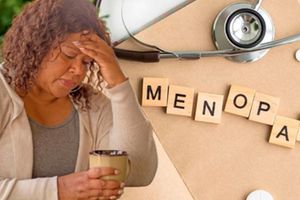
When a woman goes for 12 months without menstruating, without an external reason, she will be in the postmenopausal period.
Photo credit: Shutterstock
Because it was a mark of fulfilling the sacred laws of the society - menopause was a stage in ensuring what the deity had given one, that is life, was passed on to the next person; it was a link between the living and the ancestors, who were part guarantors of good life on earth; menopause bestowed one with wisdom - ageing came with experience and lessons, which would be passed on to the tucucu by grandparents; it also came with a sense of self-fulfillment - for one to have attained the age of menopause, one had contributed to the community, and lived well, among others. According to Wanjiru and her co-researchers, menopause was a gift towards the end of one’s life on earth.
What did Wanjiru learn in the field, from the women who lived in the countryside, who were not educated, who did not live in the city and worked like her? She records that the women did not understand her predicament. Instead, by sharing with her their own experiences of menopause, she understood the value of a balanced life; a life that integrated the everyday experiences of the individual and those of the community, making one sensitive to their own bodies and minds, and also to those around her. From this perspective, “…menopause was a natural event, and the body was capable of maintaining itself if well taken care of….”