Beneath the glitter, black women in Dubai face sexual assault, racial bias
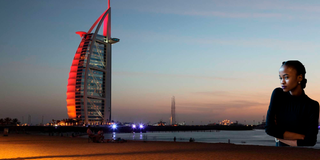
Burj Al Arab skyscraper in Dubai, UAE. A new book reveals how skin colour determines your Dubai experience - White women are pampered, brown women tolerated while black women are persecuted.

What you need to know:
- Dubai projects glamour but operates on a rigid racial hierarchy where skin colour determines treatment and opportunities.
- Black women face the harshest discrimination, enduring sexual harassment, police profiling, and exclusion from luxury spaces.
- Pardis Mahdavi's Gridlock exposes this systemic inequality.
Dubai, a Middle East tourist destination and the most famous emirate among the seven territories of the United Arab Emirates (UAE), is one of the largest migrant-receiving regions of the world. Over 70 nationalities reside in Dubai, with immigrants accounting for 92 per cent of its population.
The southern end of the city, known as New Dubai, accommodates privileged expatriates and wealthy visitors. Its gleaming ultra-modern skyscrapers include the world's tallest building: Burj Khalifa. It boasts the world's largest shopping centre – Dubai Mall, iconic beach hotel Burj Al Arab and man-made Palm Island, which is home to the 1,544-room Atlantis Hotel.
Dubai’s infrastructure was comprehensively developed on the backbone of migrant workers. Duality of purpose is apparent in the legal and social framework of Dubai’s development. While Emiratis depend on migrants for their vision of a cosmopolitan city, migrant workers aren’t protected by labour laws when confronted by harsh discrimination and an absence of access to social and health amenities.


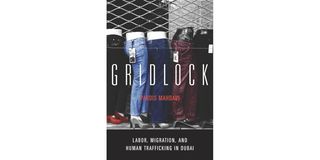
The cover of Gridlock: Labour Migration and Human Trafficking in Dubai by Pardis Mahdavi.
Citizens may seek healthcare for free, while non-citizens pay considerable fees and perversely face inequities in Medicare. Due to Kafala Law, each migrant worker is legally entangled with a sponsor known as a kafeel, who also functions as their employer. Residence and legal working papers for each migrant depend on the relationship with the sponsor. Passports of immigrant workers are confiscated by their employers. When disputes arise with the employer, migrants are often left without legal permits.
Healthcare inequalities are an official policy in Dubai. An HIV-positive emirati is conferred with Medicare, but immigrants who test positive are deported. Dubai’s unique combination of underdeveloped political and civil infrastructure for non-citizens provides a grim picture for foreigners. Besides a lack of healthcare refinement, gender, race and class play a principal role in its social layout. When seeking services, ethnic and socioeconomic background are considered.
Read more: After escaping abuse in the Middle East, domestic workers’ woes are far from over in this pandemic
Skin complexion determines social status and income-earning potential. The lighter the skin-tone, the higher the pay grade. White expatriates are the supreme income-earners after citizens. The pay scale decreases according to the shade of the employee’s skin colour. Migrants from South Asia, including Pakistanis, Afghans, Indians and Bangladeshi, Indonesians, Filipinos and Malaysians, are classified as 'brown’. They are accorded second-tier preferences and work in lower-end bars and clubs and traditional markets of Old Souk, Naif Souk and Al Satwa in the less affluent sections of Deira and Bur Dubai.
The lowest-wage earners in Dubai are from Sub-Saharan Africa, the majority of whom are from Ethiopia and Nigeria and classified as black, with black women dominating the bottom of the paygrade. Black women are confronted by adversity from every conceivable direction. On the streets, taxis don't stop when flagged down by black unchaperoned women who aren't dressed in Islamic attires – Abaya and Hijab.
Their assumption is that unaccompanied black women are sex workers and aren't worth the fare. Black women on the sidewalks are sexually harassed by local drivers, who taunt them with “how much?”, a demeaning way to solicit sex. Worsening their grief and discomfort, black women are groped. The violation of black women is so prevalent that it's perceived as normal.
When black women visit palatial installations like New Dubai, which houses the Dubai Marina establishment that includes the Jumeirah Beach Residence, Marina Mall and the Waterfront Creek Harbour, they face discrimination. They are frequently confronted by the Dubai immigration police who are unfriendly and presume they are illegal immigrants. Black women's unaccompanied entry into posh fortresses, including the Atlantis Hotel on Palm Island, is often impeded by security officers, who view them as sex workers seeking rich clients.
The immigration police profile social class by race. A considerable number of law enforcement officers acknowledge the assumption that black women’s presence should be limited to working class neighbourhoods. They prefer black women's presence limited to Old Dubai, Bastakiya and less desirable sections like Bur Dubai. Black women often find themselves in the infamous and inhospitable Abaya Police Station over fabricated charges of impropriety, instilled by a misogynistic Dubai community.
In contrast, light-skinned Arab women from North African nations of Morocco, Algeria, Tunisia, Libya and Egypt and the Persian Middle East country of Iran are locally perceived as ‘white’ and command first preference in courtesy and hospitable services. They are welcomed unquestionably into popular bars on the affluent Sheikh Zayed Road, which features seven different high-end nightclubs and popular entertainment joints for tourists and expatriates.
In her manual, Gridlock: Labour Migration and Human Trafficking in Dubai, Iranian-American author Pardis Mahdavi emphatically discloses how black women are denied privileges and liberties to experience luxurious services of Dubai.
The writer is a novelist, Big Brother Africa 2 Kenyan representative and founder of Jeff's Fitness Centre (@jeffbigbrother).