Bold and unapologetic: Valentine's Day through the feminist gaze

Young feminists give their views of Valentine's Day.

What you need to know:
- In an era of evolving gender norms, love takes on new meanings for feminist women.
- They reject name changes, redefine marriage, and embrace relationships built on mutual respect and self-preservation.
- Four feminists share their perspectives on autonomy, equality, and relationships, rejecting societal expectations while navigating love on their own terms.
Ah, Valentine’s Day. It is the annual festival of roses, candlelit dinners, and heart-shaped everything. A day drenched in the grand traditions of romance, where love notes are penned and expectations (sometimes sky-high) are set.
But in the era of feminism, what does love actually look like? How do modern women, who champion equality and independence, navigate relationships in a world that still clings to outdated notions of love, dating, and marriage?
Feminism isn’t new. For decades, women have fought for the right to vote, to work, to own property, to make decisions about their own bodies, and to demand equal treatment in every sphere of life—including relationships. But while the fight for gender equality has long been in motion, the digital age has amplified feminist conversations like never before.

Social media has given women the space to share their dating experiences, call out double standards, and redefine romance on their own terms. From viral X threads about emotional labour in relationships to TikToks dissecting power dynamics in dating, feminism has reshaped the modern love story, basically challenging the age-old scripts of who leads and who follows, who sacrifices and who gains.
Today’s feminist navigates love with a keen awareness of what’s fair and what’s not. Should a woman expect her partner to pay for every date? Should marriage proposals still involve a man getting down on one knee? How do we unlearn generations of social conditioning that taught women to compromise more in relationships? These are the questions that sit at the heart of modern romance, and the answers are not always simple.
This Valentine’s Day, we explore what love means through the voices of four feminists, each bringing a unique perspective on dating, relationships, and the delicate dance of romance in a world where gender roles are constantly evolving. Their stories challenge traditional narratives, embrace new possibilities, and offer a fresh take on what it means to love and be loved without losing oneself in the process.
Dr Stellah Bosire, 30s
Dr Stellah Bosire, a medical doctor, global health expert, social justice activist, and lawyer, doesn’t hesitate when defining love through a feminist lens. For her, love is autonomy, reciprocity, and deep, intentional care. She draws inspiration from Toni Morrison’s words: “You can't own a human being. You can't lose what you don't own... If it means so little to you that you can just give it away, then why should it mean any more to him?”
Love, as she sees it, is not about ownership, self-sacrifice, or dependency. Instead, it’s about two whole, independent people coming together to uplift and support each other and, without losing themselves in the process.
“Feminist love,” she explains, “means choosing a partner who inspires, challenges, and supports me as much as I do them. It’s about respect and power, not control or hierarchy.”
Having unlearned the fairy-tale version of love that prioritises self-sacrifice, Stella sees relationships as spaces for growth, honesty, and intention. “Feminism has helped me understand that love should not be a woman’s highest aspiration, nor should a relationship define my worth. True love doesn’t ask you to shrink, it instead allows you to expand.”
Her feminist principles guide every aspect of her life, and her approach to romance is no different. She refuses to mould herself into a version of womanhood that exists solely to satisfy societal expectations. Instead, she prioritises authenticity. “Love should not come at the cost of self-erasure,” she asserts. “If my values are seen as ‘too much’ for a partner, then they are simply not the right person for me.”
For her, true partnership means embracing open, honest conversations on topics like career progression, financial independence, and personal aspirations. She acknowledges that feminism has made her dating pool smaller, but she’s okay with that. “I’d rather be alone than be with someone who sees my autonomy as a threat.”
One of the biggest myths about feminists, she offers, is that they reject love, marriage, and family. “Feminism is not about opposing men—it’s about opposing oppression. It’s about choice.”
She believes feminists actually make better partners because they enter relationships from a place of self-awareness and personal fulfillment, rather than obligation. She laughs at the assumption that feminists “hate” men. “I love men,” she clarifies. “I date a man. What I don’t love is oppression, and that’s a different thing.”
Name-changing is one thing she strongly feels about. “One thing is certain—I am not changing my name,” she states emphatically. “My name carries history, meaning, and power. The expectation that women should give it up is a reflection of patriarchal traditions that erase women’s individuality.”
For her, marriage is not about blindly following traditions. Instead, it should be defined by the couple, based on their own values and needs. As for engagement rings, she believes they should be symbols of commitment, not financial transactions that prove a woman’s worth. “Love isn’t blind,” she says. “Love sees. It watches, learns, evolves, and grows.”
Confidently, she has had to choose between love and her feminist values many times—and she has always chosen feminism. “Love should never require me to compromise my values, shrink myself, or accommodate oppressive gender norms,” she says firmly. “If a relationship demands my silence or submission, then it’s not love—it’s control.”
She believes that feminism doesn’t weaken love; it strengthens it. “True love is about partnership, not power struggles. If I have to erase parts of myself to make someone else comfortable, then that love is not worth keeping.”
Annah Ashaba (Ashanah), 20s
Annah Ashaba, a Ugandan feminist, teacher, human rights activist, and writer based in Nairobi, has never been one to conform to expectations. In her mid-20s, she is unapologetically vocal about her beliefs, both online and offline. But with that outspokenness comes an avalanche of criticism, particularly from men who are uncomfortable with her refusal to play by traditional dating rules.
“I've been called bitter, unmarriageable, and even told I just haven’t had ‘good sex’ yet that is why I identify as a feminist. Some misogynist swear that they can fuck the feminism out of me,” she says, laughing at the absurdity of such remarks. “Men will see ‘feminist’ in my social media bio, take a screenshot, and use it as an insult. As if that’s supposed to offend me.”
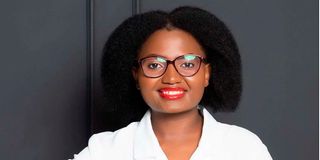
Annah Ashaba, a Ugandan feminist, teacher, human rights activist, and writer based in Nairobi.
Annah’s relationship with feminism, however, runs deep. Raised primarily by her father, she describes her childhood as one that fostered independence and critical thinking. “He was my biggest cheerleader. He never tried to mould me into societal expectations of what a woman should be. I questioned everything, and I never felt the need to shrink myself to make others comfortable,” she recalls.
Her stance on marriage is firm: she does not believe in it. “Marriage is a discount,” she states bluntly. “It benefits men more than women. I respect those who choose to marry, but for me, it’s a patriarchal institution designed to favour men while requiring women to endure endless compromises.”
These ideologies have also drawn concern from family members. “An auntie once told me that with my politics, I’m scaring men away, and that at my age, it’s worrying that no man has asked for my hand in marriage,” she shares.
Another relative advised her to slow down on her education – she is finalising two master’s degrees – warning that pursuing too many degrees would leave no room for a man to approach her. Her response? “If a man is afraid of me, the better because then it means they are not meant for me.”
Name-changing, a common expectation for married women, is another concept she rejects. “I don’t even have my father’s name, so why would I take on a man’s?” she asks.
In fact, her moniker, Ashanah, was a deliberate choice—merging parts of her given names, Annah and Ashabah in high school as a personal statement against the trend of girls combining their names with their boyfriends’.
Navigating romance as an outspoken feminist has not been without its challenges. She notes that even seemingly progressive men have limits to how much they can tolerate a woman’s independence. “They find me interesting at first, but then it’s, ‘You’re too strong, you’re too opinionated, you scare me.’ And I love when they say that, because it means they’re not for me. I have zero patience for stress in relationships.”
Her experiences with online abuse have been relentless, particularly from men who conflate feminism with misandry. “I challenge misogyny, and suddenly I must hate men. I advocate LGBTQ+ rights, and suddenly I must be queer. The assumptions people make are laughable,” she says.
Yet, despite the backlash, Annah remains steadfast in her advocacy. “Feminism has registered so many wins. We have rights today because of feminists who fought before us. But there’s still so much work to be done. Violence against women is rampant, and I refuse to stand down.”
When asked about the concept of toxic feminism, Annah is dismissive. “It’s a label used by people who fear feminist progress. It is an illusion by people who can’t argue against equality, so, when confronted about it, they resort to insults. Feminism isn’t toxic—oppression is.”
And as for love? “Feminism is love. Love is about respect, mutuality, and dignity. That’s exactly what feminism fights for. It’s not that feminists can’t love or be loved—we just refuse to lose ourselves in the process.”
La Patrona, 20s
For La Patrona, a journalist, feminist and writer, love is not just an emotion. It is a decision, a judgement, a promise, and an anchor. Above all, she says, love is profoundly political. “My whole life is guided by feminist principles, and my love life is no exception. The love I give or receive is shaped by the ethics and politics I believe in.”
Feminism, she intimates, has always been a guiding philosophy in her life. “It isn't something I found in adulthood. I was reading feminism theory by the age of 17 – long before I started dating. I cannot say it has changed my approach to dating. I can say it has informed all my dating experiences.”

La Patrona, a journalist, feminist and writer.
She is no stranger to people assuming that her feminist politics make her incapable of fulfilling romantic relationships. “On the contrary,” she counters, “feminism has taught me to love better. It has taught me that I deserve reciprocity, that I am not responsible for anyone’s emotional labour but my own.”
She finds it frustrating that women are still expected to be self-sacrificing in love. “Feminism teaches self-preservation. It recognises that I am a person with needs, just like my partner. It recognises that I deserve care as much as I give.”
She acknowledges that conflict is inevitable in relationships, but what matters is how both partners navigate it. “Engaging with political views demands open-mindedness and education. If someone is unwilling to learn, unwilling to grow, then I can’t engage.”
As such, she avoids relationships with people who can’t grasp basic human rights issues. “I’ve never had to walk away from love because of feminism, because I don’t even entertain people who can’t call out misogyny or femicide.”
Although she once considered marriage and was close to getting engaged last year, La Patrona has since realised she’s not cut out for it. “I love romance. I find proposals beautiful. I find rings beautiful. But I now know that I don’t want marriage. That doesn’t mean I won’t wear rings—I just see them as part of my jewellery collection, not a societal expectation.”
She has never once considered changing her name. “The women who raised me—my mother, my aunties—are all married, but they still use their maiden names. It has never occurred to me that I’d have to change mine.”
La Patrona strongly feels that feminism and romance cannot coexist under patriarchy. “Men say they want to be loved for who they are, not for what they provide. But when that happens, they don’t know what to do with it. If a woman loves a man without needing him financially or emotionally, he begins to question the validity of that love.”
She argues that modern love is still too entrenched in patriarchy to truly flourish. “Men are still wired to chase, to conquer. Even the most progressive ones struggle to break free from societal conditioning. Eventually, women get exhausted and disillusioned and find themselves conforming just to have some peace.”
For her, true love can only exist once patriarchy is eradicated. “Only then can we see what equitable love actually looks like.”
Florence Agutu*, 40s
Florence is a vocal social issues and women advocate and identifies as a feminist who is true to the cause. “You'll be surprised that my closest friends are not feminists. In fact, their husbands complain about me and my liberal feminist views. They once told me they would pray to bring a husband into my life, but I asked them to stop and ask God to give me money.,” she heartily offers as we settle down for the interview.
Respect and equality are the two words through which she describes love in the context of her feminism belief. “What I have observed is that in most romantic situations, respect is expected and demanded by the man, but is not often given by him. Subservience is what is expected of women – at least that is how we have been socialised to see it. But I don’t think any human being should be subservient,” she offers.
“Relationships are about two equal individuals coming together for mutual benefit…so why would one individual bend backwards in favour of the other. And equality also means that when I go out on dates, I don’t expect the man to bear the whole bill burden. He can treat me and I can treat him so that there is mutual respect and equality as a value we uphold in everything we do.
“One of the issues with this approach, however, is that sometimes you can be taken advantage of. When some men realise that you are actually willing and able to cater for your meals or drinks during a date, they take that as a sign that you are rich and wealthy and start asking you for money after the date or on subsequent dates.”
Her approach to romantic relationships has been influenced totally by her feminism stand in the sense that she wouldn’t even pay attention to a man who has misogynist points of view, who is a chauvinist or who endorses such comments. “If these personality traits were hidden in plain sight, I would outright call them out. There’s a time I was talking to a guy and the conversation was flowing well until he asked me to rate my chapati-making skills; how well I would make chapatis for him,” she expresses.
“The conversation just had to end there because chapati-making skills isn’t what I am bringing to the table. I mean, we have machines and all these gadgets to make such chores easier. We even have chapati being sold by the roadside and in supermarkets.”
Florence thinks that the greatest misconception about feminists is that they hate men and are bitter people because they can’t find husbands. “People think that because you are a feminist, then you do not have any femininity in you. They assume you don’t like perfume, flowers, chocolates and the likes and that is misleading.
“Before I embraced the feminist label, I used to associate it with a lot of negative things. When I had my first serious relationship – in my early 20s – I hadn't embraced the label, but there are things I felt strongly about a man’s and a woman’s role in a relationship. So I dated in a traditional way. But at the back of my mind, some of the things I watched my own mother do like waking up in the middle of the night to make fresh ugali for my dad who just arrived made me resolve that I never wanted to be that kind of wife or partner.
“By the time I was going into my most serious relationship that yielded a child, I had done my research and was more comfortable with the tag – I was 60-70 per cent there. So when I got into the marriage, the guy expected me to do certain things that I had said I wouldn’t in our dating phase and that just didn’t work out.
“You realise one thing about dating a man who doesn’t ascribe to feminism values is that they try to tame you. They think you being a feminist is a challenge they need to conquer. They have the notion that they can domesticate you because your views are too wild. So they will approach you, they will want to date you, then shortly, you realise that it is not you they want to conquer. It is the feminism in you that they want to tame,” she shares of her Damascus journey.
On handling a partner or potential partner who holds views that clash with her feminist principles, Florence strongly feels that you cannot change a man. “If he grew up thinking that you as his wife should cook all his meals from the onset – the wedding day, then there is nothing you can do to change that mindset.
“What I have done in my active years of dating is that I clarify my values early on in the relationship. I don’t think having feminist principles is anything to fight over. It’s either the man aligns with your values or they don’t. I am at a stage where I can only compromise so much. So, if there is a potential partner whose views clash with my principles, I respectfully walk away.
“I have a real-life story where a mutual friend introduced us – me and a certain gent. And we hit it off to the flirting stage and one day when we were chatting, he said that among the things that he loves about himself is the size of his manhood (penis). That definitely didn’t sit well with me. I mean, we barely just started talking and you are already talking about the size of your penis? It felt intrusive and even harassment. I immediately cut it off. I told him that we shared different values and I couldn’t carry on,” she shares.
On challenges she has faced as a feminist in the dating scene, she confides that there exist traditional expectations of women even by modern men. “The strangest thing I have experienced is that most of the time men will expect you to play all those traditional wife roles, including washing their underwear, not staying out late, cleaning after them and the likes. They also expect you as a working woman to play a traditional wife, but also chip in the bills. Full provision from them is where they draw the line.”
She believes that feminism and romance can exist at the same time. You can be a feminist and in love at the same time. “If a woman wants the ring, let her get the ring,” she chuckles.
These feminist perspectives offer powerful, sometimes conflicting, insights into love, relationships, and the ongoing struggle to balance romance with autonomy. Is this the way to navigate romantic relationships, or is it not? The jury is still out.
*Name changed to protect identity.


