Corruption highest in male-dominated sectors, EACC survey shows

Man carries a bribe. A fresh survey by the anti-graft watchdog has revealed that corruption is most prevalent in male-dominated sectors, even as men are more likely to report bribery incidents to the police.

What you need to know:
- New data shows men dominate bribery networks but are also more likely to report cases.
- Gender dynamics in corruption expose inequalities, with women less involved in petty bribery levels
A fresh survey by the anti-graft watchdog has revealed that corruption is most prevalent in male-dominated sectors, even as men are more likely to report bribery incidents to the police.
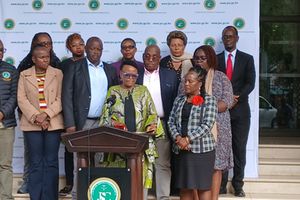
The first-ever report by the Ethics and Anti-Corruption Commission (EACC), which provides gender-disaggregated data on corruption and its dynamics, was released on Thursday in Nairobi. It shows that men pay bribes more frequently than women.
The survey highlights that in the 12 preceding months, 35.5 per cent of service seekers reported paying bribes to police officers. This was followed by civil registration officials (30 per cent), National Transport and Safety Authority (NTSA) officers (25.4 per cent), land registry officers (23.3 per cent), and registration of persons officers (21.2 per cent).


Men form the majority of the workforce in these sectors. For instance, NTSA staff are 92.9 per cent male, prosecutors 92.3 per cent, public utilities officers 90.9 per cent, and police officers 88.8 per cent. Despite this, more male respondents (40.2 per cent) reported bribery incidents to the police compared to women (22.6 per cent).
Only 3.1 per cent of men reported such cases to the EACC. Meanwhile, more women (15.4 per cent) than men (10.3 per cent) reported incidents to chiefs. The national average bribe rose from Sh4,878 in 2024 to Sh6,724 in 2025, representing a 38 per cent increase. Magistrates received the highest bribes more than 24 times the national average at Sh164,367, while the lowest average bribe of Sh1,415 was paid to civil registration officials.
There was little difference between the average bribe paid by men and women. Men paid an average of Sh6,748, while women paid Sh6,702. At the county level, Kakamega recorded the highest average bribe at Sh79,305, largely driven by payments to judicial officers. It was followed by West Pokot (Sh16,400), Isiolo (Sh13,912), Vihiga (Sh12,389), and Garissa (Sh12,297). The lowest average bribes were reported in Kitui (Sh2,168), Siaya (Sh2,155), Nyamira (Sh1,655), Kilifi (Sh1,559), and Baringo (Sh1,314).
EACC chairperson David Oginde said the findings highlight the complex gender dynamics of corruption. “The gender dimension brought out by this survey is particularly significant,” he said. “It demonstrates that corruption does not operate in a vacuum but interacts with existing social and economic inequalities.”
He also noted a worrying, emerging trend in the gendered nature of corruption. “At the lower levels of social status, or what we may call micro-corruption, women are less involved. However, at higher echelons of society, what we refer to as mega corruption, women are increasingly becoming drivers and facilitators,” he added.
Meanwhile, the Cabinet Secretary for Public Service, Human Capital Development and Special Programmes, Geoffrey Ruku, sternly warned officials under his docket against corruption. “If anyone under my ministry is involved in corruption, whether in the Huduma Kenya Secretariat, Kenya School of Government, or any other institution under my ministry, I will remove them and ensure the law takes its course swiftly before I am held accountable by the President.”
Follow our WhatsApp channel for breaking news updates and more stories like this.