Since the advent of devolution in 2013, 16 impeachment cases involving county governors have been handled by the Senate of Kenya.
Former Agriculture Cabinet Secretary Mithika Linturi.
Photo credit: Jared Nyataya | Nation Media Group
In processing impeachment cases, the Senate has discretion to handle them either through an 11-member special committee or in plenary, as the House may decide by resolution.
The County Governments Act states that if the special committee finds the impeachment charges against a county governor unsubstantiated, the matter ends there and does not proceed to a vote.
In the event that the committee finds even one charge substantiated, the matter proceeds to the plenary for voting, just as it does if the House chooses the plenary route. Of the county governors who have had their day before the Senate, three have been successfully removed from office by impeachment and the decisions upheld by the courts.
The impeachment process is such that the county assembly votes, and the Senate undertakes trial or confirmation proceedings.
While many county governors have been impeached at the county assembly level, a majority have survived through Senate acquittals or court interventions.
But in the course of undertaking its constitutional oversight role, the Senate has been hit by corruption scandals blamed for influencing the outcome of impeachment proceedings.
“The issue that matters at the Senate is numbers, and the magic number is 24. The politics of the day normally take centre stage. The Mike Sonko and Ferdinand Waititu cases did set a bad precedent,” said Mr Kilonzo Jr.
Former governors Ferdinand Waititu (Kiambu) and Mike Sonko (Nairobi). The two were impeached.
Photo credit: File | Nation Media Group
Richard Onyonka told Nation Media Group that it is no longer doubtful that senators are induced to manipulate the outcome of an impeachment trial.
“Money has always been shared at the Senate and county assembly levels to influence the outcome of a governor’s impeachment proceedings,” said Mr Onyonka, confirming previous comments by Fatuma Dullo that the Senate has become soko huru (free market).
Senator Dullo coined the phrase soko huru following the dismissal of an impeachment motion against her governor, Abdi Ibrahim Hassan, at the preliminary stage to imply that the Senate has become a free market where the highest bidder carries the day.
This was intended to reinforce her argument that the Senate had become a “marketplace” where oversight was being traded for personal gain and bribery at the expense of the oversight role for which senators were elected.
None other than William Ruto has shared her position twice and lambasted Parliament for practising rent-seeking behaviour.
The first instance was during the August 2025 Devolution Conference in Homa Bay County, when the President criticised rent-seeking MPs, and a few days later during a joint parliamentary group meeting of his Kenya Kwanza coalition and Orange Democratic Movement in Nairobi.
Impeached deputy governors
“Where does a county governor find Sh150 million? That is the county’s money,” said President Ruto during the August 18, 2025, PG meeting in Nairobi.
Of the many impeachment proceedings the Senate has handled so far, only three county governors have been successfully removed, as affirmed by the courts.
They include Kawira Mwangaza (Meru) in August 2024, Mike Sonko (Nairobi) in December 2020 and Ferdinand Waititu (Kiambu) in January 2020.
Former Kisii Deputy Governor Robert Monda.
Photo credit: File | Nation Media Group
Several deputy county governors have been impeached, with Dr Robert Monda (Kisii) becoming the first and only deputy governor to be successfully removed from office on March 14, 2024.
Nairobi Governor Johnson Sakaja at his office in Nairobi.
Photo credit: File | Nation Media Group
Governors who were impeached by their respective county assemblies but saved by the Senate include Abdi Ibrahim Hassan (Isiolo) on July 8, 2025; Amos Nyaribo (Nyamira) in December 2025; and Eric Mutai (Kericho), who was twice saved on technicalities in October 2024 and August 2025.
Others include Mohammed Abdi Mohammed (Wajir), Martin Wambora (Embu)—impeached a record four times but reinstated by the courts each time—Anne Waiguru (Kirinyaga) in June 2020, Mwangi Wa Iria (Murang’a) in November 2015, Paul Chepkwony (Kericho) in 2014, the late Nderitu Gachagua (Nyeri) in 2016, Granton Samboja (Taita Taveta) in 2019, and Kivutha Kibwana (Makueni).
However, it is the outcome of the impeachment proceedings against the Isiolo Governor that seems to lift the lid on widespread corruption in the Senate, especially during impeachment trials.
The Senate Hansard—the official record of House proceedings—of July 8, 2025, when the House voted to save the Isiolo Governor, captures Fatuma Dullo ranting about widespread corruption in the House.
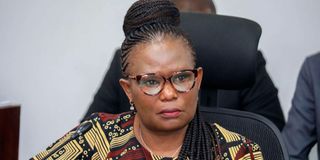
Isiolo Senator Fatuma Adan Dullo.
Photo credit: Joseph Kanyi | Nation Media Group
“Before this motion, this House was crying for the blood of the Governor of Isiolo. We know each other, and I know what transpired even 30 minutes ago,” said Senator Dullo before dropping the bombshell.
“I think it is good for the people of Isiolo and the public to know what happened. The so-called ‘soko huru’ is taking over this House. I must say that,” the Isiolo Senator told the Senate, a claim she has maintained to date.
“You cannot impute improper motives to your colleagues. If you want to proceed in that manner, you know what to do; substantive motions,” Speaker Kingi reminded Senator Dullo. But she stood firm: “Let me proceed, and I will leave it at that.”
“I have sat in this House for the last 13 years. What I have seen today has never happened in the history of this House. Killing a motion at the preliminary objection level is disastrous,” she said after the impeachment motion fell through on a technicality.
“This is a free-market economy; whoever has money, his bidding gets done,” he said.
Aaron Cheruiyot, the Leader of Majority, is captured by the Hansard defending the Isiolo Senator.
“Senator Fatuma Dullo, our colleague, has raised a very important question,” the Hansard captures Senator Cheruiyot saying.
“When you tell the county assembly to go back and follow the right procedure, under which Speaker now? First of all, where will they meet?” posed the Kericho Senator, adding: “The governor and the county assembly share an office.”
“That is how bad that situation is in that particular county.” “As we speak today, what you saw in that video is what these people are returning to should this preliminary objection be upheld—a place that has been completely broken, has no order, and where there are two clerks and two speakers,” said the Leader of Majority.
Of the impeachment charges processed by the Senate, nine have been handled through the 11-member special committee and seven through the Senate plenary.
Governors who have appeared before the special committee include Martin Wambora (Embu) twice, Paul Chepkwony (Kericho), Alfred Mutua (Machakos), Mwangi Wa Iria (Murang’a), Granton Samboja (Taita Taveta), Anne Waiguru (Kirinyaga), Mohammed Abdi Mohamud (Wajir) and Kawira Mwangaza (Meru).
Those who appeared before the Senate plenary, sitting as a trial chamber, include Ferdinand Waititu, Mike Sonko (Nairobi), Kawira Mwangaza (during her second and third impeachments), Eric Mutai (during his first and second trials) and the late Nderitu Gachagua (Nyeri).
Senator Onyonka says that all county governors with serious audit queries and corruption cases only need to “get allied” to the government to cushion themselves from Senate oversight.