Dora Akunyili: The pharmacist who took on Nigeria’s counterfeit drug mafia
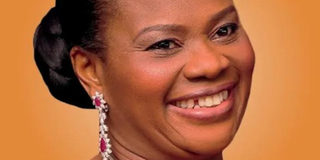
Dora Akunyili, the pharmacist who fought counterfeit drugs in Nigeria.

What you need to know:
- The former Nafdac chief waged a relentless war against counterfeit drugs, surviving threats, attacks and an assassination attempt.
- Dora Akunyili’s fight for safer medicines came at a heavy personal cost as counterfeiters threatened her life and attacked Nafdac.
In early 2001, then-Nigerian President Olusegun Obasanjo was briefed by his Finance Minister, Mallam Adamu Ciroma, about an Igbo pharmacist named Dorothy “Dora” Akunyili. Dora, a former Petroleum Trust Fund zonal secretary responsible for the south-eastern region, had returned £12,000 that had been assigned to her after her planned misdiagnosed medical surgery was cancelled in London.
On April 8, 2001, in Enugu, Dora was startled by a call and the unmistakable voice of President Obasanjo. He summoned her to Aso Rock Presidential Villa in Abuja for a discussion that culminated in her appointment on April 12 as Director General of the National Agency for Food, Drug Administration and Control (Nafdac).
Dora had developed a passion for promoting prescription medication after her pharmaceutical studies at the University of Nigeria Nsukka, mindful of how difficult it was to ascertain whether drugs being retailed were authentic.

In the 1980s, while she interned at the University of Nigeria Teaching Hospital, the World Health Organisation conducted a study, which indicated that 54 per cent of drugs in Nigerian pharmacies were counterfeit. Dora’s youngest sister, Nwogo, consequently died in her arms after she was injected with counterfeit diabetes medication mistaken for insulin.
Her tenure as head of Nafdac, Nigeria’s most critical regulatory body, conferred on her the responsibility of ensuring the safety of food, packaged water, drinks and medicine for more than 160 million Nigerians.
Prompted by the loss of Nwogo, she embarked on a nationwide awareness campaign through town-hall workshops, radio, television, newspaper adverts and interviews to inform Nigerians of the dangers of counterfeit products. She emphasised the most commonly replicated products and the distinctive signs of inauthenticity, such as blurred or missing expiry dates, packaging colour inconsistencies and misspelt brand names that imitate genuine ones.
She established hotlines for citizens to report suspected individuals, factories or warehouses dealing in counterfeit drugs, unwholesome food and substandard products. Dora significantly restored Nafdac registration, with a set of numbers printed on packages to alert consumers to approved products. Water, drinks, food and drug companies had to register with Nafdac to meet the standards and legally operate in Nigeria.
She urged National Union of Road Transport Workers, pharmacists, patent medicine dealers, doctors, hospitals, bankers, airlines, courier services, millers, importers, civil society, state parastatals and port authorities to join the battle.
Banks were instructed to process financial documents for drug importation only after validating the imports with Nafdac. In conjunction with the Ministry of Aviation, Dora issued new guidelines that prohibited aircraft from importing drugs without Nafdac authorisation. Shipping lines had to furnish Nafdac with all their cargo manifests, as did the Nigeria Customs Service, which controlled the movement of cargo.
These partnerships were immensely effective, as Dora confiscated and destroyed more than 6,000 25-kilogramme bags of expired Nestlé Nigeria baby milk worth $830,000. Subsequent activities resulted in the destruction of $16.6 million worth of counterfeit products in Onitsha and Lagos in July and October 2001 respectively.
In four consecutive years, Dora marshalled more than 800 raids on drug distribution outlets and 90 destruction exercises targeting counterfeit and substandard medicines. Between April 2001, when she assumed leadership, and August 2004, the agency eliminated more than $59.6 million worth of unregulated products. Thanks to Dora, a baseline survey repeated in 2002 and 2003 indicated reductions of 67 per cent and 80 per cent in counterfeit drugs respectively.
But producers of counterfeit drugs were undeterred, as many of them approached Dora with luxury cars and cash inducements. To their shock, she rejected their corrupt incentives. Dora subsequently found occult objects on her Abuja office desk, including clumps of feathers dripping with blood, coral beads, cowrie shells and a dead tortoise. Six gunmen successively stormed her residence in Abuja, but, luckily, she was on an emergency trip to Lagos.
A few weeks later, 30 armed men attacked her newly refurbished Nafdac laboratories in Oshodi, Lagos, stripping all the security guards naked before vandalising the facility. The cost of the destruction was estimated at $3.65 million.
In December 2003, Dora received intelligence that an Igbo member of the counterfeit mafia had “put a price on her head”. She opted to spend the holiday season with her husband, Chike, in their family home in Enugu, but on Boxing Day, against her reservations, she left Enugu to spend time in an Orlu village in Imo State. She had received an insistent call the night before from an influential ally in the fight against counterfeiters, cajoling her to attend his chieftaincy ceremony.
In I Am Because We Are: An African Mother’s Fight for the Soul of a Nation, Dora states that after the previous attack on Nafdac, President Obasanjo beefed up her security. The one-and-a-half-hour drive to Orlu was made in a convoy of five vehicles, with sirens blaring at the front and back.
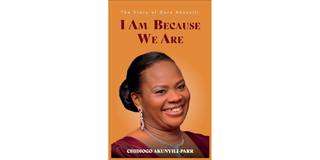
The cover of Dora Akunyili's book, I Am Because We Are: An African Mother’s Fight for the Soul of a Nation.
At 5pm, as they headed from Orlu past her maternal grandmother’s gate in Agulu, the security car ahead swerved dangerously before speeding off. Suddenly, there were deafening sounds of multiple gunshots. Dora ducked down as everyone else in the car screamed. She felt a sharp pain on her head that felt like a scald. The convoy sped off and only came to a stop at a police station in Awka.
It was determined that a sniper’s bullet had pierced Dora’s architectural head-tie, grazed her scalp and scorched her hair, coming close to penetrating her skull. The following day, Nigerian newspaper headlines painted a graphic picture of how an assassin’s bullet had almost killed Dora.
The writer is a novelist, Big Brother Africa 2 Kenyan representative and founder of Jeff's Fitness Centre (@jeffbigbrother).