The woman who eradicated Nigeria's counterfeit-drug epidemic
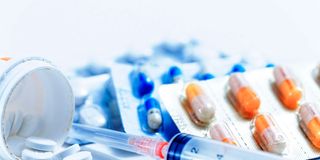
Dora Akunyili transformed a toothless regulatory agency into a fierce watchdog, saving millions of lives by dismantling Nigeria's multi-million-dollar counterfeit drug empire.

What you need to know:
- A World Health Organization study from the late 1980s found that 54 per cent of drugs sold in major Nigerian pharmacies were counterfeit.
Dorothy "Dora" Nkemdilim had a hard childhood. She narrowly survived a severe pneumonia attack, then went on to score the second-best results nationwide in her First School Leaving Certificate exams. That win earned her a full scholarship to Queen of the Rosary Secondary School in Nsukka, just as the Biafra war broke out in July 1967.
For the next three years, she fled with her parents and seven siblings from Nanka to rural Umulolo, witnessing the traumatic sight of dead bodies decaying by the road.
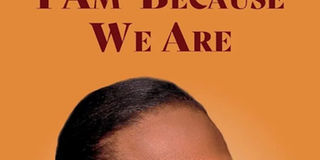
In her mother's biography, I Am Because We Are: The Story of Dora Akunyili, Chidiogo writes that the loss of Nwogo drove her mother as she built Nafdac around two goals that had to work together: wiping out public ignorance, and exterminating the counterfeit-drugs epidemic.


Her hardship deepened in April 1972, when her father died of a heart attack at 59. Around the same time, her mother and youngest sister, Nwogo, were diagnosed with diabetes. Still, by the end of 1973, Dora sat the West African School Certificate exam and passed with distinction, one of the best results in Nigeria that year.
Drawn to pharmacology, Dora enrolled at the University of Nigeria, Nsukka and interned at the University of Nigeria Teaching Hospital. There, she grew increasingly troubled by how hard it was to know whether the drugs sold at the hospital were genuine.
A World Health Organization study from the late 1980s found that 54 per cent of drugs sold in major Nigerian pharmacies were counterfeit.
Then tragedy struck twice. Dora's mother died. And her sister Nwogo died in her arms after being injected with a counterfeit diabetes drug sold as insulin.
More pain followed. While Dora was seven months pregnant with her fifth child, one of her husband Chike Akunyili's mistresses called her, gloating, to confess about their affair. The shock sent Dora into severe distress, which turned dangerous and triggered pancreatitis. Doctors delivered her daughter, Chidiogo, by caesarean section, and Dora spent five life-threatening months in hospital recovering.
After earning her PhD in Pharmacognosy from the University of London, Dora wrote a handbook in 1991, warning the public about dangerous drug combinations, while actively raising funds to build Agulu's first hospital.
Her reputation for incorruptibility grew, and she was named zonal secretary for the Petroleum Trust Fund (PTF) in south-eastern Nigeria, covering Abia, Anambra, Ebonyi, Enugu, and Imo States.
Around this time, a minor bowel problem was wrongly diagnosed as a cancerous tumour. Fortunately, her PTF benefits covered the roughly 117,000 pounds cost of travel and surgery in London. When her test results came back negative, Dora returned the unused funds to PTF.
One Sunday afternoon in Enugu, Dora was startled by a phone call and the unmistakable voice of Nigeria's newly-elected President, Olusegun Obasanjo. He summoned her personally to Aso Rock, the presidential villa in Abuja, and appointed her Director General of the National Agency for Food and Drug
Administration and Control (Nafdac).
Obasanjo had been told how Dora returned thousands of pounds to PTF that were already signed over to her, and he was struck by her incorruptible conviction. On April 12, 2001, Dora took charge of Nafdac, Nigeria's most critical regulatory body, responsible for the safety of food, packaged water, drinks, and medicine for more than 160 million Nigerians.
In her mother's biography, I Am Because We Are: The Story of Dora Akunyili, Chidiogo writes that the loss of Nwogo drove her mother as she built Nafdac around two goals that had to work together: wiping out public ignorance, and exterminating the counterfeit-drugs epidemic. Since counterfeiters were so inventive, getting ordinary consumers on board was key.
Dora launched a nationwide awareness campaign, town hall workshops, radio, TV, newspaper ads, and interviews to teach Nigerians the tell-tale signs of fake products: blurred or missing expiry dates, mismatched packaging colours, and misspelt brand names designed to mimic the real thing.
She set up hotlines so citizens could report suspected counterfeiters, individuals, factories, or warehouses making fake drugs, unwholesome food, or other substandard products.
Dora also revamped the Nafdac registration number, a code printed on packaging showing the agency had approved the product. Every company selling water, drinks, food, or drugs had to register with Nafdac to legally operate in Nigeria.
She converged pharmacists, medicine dealers, doctors, hospitals, banks, airlines, courier services, the National Union of Road Transport Workers, bakers, millers, importers, civil society groups, government agencies, and port authorities into the battle.
Banks, the artery of every financial transaction, were ordered to process import paperwork for drugs only after the watchdog had verified them. Working with the Ministry of Aviation, Nafdac barred aircraft from carrying drugs into Nigeria without the agency’s clearance. Shipping lines had to furnish Nafdac with their cargo manifests, as did the Nigeria Customs Service, which controlled cargo movement across the country.
With more hands on deck, these partnerships proved immensely effective. Dora's team confiscated and destroyed more than 6,000 25-kilogramme bags of expired Nestlé Nigeria milk, worth $830,000, earmarked for baby food production. Later raids led to the destruction of nearly $16.6 million worth of counterfeit products in Onitsha and Lagos, in July and October 2001.
Over the following years, Dora marshalled more than 800 raids on drug distribution outlets and about 90 destruction exercises on counterfeit and substandard medicines.
Between April 2001, when she took office, and August 2004, the agency annihilated more than $59.6 million worth of unregulated products. Thanks to her work, a follow-up survey found the incidence of unregistered drugs on the market fell by 67 per cent in 2002 and 80 per cent in 2003.
Jeff Anthony is a novelist, Big Brother Africa 2 Kenyan representative and founder of Jeff's Fitness Centre @jeffbigbrother