From hospital volunteer to AI innovator: Melodious Isanda’s inspiring journey
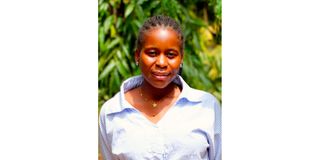
Melodious Isanda, a community health graduate who built a blood sugar prediction app after joining the Engage Project in 2025.

What you need to know:
- Melodious Isanda, a determined young woman, turned curiosity into innovation despite limited opportunities and lack of formal tech training.
- From rural classrooms to universities, mentorship and exposure are reshaping girls’ ambitions in science and technology.
Melodious Isanda grew up convinced that her future career would lie in the healthcare field. Her determination was so strong that, even as a Form One and Form Two student, she volunteered at a nearby hospital in Nairobi. There, she registered patients, weighed babies, and performed any other tasks assigned to her.
She longed for her mother to witness her dream come true but had lost her tragically when she was just six months old. Her father and paternal aunt sacrificed everything, taking out loans they are still repaying, to support her education at the Kenya Medical Training College, Machakos, where she earned a diploma in community health.
By 2025, upon completing her studies, she looked forward to opportunities that would help her stand out and secure employment. That same year, her sister introduced her to a project aimed at enhancing skills in artificial intelligence (AI), machine learning, and data science for public health. She applied and was accepted.


The initiative, Enabling Girls in AI and Growing Expertise in Data Science for Public Health (Engage), is run by the University of Nairobi’s Institute of Tropical and Infectious Diseases. “I didn’t have any background in data science or any computer-related course. I didn’t know anything. But once I joined, they taught me about data science and public health.”
The Engage project not only targets students at higher learning institutions like Melodious. It begins at high school, sparking girls’ interest through a 10-day residency training in six universities across Kenya: Meru University of Science and Technology, Dedan Kimathi University of Technology, South Eastern Kenya University, Pwani University, Kabarak University, and Jaramogi Oginga Odinga University of Science and Technology.
The curriculum is tailored to the level of the trainees. High school girls learn basic computer skills and introductory coding during the 10 days, while gaining real-life exposure to how science and technology are applied in health facilities through learning visits.
Diploma and university students undergo a 20-day residency, complete a capstone project, undertake a six-week internship at a health facility, and are paired with mentors for guidance. Diploma students tackle intermediate modules, while undergraduates engage with full AI and data science curricula.
From this training, internship, and mentorship, Melodious developed something she is forever grateful for: a blood sugar prediction app. “At the hospital where I interned, I looked at the data on blood sugar because most of the patients who came were being checked for it,” she explains.
“So, I thought of working with blood sugar data to see if I could flag patients at risk before they were tested, using their location, age, and gender. I created the blood sugar prediction app and left it with the hospital manager to see if they could use it for learning.”
Despite this achievement, Melodious is yet to find a job. She hopes to secure a placement that will enable her to help her father, a conductor, and her paternal aunt repay the loans they took to educate her.
Prof Julius Oyugi, the project’s principal investigator, says they set out to train 1,000 girls from disadvantaged backgrounds over five years. “Girls from rural areas, many of whom had never seen a university, now aspire to pursue higher education in Stem (science, technology, engineering, and mathematics),” he notes.
Data-driven decisions
“Some have gone on to master’s programmes in data science, locally and abroad. Others have secured jobs in health facilities where they were once interns, helping institutions make data-driven decisions.”
Last year, Deborah Kishapa Namaiyana shared her experience of interacting with Kenyan-based women scientists. “We had women scientists from the University of Nairobi visit our school in early 2024. They conducted practical lessons in the laboratory, and I admired the way they worked,” she recalled.
“We had the opportunity to ask them questions, which made it clear to me that I wanted to pursue a medical course in surgery at university. However, I needed to achieve excellent results in maths, biology, and chemistry. Their encouragement made us feel that we could conquer any challenge, and nothing is too hard if you put your mind to it.”
True to their guidance, Deborah excelled in the 2024 Kenya Certificate of Secondary School Examinations, achieving an A minus with 77 points. Today, she is a first-year clinical medicine undergraduate at Kabarak University. “I’m enjoying the course, and I look forward to completing it. It’s a four-year course with three semesters each year,” she says.
The women scientists behind her success are part of the African Schools Science Outreach Programme, Kenya, hosted at the Department of Biochemistry at the University of Nairobi. More than 30 women researchers from universities, research institutions, government agencies, and nongovernmental organisations are positively shaping the futures of girls.
These scientists are experts in diverse biosciences, including veterinary vaccinology, biochemistry, biotechnology, microbiology, animal science, and science communication. “The programme targets high school students, mainly girls, from marginalised communities, where low scientific capital and socio-cultural barriers affect girls’ education and hinder their transition from high school to universities,” says Dr Esther Kanduma, director of the Centre for Biotechnology and Bioinformatics and coordinator of the programme.
Through their engagement, they demystify science and strengthen analytical skills, positively influencing attitudes. Dr Esther notes that they have visited 29 schools across 11 counties: Kajiado, Kilifi, Kwale, Narok, Laikipia, Machakos, Nakuru, Kisii, Nyamira, Garissa, and Nairobi.
Looking ahead, they plan to diversify Stem activities and co-develop a Stem, information, communication, and technology (ICT)-integrated resource kit with Stem teachers. “This would be provided to schools to enhance their capacity to improve the teaching of ICT, biology, chemistry, and physics. It would also help coach and prepare girls for science careers, especially as many schools have limited science laboratory infrastructure,” she explains.
“This supports the government’s efforts to ensure that 60 per cent of Junior Secondary School learners progress to pursue Stem in senior secondary school.”