From protests to policy: Kenya’s GBV report heads to State House
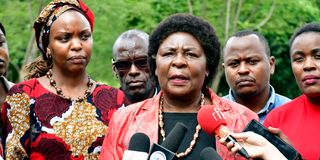
The Technical Working Group on Gender-Based Violence, Including Femicide chairperson, Dr Nancy Baraza (centre), briefs the media after the conclusion of a public participation session at Moi Girls Secondary School on May 28, 2025.

What you need to know:
- Kenya’s GBV working group uncovered femicide, child abuse, and systemic failures, offering actionable solutions for nationwide implementation.
- The Baraza-led taskforce will deliver comprehensive findings to President Ruto, aiming to curb femicide and strengthen survivor protections.
The Technical Working Group on Gender-Based Violence (GBV) is finalising its report, months after nationwide consultations, and will soon present it to President William Ruto.
The committee’s chairperson, former Deputy Chief Justice Nancy Baraza, said the report was in its final stage before being handed over to the President.
“This has been a major challenge for our country, which is why the President formed the working group. We worked tirelessly to ensure the report is ready, and it will soon reach the President,” she said.


Formed earlier this year, the working group was tasked with mapping GBV hotspots, identifying causes, and recommending solutions to curb femicide and other forms of GBV. It held public forums across the counties, engaging survivors, community leaders, and law enforcement. Its mandate included proposing legislative amendments to strengthen laws, close legal loopholes, and improve enforcement against GBV, including femicide.
Dr Baraza said the group’s primary focus was femicide, but members uncovered other disturbing forms of violence. “We found widespread defilement, sodomy, and incest, mostly involving children. These serious issues require urgent action,” she said.
She added that only the President could make the report’s recommendations public, but assured Kenyans they were actionable and aimed at tackling the problem. GBV, including femicide, has become a growing crisis in Kenya. Last year, activists and members of the public protested against the killing of women in separate incidents.
In response to mounting pressure, Dr Ruto appointed the group, comprising notable figures, to recommend measures to end GBV and femicide. In a Gazette notice, the President cited gaps in prevention, response, investigations, prosecution, data management, and survivor support systems in GBV and femicide. He noted that such violations threaten national security and undermine the country’s social fabric.
Dr Baraza expressed optimism that implementation would begin once the President received the report. “The President is determined to act on this. We have a big problem on our hands, and this report offers a way forward,” she said.
The completion of the report offers hope for tackling GBV across both rural and urban areas.


