When your boss says 'leave your baby behind or leave your job'
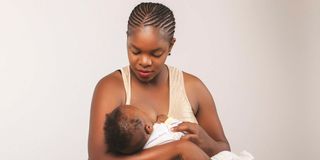
A breastfeeding mother. The Constitution and the Employment Act provide strong protections for women in employment around maternity and caregiving.

What you need to know:
- Linet Nanjala was dismissed for requesting baby travel support.
- Vivian advises legal action for discrimination, explaining her rights.
Dear Vivian,
I recently returned to work from maternity leave and just two weeks in, I was assigned a work trip out of town for two nights. I explained to my supervisor that I was still breastfeeding and asked to have arrangements made so I could travel with my baby and nanny. When I insisted, I was summarily dismissed for insubordination. What should I do?
Linet Nanjala,
Karen
Dear Linet,
Your experience is sadly not unique, and it highlights some of the real challenges many women face when returning to work after childbirth. It also raises serious legal and ethical questions around the treatment of breastfeeding mothers at the workplace.
The Constitution and the Employment Act provide strong protections for women in employment, particularly around maternity and caregiving responsibilities. When you returned to work from maternity leave, you were not only exercising your right to earn a living, but also navigating a sensitive period where your physical and emotional health and that of your newborn still required special consideration. Breastfeeding is not simply a personal choice; it is part of reproductive and maternal health. Employers are expected to accommodate such realities.
The law guarantees the right to fair labour practices and expressly prohibits discrimination on the basis of sex or pregnancy. This means that decisions made by employers that disregard the specific needs of women, especially during or after maternity, may amount to indirect discrimination. In your case, the refusal to accommodate your request not to travel, or at the least to facilitate the necessary support for your child and caregiver, could be interpreted as a form of workplace discrimination.
The Employment Act, which governs employer-employee relationships in Kenya, requires that all employees be treated with dignity and respect. It obliges employers to promote gender equality and eliminate workplace discrimination. While the law does not explicitly require employers to cover costs for caregivers of children during work travel, it does place a duty on them to reasonably accommodate employees, particularly where health, family responsibilities, or gender come into play. Dismissing your request without consideration, and ultimately firing you for insubordination, points to a lack of procedural fairness and sensitivity to your legitimate concerns.
Kenyan courts have weighed in on similar issues. In one notable case involving a teacher who was breastfeeding and not given appropriate accommodations at work, the Court emphasised that employers must create a supportive environment for nursing mothers, which may include adjusting workloads or providing flexibility around assignments. The judgment underscored that maternity protection does not end once maternity leave is over; it extends to how returning mothers are treated and supported at the workplace.
Moreover, in cases of dismissal, it must be substantively and procedurally fair. This includes giving the employee a chance to explain their situation, exploring reasonable alternatives, and ensuring the decision is not tainted by bias or disregard for the employee's circumstances. You have legal options. You can file a complaint at the Employment and Labour Relations Court for unfair and discriminatory dismissal. You may also consider approaching the National Gender and Equality Commission, which is mandated to investigate cases of gender-based discrimination at the workplace.
Vivian
The writer is an advocate of the High Court of Kenya and award-winning civil society lawyer ([email protected]).


