Hope beyond bars: Visitors bring joy to forgotten women at Kapenguria Prison
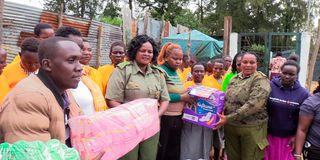
Charity organisations hand in donations to officers at Kapenguria Women's Prison on May 14, 2025.

What you need to know:
- Women inmates in Kapenguria receive rare emotional support, donations, and community engagement from visitors.
- Despite abandonment by families, they found joy through visits, skills training, and donated supplies.
Many prisoners suffer depression, stress, trauma, untold loneliness and feelings of abandonment and dejection when friends and family stay away from them.
Detained far from home, they receive few or no visitors. Spouses, who initially visit, eventually get disillusioned and give up, moving on with their lives. Some start new families. Consequently, many inmates lose contact with loved ones.
However, on Wednesday, this was not the case for those at Kapenguria Women’s Prison in West Pokot County. They felt cared for by friends and well-wishers. It was a happy moment when charities, well-wishers and journalists visited the correctional facility. Inmates got a rare chance to freely interact with guests and receive goodies.


The usually tense and quiet facility was brought to life by loud music, dance and feasting. The women prisoners showcased their dancing styles and untapped talent. “We are delighted to have people who care for us. We now have hope. Many of us stay for long without being visited,” Pamela Lorema, a convict, said.
She was grateful, saying they are optimistic that the prison is rehabilitating offenders positively and making them better people who should be reaccepted into society. Pamela said they have spiritual nourishment from God. “We pray from Monday to Monday. We are neater than even when we were outside.”
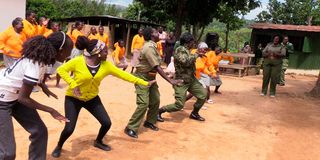
Inmates dance with well-wishers and prison warders at Kapenguria Women's Prison on May 14, 2025.
Dorcas Atieno, another inmate, said donations from well-wishers is a great move aimed at making them receptive to correction and motivating them to be better at whatever they learn. “We are happy the prison opens gates for visitors to give us aid and moral support,” she said.
Samuel Barasa, the chief executive officer for the Kapenguria Charity Network, said there is hope for convicts outside the prison and society is ready to welcome them back. “We want them to become role models after finishing their sentences.”
He added that the inmates have gained critical skills that would help them earn a living once they are released.
Ashiono Wendo, the director of Elite Events and Kapenguria Films, said many prisoners acquire skills that can propel them to greater heights after completing their jail terms. “Many ex-convicts have been making good furniture for the State House. Everyone makes mistakes and even those here might be clean.”
For her part, Pascalia Kagwara, the National Drought Management Authority Coordinator in West Pokot County, said many people believe that those in jail stay in worse conditions. “We are surprised to see their faces charming and clean.”
Pascalia said many imprisoned women are forgotten but need help. “They are segregated. Only male prisoners are visited.”
Andrew Wachelon, the director for Dreams Alive Africa, pointed out that many prisoners have a child or children outside of prison and have great social and emotional need for regular contact with their family. “Everyone is cunning and those of us who are outside prison are no better than prisoners.”
He said many prisoners have talents and creativity that help them reintegrate with their communities.
According to Stephanie Kidula from the Jitokeze organisation, many ex-prisoners are change makers in their communities. “One woman who had been imprisoned for cutting girls is now saved, sensitising residents against the vice in Lomut after she finished her jail term.”
She added that little attention has been given to women in prison and their special needs mainly because they are a minority.
Ruth Chepkwech, a team leader for the Mob Entertainment Crew, encouraged them to utilise the skills gained from the institution as a means of income generation and avoid falling back to crimes. “I thought those of us who are outside know new dancing styles, but we are surprised that many here dance better than us. We shall welcome you to the community.”
For Nancy Chepkonga, an officer in charge of the prison, 22 convicts and children take part in kitchen gardening, sewing and saloon. She noted that they have equipped the women with tools and strategies to improve their wellbeing and rediscover a sense of purpose to avert stress and trauma. Prisoners, especially women and young girls, are vulnerable and require special support, she said.
Nancy added that a number of prisoners have been transferred from distant facilities, implying that many of them will not be visited by their friends and families because of long distance, the stigma due to the gravity of the offences committed, or because they have never had the opportunity to tell their relatives where they are.
“Many of these women are hit with bouts of loneliness, sadness and depression brought about by the fact that they have not had any contact with their family, children, and loved ones. The few who have visitors are not frequently visited because of long distances.”
The items donated were reusable sanitary towels, soap, clothes, and food, among other personal effects.


