How inheritance disputes are forcing Uasin Gishu's elderly widows into endless court battles
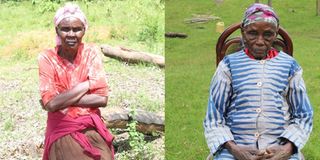
Sarah Samoei (left) and Salina Chelimo Kwambai at their homes.

What you need to know:
- Elderly widows in Uasin Gishu are spending their final years battling against children and in-laws over inherited property.
- Decade-long succession disputes are exposing widows to emotional suffering, financial strain and endless courtroom delays in Kenya.
At 82, Salina Chelimo Kwambai should be resting quietly in her home in Tendwo, Ainabkoi, watching her grandchildren grow. Instead, her days are consumed by the cold reality of moving from court to court in succession disputes involving her own children.
For more than a decade, she has been locked in a bitter courtroom battle—not against strangers, but against her own flesh and blood.

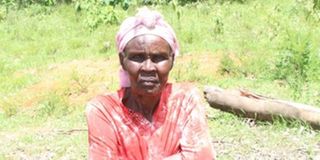
Salina Chelimo Kwambai, 82, at her home in Tendwo, Ainabkoi, Uasin Gishu, on May 5,2026. She is has been crying for justice for more than 10 years as she moves from court to court in succession disputes with her sons.


Salina is not alone. Across Uasin Gishu, a quiet but devastating crisis is unfolding. Elderly widows, already struggling with the grief of losing their husbands, are being thrust into protracted property battles. The people who should be protecting them—their children and in-laws—are dragging them through the corridors of justice, often disregarding written wills and the clear provisions of the 2010 Constitution.
For Salina, the trouble began 15 years ago when her husband died, leaving behind 44 acres of land. Seeking fairness, Salina decided to distribute the land equally among her children. However, her eldest son, Julius Kwambai, vehemently objected to his sisters receiving equal shares. He argues that under Keiyo customary law, married daughters are not recognised as equal heirs.
But Salina’s daughter, Eunice Kwambai, refuses to allow tradition to be used as a weapon of dispossession. Relying on the Constitution, which guarantees gender equality in property inheritance, Eunice has taken up the matter in court.
“As daughters of the late Francis Kwambai, we want the law on succession and inheritance to be followed without discrimination,” Eunice insists in her court affidavit. “Our brothers should not use their masculinity to deny us what is rightfully ours.”
The family’s internal conflict has paralysed the legal process since 2013. Attempts by the court to resolve the matter through the Alternative Justice System collapsed amid mistrust. Eunice alleges that local elders pushing for mediation are secretly acting as proxies for land buyers seeking to exploit the family’s division. Meanwhile, Julius accuses Eunice of manipulating their elderly mother in pursuit of a “lion’s share” of the estate.
“My health is deteriorating because of my advanced age,” Salina pleads, her voice weighed down by the fatigue of a 13-year court battle. “The court should help me settle this matter as soon as possible to ensure I leave behind a peaceful family after distributing this land as my late husband desired.”
The hearing of the case is set to continue in July after it was adjourned on June 22.
A few miles away in Sosion, Turbo, 74-year-old Sarah Samoei faces a different enemy: her in-laws. Sarah’s husband, Henry Samoei, had bought a 22-acre parcel of land under the Tapsagoi settlement scheme. Despite Sarah holding the title deed and being registered as the sole administrator and next of kin, her brother-in-law, Musa Kosgei, claims the land is ancestral property.
Sarah Samoei, 74, at her home in Sossian village, Turbo. She has had a land dispute with her brothers-in-law since 2012. She claims her husband bought it for her nuclear family.
The dispute has escalated from legal arguments to physical occupation. Kosgei has already constructed a house on the contested land, forcing the widow to seek an eviction order through the courts.
Like Salina, Sarah has been trapped in legal limbo since 2012, her life stalled by endless technical adjournments.
“I only moved to court to evict strangers from my land,” she says, pointing to her legal documents. “I do not understand why it is taking so long when this is my land. I have all the legal documents proving my ownership.”
12-year fight
The tragedy of disinherited widows cuts across economic lines. In the region’s highest-stakes property dispute, 70-year-old Irene Talai has spent the past 12 years fighting her stepchildren over the multibillion-shilling estate of her husband, paramount chief Kibor arap Talai. When he died in 2012 at the age of 95, he left behind an estate valued at Sh3.5 billion—and a family destined for the courts.
Since 2014, Irene and her stepchildren have remained deadlocked. The extended family has rejected the deceased’s will, with Irene and her children claiming it is a forgery. Her stepdaughter, Nancy Talai—a co-administrator of the estate—has hit back, accusing Irene of failing to account for millions of shillings collected in rent from commercial properties since 2012.
Nancy claims the widow is deliberately delaying the distribution of the estate by blocking a private audit. With billions of shillings at stake, the family will return to court on July 23, no closer to peace than they were more than a decade ago.
The common denominator in all these cases is a heartbreaking irony: most of these widows are the legally recognised next of kin and court-appointed administrators. Yet objectors exploit legal loopholes and the Judiciary backlog to file a continuous stream of fresh applications and injunctions.
By keeping the wheels of justice turning through endless delays, challengers appear to be waiting for time to achieve what the law cannot—outlast the frail, elderly women holding the title deeds.
Until the Judiciary finds a way to fast-track succession cases involving the elderly, widows in Uasin Gishu will continue spending their final, fragile years not in comfort, but in the cold and adversarial hallways of the courts.


