International Widows Day: 'We don't need pity, we need justice', widows demand action
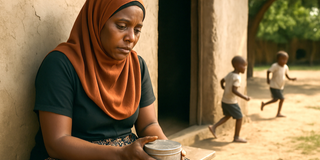
International Widows Day: While the government has established support funds and legal frameworks, widows' rights, customary practices still override constitutional protections, leaving widows vulnerable to discrimination and poverty.

What you need to know:
- When Agnes Njoki's husband died in 1982, she lost her matrimonial home and faced social ostracism—a story shared by thousands of widows who don't know where to turn for legal help.
- Kenya's over one million widows are now demanding concrete reforms, including a national widows' manual, legal harmonisation between statutory and customary law, and a National Task Force on Widowhood.
When Agnes Njoki's husband died in 1982, she thought her grief was the hardest battle she would face. She was wrong.
Within months, Njoki watched helplessly as her matrimonial home was taken away, leaving her with nothing but eight children to raise and nowhere to turn. Even her friends began treating her with suspicion.
"If any woman saw me standing with her husband on the road, even if it was just to greet him, they would start hurling insults at me because they thought I had other motives," recalls Njoki, who was then chairperson of the Kamahuha Widows Group.

Stripped of her property and forced to lease land just to farm and survive, Njoki's story echoes that of thousands of Kenyan widows who find themselves in legal limbo after losing their husbands. Many, like her, simply don't know where to start or whom to turn to for help with succession proceedings.
As the world marks International Widows Day today under the theme "Rights, dignity and justice", a growing chorus of Kenyan widows is demanding concrete action to bridge the information gap that leaves them vulnerable to exploitation and destitution.
Through the Come Together Widows and Orphans Organisations (CTWOO), widows are pushing for sweeping reforms that could transform their lived reality. Their demands are both practical and profound: the development of a nationally accepted widows' manual to guide programming, legislation, and service delivery.
They're also calling for legal amendments to harmonise statutory and customary law, ensuring that traditional practices don't override constitutional guarantees and human rights principles. Additionally, they want the establishment of a National Task Force on Widowhood to explore all challenges faced by widows and develop comprehensive solutions.
"Widows are still being evicted, cleansed, remarried against their will, or silenced," explains Dianah Kamande, founder and executive director of CTWOO. "That is why we are calling for legal amendments that harmonise statutory law with customary law, ensuring every widow, regardless of where she lives or how she was married, is protected under the law."
Despite existing legal protections, she says widows continue to suffer under the weight of customary practices that often contradict the Constitution.
Legal complexity
Recognising the urgent need for accessible information, CTWOO developed a Widows Resource Guide in 2024, working alongside like-minded organisations. The guide serves as a crucial tool, providing widows with simplified legal information, step-by-step guides on inheritance processes, contacts for legal aid, government support programs, and psychosocial services.
"I urge our nation to see widows not as victims but as survivors who deserve protection and support," Dianah emphasises. "We call on the government to prioritise widow-related legal reforms, on communities to reject stigma, and on the media to amplify widow voices. Widows do not need pity. They need justice."
The numbers paint a stark picture. According to the Kenya National Bureau of Statistics 2019 Census, Kenya has over one million widows. Globally, there are an estimated 258 million widows, with nearly one in ten living in extreme poverty. In Africa, one in ten women above the age of 14 is widowed, according to a 2018 World Bank report.
Speaking at a consultative forum on the protection of widowed persons' rights held in Nairobi last month, Hannah Cheptumo, Cabinet Secretary for Gender, Culture, the Arts, and Heritage, acknowledged the compounding challenges that prevent widows from fully enjoying their human rights.
The CS singled out disinheritance and loss of property as key factors accounting for high poverty levels among widowed persons.
"Many widowed persons are forced to strategise life after the loss of their loved ones," she said. "Harmful practices and stigmatisation, which include widow cleansing and widow inheritance, have greatly contributed to increased levels of human rights violations and sexual abuse."
The CS added that the issue of stigmatisation, where widows are ostracised and considered bad omens within society, adds to the burden of psychological and emotional distress in their lives. She noted that widows also suffer from socio-economic marginalisation, limiting them from experiencing their full potential in life.
Existing frameworks
She said the government has put in place legal frameworks and programs to alleviate these issues, listing the Constitution of Kenya 2010, which recognises equality and non-discrimination as national values, the Matrimonial Property Act that shields widowed persons from disinheritance, and the Succession Act, which regulates how a deceased person's property is distributed among heirs.
The CS also referred to the National Policy on Gender and Development, which provides policy direction and demonstrates government commitment to addressing gender inequalities, including those faced by widowed persons.
"The government has established various initiatives to alleviate the situation of widows in our country," she added. "We have enhanced access to finances through the affirmative action fund, where widows can access affordable loans. We have the Women Enterprise Fund, which has a special facility for widows, the Thamini Fund, the Uwezo Fund, and the newly launched Hustler Fund."
Global problem
Yet challenges persist both locally and globally. Widows face discrimination, harmful practices, disinheritance, and loss of income, status, and basic needs. This creates a vicious cycle of poverty for widows and their children. Despite being highly marginalised, they are often overlooked in aid and development programmes.
According to the World Bank's report "Women, business and the law 2023", 76 of 190 countries studied restrict women's property rights. Currently, 43 economies do not grant equal inheritance rights to male and female surviving spouses. In many countries, the UN notes, being a widow can mean significant financial insecurity.
Rural widows are particularly disadvantaged by patriarchy, harmful cultural practices, and poverty.


