Rising defilement and sodomy cases in Vihiga County spark alarm as grandfathers blamed
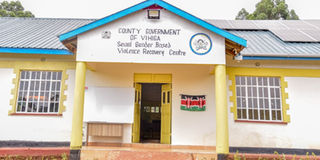
Sexual and Gender-Based Violence Recovery Centre at Wodanga in Sabatia, Vihiga County. The centre is the second in the Lake Region Economic Bloc counties after Kisumu.

What you need to know:
- Authorities are raising concern over increasing child sexual abuse cases involving relatives, particularly grandfathers, in Vihiga.
- Defilement and sodomy cases continue rising as activists call for stronger protection and justice measures.
In February, Abel* from Sabatia in Vihiga County was allegedly sodomised by his grandfather, in whose care he had been left. Despite the six-year-old's pleas, the abuse continued, leaving him severely traumatised.
The grandfather was later arrested and charged in court, while Abel was taken to a safe house, where he has remained ever since. Abel's ordeal is not an isolated case. A disturbing trend is emerging in the county, with grandfathers increasingly being identified as perpetrators of sexual violence against minors.
According to police and county government records, about 40 per cent of defilement and sodomy cases in Vihiga involve grandfathers as suspects. Until recently, such crimes were largely associated with younger men. Besides defilement, cases of sodomy and incest are also prevalent.


Arthur Lisimba, the County Director of Gender, says there has been a noticeable rise in cases involving grandfathers committing sexual offences against children. “We are increasingly seeing grandfathers among defilement and sodomy suspects. Other perpetrators in many sexual violence cases include siblings and other family members,” he says.
Mr Lisimba identifies Luanda as the most affected sub-county, recording the highest number of cases. He also lists Vihiga, Hamisi and Emuhaya sub-counties as other major hotspots. “Defilement and sodomy are the most prevalent sexual violence offences, while rape ranks a distant third,” he says.
He adds that many cases go unreported and blames some community elders for encouraging out-of-court settlements.
Luanda Sub-County Police Commander Richard Siele acknowledges that the area is grappling with high levels of sexual and gender-based violence (SGBV). However, he partly attributes cases involving grandfathers to cultural practices.
“I believe culture contributes to this problem. In some cases of separation or divorce, children remain with their father’s family. The father may then leave them in the care of grandparents while he goes to work. Some grandfathers take advantage of this arrangement and abuse the children,” he says.
Mr Siele adds that increased reporting through Nyumba Kumi and community policing initiatives has helped authorities uncover more cases. Between January and May this year, Luanda alone recorded about 30 cases reported across its five police stations and six police posts.
SGBV remains a major public health and human rights concern in Vihiga. Data shows sexual violence prevalence of 11.9 per cent. Cases of defilement, rape and intimate partner violence have continued to rise.
Exploitation
Perpetrators often exploit the economic vulnerabilities of victims and their families. Many cases are resolved informally because families fear the consequences of prosecuting relatives or breadwinners. Authorities also attribute the increase in defilement and incest cases to the widespread consumption of illicit and unregulated alcohol.
Informal community dispute-resolution mechanisms, commonly referred to as kangaroo courts, have also been blamed for undermining justice. Such arrangements often silence victims, shield perpetrators from accountability, and prevent access to formal legal processes.
Gender rights activists further point to economic dependence as a major challenge. Families that rely financially on abusers may choose to conceal crimes rather than report them.
To address the growing crisis, both county and national governments, alongside civil society organisations, have intensified prevention and protection efforts. In 2024, Vihiga County launched its Anti-GBV Policy to strengthen the legal framework for prosecuting offenders and ensuring justice for survivors.
The policy aims to improve prevention measures, strengthen survivor support services and promote a coordinated multi-sectoral response to gender-based violence. It also prioritises trauma-informed care, including medical treatment, counselling and legal assistance to help survivors recover and reintegrate into society.
Vihiga is also home to an SGBV Recovery Centre established in partnership with the National Government Affirmative Action Fund. The facility provides safe accommodation, forensic services, counselling and other forms of support for survivors of violence. The shelter can accommodate up to 50 survivors and currently houses 18.
Human rights defender Beatrice Otuma says the situation remains deeply concerning, particularly because many cases involve children. “I do not know what is happening, but the number of sexual violence cases is alarming. Between January and May this year, I handled 13 cases. Last year, I handled 28. Three of the girls who were defiled became pregnant,” she says.
She regrets that although many cases are reported, only a small number proceed to court because of challenges in gathering sufficient evidence. As authorities strengthen legal and support systems, campaigners say greater community vigilance, accountability and protection of children will be essential in tackling the growing crisis.
*Name changed to protect identity of the minor.


