Siaya sets precedent with first Widows’ Protection Bill
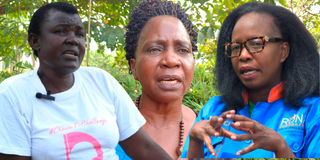
From left: Widows’ rights champions Mary Kere, Scholastica Masidis Madowo and Roseline Orwa. Their persistence over 15 years has shaped the landmark Siaya County Widows Protection Bill, the first in Kenya to safeguard widows’ dignity, livelihoods, and representation.

What you need to know:
- Widows in Siaya, led by Roseline Orwa and six others, spent 15 years pushing leaders to recognise the injustices they face.
- Their persistence led Governor James Orengo to revive a stalled process, resulting in the Siaya County Widows Protection Bill—the first of its kind in Kenya.
Siaya County welcomes you with a rhythm of life shaped by water and land. In the early mornings, the beaches stir with activity as fishing boats glide back to shore laden with tilapia. Soon after, markets brim with the day’s catch alongside vegetables from the small farms scattered across the fertile countryside.
But behind this rhythm, widows are suffering in unimaginable ways. They have endured indignities for decades; humiliation, dispossession, and harmful traditional practices that strip them of dignity and livelihood. For too long, they bore the pain in silence. But silence was no longer an option.
Fifteen years ago, widows in the county began to organise themselves. They spoke wherever they could; at churches, funerals, markets, and public gatherings, seizing every chance to make leaders listen.


By 2015, one widow, Roseline Orwa, decided that advocacy alone was not enough; something tangible had to be done. She began visiting then Governor Cornel Rasanga, who was in office from 2013 to 2022, pressing him to address the systemic injustices against widows.
Her persistence bore fruit in 2017 when the governor directed the creation of a technical committee. For the first time, widows felt that their suffering might be formally recognised. But when Governor Cornel left office, the momentum died, and the group collapsed before it could achieve change.
When James Orengo campaigned for the governorship, Roseline and a delegation of widows made their support conditional.
“Stand with us, and we will stand with you,” they told him.
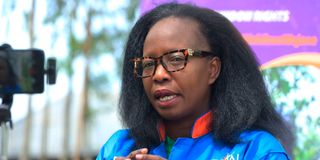
Roseline Orwa during an interview in Siaya County in 2023. She led a 15-year fight for dignity and justice, now celebrates the Siaya County Widows Protection Bill—the first of its kind in Kenya.
He pledged to complete the journey Rasanga had left unfinished. And when he took office, Roseline did not let him forget. She mobilised six other widows, including South East Alego Member of County Assembly (MCA) Scholastica Masidis Madowo, and together they knocked on his door repeatedly, sometimes even at his home, retelling their painful stories until he was moved to act.
This persistence worked. Orengo revived the technical committee, and from it came a historic document: the Siaya County Widows Protection Bill (2025) - the first of its kind in Kenya. It has already undergone public participation through the Siaya County Assembly Committee on Gender. For Roseline, this bill is more than legislation; it is liberation.
“How do we deal with harmful widowhood practices?” she asks.
“They are no different from female genital mutilation (FGM). They are both rooted in traditions. The only difference is you can photograph FGM scars, but widow abuse is invisible. Our only tool was our stories. And for stories to be believed, we had to tell them for years, again and again, to the same people, to different people. I carried this bill for almost 15 years, bearing the scars of shame as I repeated my pain. Vulnerability became my weapon.”
Her fight was not only with structures of power, but also with scepticism.
“We went before committees countless times. In a single year, we could appear five or six times, always repeating the same experiences. The leaders lived among us, they saw widows dispossessed, they saw viral stories of women attacked online and offline, yet they still asked the same questions, as though they could not connect the suffering to the need for law,” she says.
But Roseline insists their victory had another crucial pillar: Mama Betty Orengo, as she calls her, the governor’s wife.
“She became our silent ally. She listened to our stories, and when we left, she would remind the governor, ‘Don’t forget the widows.’” she says.
“She encouraged us when we were weary, calling and urging us not to give up. Her power, both as a human rights defender and as the governor’s partner, was key in keeping our struggle alive.”
Roseline draws a sharp contrast between the Siaya bill and existing international frameworks.
“The UN Widows’ Resolution is a paper signed in New York. The Maputo Protocol promised rights for African women, but tell me, have you ever seen a Kenyan judge cite it in court? I haven’t.” she asserts.
“Laws that live only on paper don’t change lives. The Siaya bill is different. It lives in the village. It gives widows seats at decision-making tables. It allows them to represent themselves, not through others. It restores their dignity.”
She pauses, then adds firmly: “This is not just a law for books. It is a law that breathes, walks in markets, and protects women in the places where life happens. That is what makes Siaya different.”
Scholastica, the South East Alego MCA
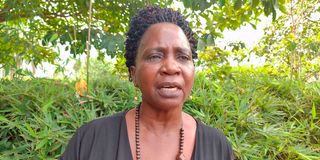
Scholastica Masidis Madowo during an interview with Nation.Africa in 2023. The South East Alego MCA is one of seven widows who championed the Siaya County Widows Protection Bill.
In a 2023 interview, Scholastica, the South East Alego MCA vowed to lobby for the passage of bills defending the rights of widows.
“Widows in our community are still seen as a nobody,” she said then.
“When women are married here, they are viewed as outsiders and the husband is her protector. Once that man is no longer there, then you are open to all manner of abuses.”
She highlighted the importance of safeguarding the rights of widows.
“We trap our communities in a cycle of poverty when we dispossess the widows of their land where they are supposed to till and use the harvest to feed their children or sell the surplus to send them to school,” she noted.
Mary Kere
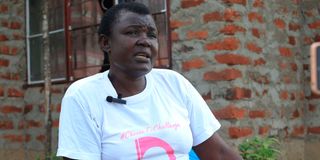
Mary Auma Kere during an interview at her home in Rarieda in 2023. She says the Siaya County Widows Protection Bill must not only be passed but also fully implemented to change lives.
Mary Kere, another widow and an active voice in the movement, recalls the frustration of repeatedly telling their stories.
“We have told the stories of widows and retold them until we felt fatigued and were almost giving up, but somehow God made things happen,” she says with hope.
Encouragingly, she says MCAs have promised to pass the bill.
The proposed law provides for Siaya County’s Widows’ Welfare Fund, designed to help widows with disabilities acquire assistive devices and services, access technical and vocational skills, and support sensitisation on their rights.
It also envisions ward-level widows’ welfare committees made up of widow representatives, county officials, local administrators, faith-based groups, civil society, youth, and persons with disabilities. It is tasked with collecting data on widows, reporting violations, and implementing policies to protect them.
“We don’t want it to be passed and be kept but passed and implemented. That is the only way it will make the difference that we need,” Mary emphasises.


