The homeless high school dropout who exposed Jack Daniel’s history and became a billionaire
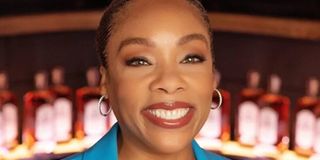
Fawn Weaver, the founder of Uncle Nearest.

What you need to know:
- Fawn Weaver, once a homeless teen, built the billion-dollar Uncle Nearest whiskey empire after discovering Nathan "Nearest" Green was the forgotten black master distiller who taught Jack Daniel his craft.
- After reading about this hidden history, she launched Uncle Nearest Premium Whiskey in 2017, transforming it into the world's most awarded American whiskey for five consecutive years.
While having breakfast with her husband Keith at the Grand Hyatt's club lounge in Singapore on June 2016, Fawn Weaver was enthused by New York Times international edition'scompelling article about Jack Daniel’s distillery. The intrinsically researched piece articulately debunked the prolonged belief that a white Lynchburg Tennessee entrepreneur named Dan Call had educated Jack on whiskey distillery.
The article contrastingly profiled how in 1856, an enormously skilled enslaved black master blender named Nathan 'Nearest' Green, meticulously distilled whiskey through charcoal made from filter maple trees. The West African distillation aptitude of enslaved blacks organically eliminated impurities prior to the whiskey being loaded into wooden barrels to absorb the texture and taste of timber.
At the behest of Nearest, Jack Daniel’s Tennessee Whiskey would levitate to a $22 billion company and become an advent of America's most illustrious Mount Rushmore brands. Unfortunately, the pivotal role of its black inventor, Nearest, would woefully be shredded into secrecy and oblivion for over 160 years. Fawn was gripped by an epiphany to establish a whiskey brand in honour and respect of Nearest.


House rules
Fawn's father was Frank Wilson, a legendary songwriter and music producer of Motown Records who worked with iconic figures in the music industry, including Stevie Wonder, The Temptations and The Jackson Five. He eventually absconded his occupation and moved from Detroit, Michigan, to Los Angeles, California, and founded a church ministry. In 1992, at the age of 15, Fawn's parents accorded her an ultimatum to conform to their house rules or relocate.
Fawn left home at 15, dropped out of high school at Grade 11, and found refuge in the destitution of dilapidated homeless shelters in Jordan Downs, one of the housing projects in Watts. The last shelter she occupied at 18, was Covenant House which assisted occupants locate employment at BB King’s Blues Club. As her confidence expanded, she earned a job as a club hostess at Camacho’s Cantina restaurant and started saving her earnings.
Due to her genteel professionalism and refined versatility, clients preferred dealing with her directly, thus at 19, Fawn used her savings to inaugurate her PR Company called Few Entertainment. Within a month she was aggravated by depression, which compounded the distress of her faltering business and she unsuccessfully attempted suicide twice.
She started a self-reconstruction procedure to renovate the very fabric of her conscience by avoiding TV while she read over 60 books in six months, and wrote two bestselling relationship books. At 25, she was contacted by celebrity chef Gerry Garvin to help him open a new restaurant.
Gerry subsequently offered Fawn a minor stake in the business and as a shareholder she transformed G Garvin’s Restaurant into the most famous eatery in Los Angeles. Fawn was on the ascendancy when she discovered Nearest’s story.
Her captivating book, Love & Whiskey, is a culmination of scrutinising countless census records, evaluating non-population schedules, competitively studying slave artefacts and the entire Nearest family tree, heritage, lineage and its rich legacy of excellence. Fawn's stellar archival research led her to Lynchburg Tennessee, on her 40th birthday, where she spoke to genealogists and met Nearest’s and Jack’s descendants.
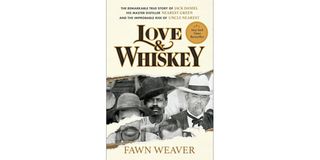
The cover of Fawn Weaver's memoir, Love & Whiskey.
Intellectual property law is a part of what propelled the wealthiest white American families to advance and secure their fortunes over generations, and it was the lack of those rights for enslaved black people that ensured black families wouldn't compete.
In December 1856, during Nearest's invention, he couldn't trademark a brand name, own a product, possess any type of patent or sell his whiskey due to the institution of slavery. Black people's mass exclusion from the right to own one's ideas consequentially reverberated through centuries.
The only person who could acquisition all those benefits was his employer Jack Daniel. Jack was a distiller because he owned a distillery, not because he made the whiskey it produced. Fawn commenced a mission to reclaim the unsung legacy of Nearest by creating a whisky brand in his name. She bought all URLs and trademarks related to Nearest through the US Patent and Trademark Office.
Whiskey distillery involved chemistry, altitude, temperature, humidity and time. Lynchburg had the perfect climate, timber, filtered iron and minerals for distillation. Fawn placed an earnest deposit and purchased the Dan Call piece of land where Nearest distilled his first whiskey.
She successively established an expansive 423-acre distillery, becoming the largest black landowner in Lynchburg. In December 2016, Fawn raised the $3 million minimum required to elevate and market her brand and secured her first six investors without selling equity in her firm. She feverishly worked day and night sourcing the product, bottling it, convincing distributors, and handling logistics of her upstart independent company.
Bar owners
The first bottle of sugar and carb-free Uncle Nearest 1856 Premium Whiskey was launched on July 19, 2017. Fawn anchored a multi-million-dollar marketing campaign in Portland Oregon and Nashville Tennessee, with a plethora of mixologists, bartenders, bar owners, store entrepreneurs, and restaurant operators.
In 2020, Uncle Nearest became the fastest growing black-owned spirit brand in history and in 2023, it became the world’s most awarded bourbon and American whiskey for the fifth consecutive year. Its Call factory had 250,000 visitors in 2023, ranking as the seventh most toured distillery in the world.
It became the most successful black-owned distillery globally and in 2024, it was valued at $1.5 billion. Its unprecedented meteoric rise led Fawn to launch a higher learning scholarship trust for all Nearest Green descendants. Nearest’s legacy was cemented and encrusted with the lasting recognition it deserved, to preserve its credence for posterity and prolong its enduring longevity.
The writer is a novelist, Big Brother Africa 2 Kenyan representative and founder of Jeff's Fitness Centre (@jeffbigbrother).