The next 30 years start now: Nairobi summit charts bold path to universal women's rights
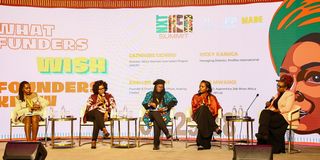
Panelists at the NXT HER Summit held at Movenpick Hotel, Nairobi, on August 22, 2025. The summit's theme, "Breaking barriers – 30 years on," commemorated three decades since the landmark Beijing Declaration and Platform for Action of 1995.

What you need to know:
- Global women's rights champions and HeForShe allies gathered in Nairobi, last week, for the NXTHer Summit organised by Nation Media Foundation.
- The two-day summit revealed mixed progress across 12 critical areas of gender equality, with advocates warning that donor funding cuts, political backlash, and rising anti-feminist movements have slowed or reversed many gains.
In the hushed atmosphere of a Nairobi plenary hall, an uncomfortable reckoning was taking place. Women from across the globe—champions of their fellow women and girls, joined by HeForShe men—had converged for the NXTHer Summit organised by Nation Media Foundation in partnership with FP2030 under the theme 'Breaking Barriers 30 Years On'.
Gender equality advocates filled the cold hall: those born before the Beijing Declaration and Platform for Action with its 12 critical areas, and those who witnessed its adoption with dreams of better lives. From keynote speeches to panel discussions, one message was clear: progress has been made since 1995, but challenges—global restructuring of donor funding, political backlash, and rising anti-feminist movements—have slowed or reversed gains in women's and girls' rights
By the summit's close, consensus was firm: all must be done to move from present reality to universal enjoyment of rights by 2055, before another 30 years pass. Where have we come from, and where are we now, as we trace our steps across all 12 critical areas?


Women and poverty
When was the last time you saw women in the rural villages of Mt Kenya, Western, Rift Valley or the Coast turning on taps to fetch piped water in their compounds, or filling kitchen sinks with flowing water? And when did you last stop seeing women with children strapped to their backs, chasing travellers or trekking from Kawangware to Westlands to sell bananas? The numbers tell the story.
In 2015, according to the Kenya National Bureau of Statistics (KNBS), men and women in Kenya experienced almost the same levels of poverty. In rural areas, about four in ten lived below the poverty line, whilst in towns and cities, about three in ten did. By 2019, however, women had slipped further behind. In the countryside, nearly four in every ten women were poor compared to a little over a third of men, and women's poverty was deeper, meaning they had to survive on even less. In urban areas, too, the gap widened: about 24 in every 100 women were poor compared to 23 in every 100 men, with women again experiencing harsher deprivation.
Kenya has made notable strides in easing women's economic burden through constitutional reforms, affirmative action programmes and expanded access to finance. The 2010 Constitution and subsequent laws strengthened women's rights to property and resources, whilst initiatives such as the Women Enterprise Fund, Uwezo Fund and the National Government Affirmative Action Fund have broadened access to credit. Yet despite these gains, women remain disproportionately affected—unequal land ownership, collateral requirements and the heavy burden of unpaid care work continue to undermine progress.
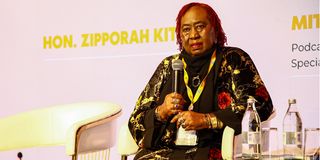
Former Senator and Chair of Maendeleo Ya Wanawake, Zipporah Kittony, speaking at the NXT HER Summit held at Movenpick Hotel, Nairobi, on August 22, 2025.
"There are women in this country who still cannot access clean water. They cannot afford food or educate their children. This cannot continue," said Zipporah Kittony, a trailblazer in Kenya's leadership who chaired Maendeleo ya Wanawake Organisation from 1996 to 2006. Reflecting on her own childhood, she recalled wearing shoes for the first time in Standard Five after sitting the Kenya African Preliminary Examination in the 1960s. It is disheartening, she added, that in post-colonial Kenya, girls are still walking barefoot to school and their mothers still lack the essentials to live a dignified life.
Education and training of women
In 1995, when 189 governments adopted the global blueprint for gender equality, they confronted a deep-rooted problem: girls were being raised to become wives rather than learners. Even when they entered classrooms, education was skewed; it was designed to prepare them for domesticity rather than discovery. Boys were encouraged to pursue subjects such as Physics, Mathematics, and Chemistry, whilst girls were often channelled into Home Science, reinforcing the belief that their rightful place was in the kitchen rather than the laboratory.
The landmark framework raised governments' consciousness of this injustice and urged education systems to become more gender-responsive. Since then, progress has been made, though unevenly.
In Kenya, statistics show that in 2009, 15.6 per cent of men had never attended school, compared with 19.5 per cent of women. By 2019, these figures improved to 15.1 per cent of men and 17.7 per cent of women. Behind these percentages are real children, mostly girls from rural and marginalised communities, denied the right to learn.
Free Primary Education in 2003 and Free Day Secondary Education in 2008 lifted financial burdens from families, allowing more girls to remain in school. Sanitary towel programmes and return-to-school policies for teenage mothers have made classrooms more inclusive.

Prof Maria Nzomo speaking at the NXT HER Summit held at Movenpick Hotel Nairobi on August 21, 2025.
"More girls are now in school than was the case in 1995. Dropout rates have fallen. Young women are beginning to look into science, technology, and mathematics," Prof Maria Nzomo, Executive Director of the Transformative Leadership Centre, said whilst addressing the advocates
"But the reality is that disparities still exist in access to higher-quality education that prepares them for digital economies and job markets. The next task must dismantle stereotypes around what counts as 'valuable work,' make digital literacy universal, and ensure that rural girls, who are often the forgotten minority, enjoy the same quality of education as their peers in more privileged areas."
Women and health
When President Uhuru Kenyatta campaigned for his second term in 2017, many rural women considered him their champion. Anyone who challenged that perception would be quickly dismissed with the retort: Uhuru ni wetu, nani alituletea mpango wa kuzaa bila malipo? (Uhuru is ours, who brought us the free maternity programme?). This landmark policy encouraged hospital deliveries, helping reduce maternal and newborn deaths.
According to the Kenya Demographic and Health Survey (2014), maternal and newborn health indicators improved notably. Maternal mortality fell from 488 to 362 deaths per 100,000 live births within five years, whilst newborn mortality dropped from 31 to 22 per 1,000 live births. This was part of deliberate reforms to improve women's health.
Free maternity services were introduced in 2013, later expanded under Linda Mama through the National Health Insurance Fund. This guaranteed women access to skilled care during pregnancy, childbirth, and postnatal periods, though the programme has been diluted under Universal Health Coverage managed by the Social Health Authority.
FP2030 Executive Director Dr Samukeliso Dube speaking at the NXT HER Summit held on August 22, 2025.
At the summit, Dr Samukeliso Dube, Executive Director of Family Planning 2030, emphasised that access to contraception has been central to women's empowerment in Kenya. "The country's progress is linked to access to contraception, which has led to more than a 10 per cent rise in paid work and a 14 per cent increase in women's control over their wages," she said.
However, she cautioned that gaps in access remain. "There is need for action. And what is that action? It is about infrastructure, education, and all the benefits that come from a well-planned family. That is how we accelerate society," Dr Dube added.
Violence against women
In January and December 2024, thousands of Kenyans, mostly young women and their allies, poured into the streets of Nairobi, Kisumu, Mombasa, Nakuru and other towns to protest the alarming rise in femicide. Waving placards inscribed with "Stop Killing Us" and "End Femicide Now", they demanded an end to gender-based violence (GBV) and greater government accountability. These back-to-back protests, the largest anti-femicide demonstrations in Kenya's history, were triggered by a spate of brutal killings of young women at the hands of intimate partners.
A Presidential Taskforce on Gender-Based Violence including Femicide was established to review existing legal, policy and institutional frameworks. Kenya has adopted progressive laws, including the Sexual Offences Act and Protection against Domestic Violence Act. Yet enforcement remains weak, and new forms of violence emerge.
Speaking during the Emerging Tech, AI & the Future of Work for Women panel discussion, Heinrich Böll Foundation's Programme Manager for Gender Justice, Akinyi Odera, warned that the digital space, once a platform for light-hearted interaction, has become "extremely violent and hostile to women." She noted that technologically facilitated GBV is on the rise, fuelled in part by practices within the tech industry.
"It's crazy how software manufacturers can update your phone and suddenly your location is pinged to the next ten people within a certain radius, without your permission," she said.
Such automated updates, she argued, expose women to danger, forcing them to manually adjust settings they were never alerted about. "They don't warn us about these risks," she added, calling for urgent regulation to protect African users in the digital ecosystem. "It's about time we start questioning, not to hinder progress but to safeguard. If technology is not benefiting the end user on the continent, then companies should find their free labour elsewhere."
Women and armed conflict
In Baringo and West Pokot, women cannot count how many times they have lost food meant to feed their families or been displaced from near hospitals where they accessed maternal health services due to recurring banditry attacks. Yet, how many of them are actually involved in peace processes?
There are no official records of women's inclusion in peace processes in Kenya before 2019. Kenya, as a UN Security Council Resolution 1325 signatory, committed to ensuring women's meaningful participation in peace and security processes.
At the policy level, Sessional Paper No. 5 of 2014 on National Peacebuilding and Conflict Management introduced the 30 per cent gender rule in the composition of County Peace Committees. Yet progress has been mixed. According to the second Kenya National Action Plan (2020–2024), women made up only 29 per cent of the 4,505 committee members in 2019.
Dr Samukeliso Dube stressed that universal access to contraceptives is impossible without peace, urging countries to prioritise stability as a foundation for women's health and wellbeing.
Women and the economy
According to collaborative research by KNBS, United Nations Children's Fund and UN Women, 40.6 per cent of women in Kenya had been economically empowered by 2025 compared to 29.3 per cent in 2020. Whilst this reflects a significant leap in empowerment, the headcount poverty rate does not mirror this progress.

Nation Media Group Managing Director and CEO Geoffrey Odundo when he met with FP2030 team during a courtesy visit to Nation Centre in Nairobi on August 12, 2025.
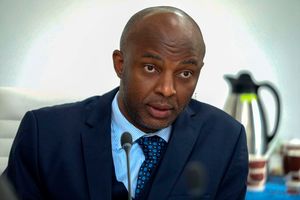
In his keynote address, Group Chief Executive Officer and Managing Director of the Nation Media Group (NMG), Geoffrey Odundo, expressed concern about the slow pace of change, compounded by democratic backsliding and a growing backlash against gender equality. "The reality calls for renewed collaboration, shared responsibility, balanced action and deliberate interventions," he said.
Women in power and decision-making
In 1995, Nyiva Mwendwa was the only woman in President Daniel Moi's Cabinet, serving as Minister for Culture and Social Services. She was appointed that year, just four months before the Beijing Conference. Since then, the number of women in the Cabinet has both risen and fallen, influenced by shifting political dynamics.
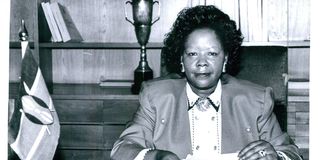
In 1995, Nyiva Mwendwa (pictured) was the only woman in President Daniel Moi’s Cabinet, serving as Minister for Culture and Social Services. She led Kenya's delegation to the Beijing conference four months after her appointment.
For example, under President William Ruto, the number stood at seven, but following the 'handshake' with ODM leader Raila Odinga, one woman in the ICT docket was replaced by a man. The patience for passing the two-thirds gender law has all but run out after years of waiting, with many losing hope of its realisation.
Speaking at the "Intergenerational Fireside Chat – The Movement that Shaped Us" session, Prof Winnie Mitullah, Chairperson of the Institute for Development Studies at the University of Nairobi, reflected: "I remember very passionately as a young person when we would often ask why civil aviation had no women."
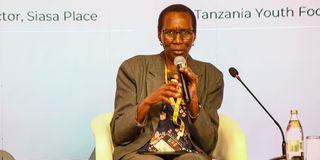
Prof Winnie Mitullah, Research Professor of Development Studies and Unesco Unitwin Chair at the Institute for Development Studies, University of Nairobi, at the NXT HER Summit event on August 22, 2025.
"Today, if you look carefully, they are there. Civil aviation in Kenya made a very deliberate attempt; they opened up space where they would only interview women. This was a unique approach to fill the gap. When you're not balanced and there's a deficit, what do you do? You take affirmative action. We have it in our legal provisions, but what is that provision really doing for us? Namibia has done it. Rwanda has done it. So, what about Kenya?"
Insufficient mechanisms for women's advancement
If you have ever wondered why the National Gender and Equality Commission exists, the answer lies in the Beijing Platform for Action. It is not just a commission; it is a gender-responsive mechanism born of the call to create and strengthen national machineries and governmental bodies to advance gender equality. Yet, gender-responsive budgeting remains a major challenge, both at national and county levels, where allocations for gender equality initiatives are either negligible or non-existent.
For women and girls to universally enjoy their rights within 30 years, these mechanisms must translate into concrete policies, interventions, and measures that directly address existing gaps.
Prof Margaret Kobia, former Cabinet Secretary for Gender, highlighted Kenya's constitutional commitment to gender equality, citing articles such as 27 and 81(b), which outlaw discrimination in political, economic, and social spheres. She acknowledged progress in policy formulation and implementation, saying: "Have we made great strides as far as policy formulation and implementation is concerned? I would say yes."
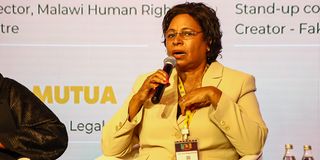
Former Gender CS Prof Margaret Kobia speaks at the summit on August 21, 2025.
Looking back on her early career, she recalled the struggles women endured, such as being denied entitlement to housing simply because their husbands were considered the primary beneficiaries. Policies were eventually crafted to close such gaps. Stressing the importance of women's presence at decision-making tables, she noted: "If you are not there at the table to make decisions regarding how women within the organisation are going to be invited… promotion opportunities will not be there."
Human rights of women
When a woman today goes to court to seek a share of matrimonial property and is awarded 50 per cent on the basis of her contribution of unpaid care work, that is a win. This recognition, provided for under the Matrimonial Property Act, marks an advancement in the human rights of women.
Since 1995, Kenya has progressively strengthened women's rights by aligning its laws and policies with international instruments such as Convention on the Elimination of All Forms of Discrimination against Women and the Maputo Protocol. The landmark 2010 Constitution entrenched equality and non-discrimination under the Bill of Rights, guaranteeing women legal protection and affirmative action measures such as the two-thirds gender rule, though its implementation remains incomplete.
Legislation such as the Sexual Offences Act, the Prohibition of FGM Act, the Protection against Domestic Violence Act, and the Marriage and Matrimonial Property Acts have further expanded women's rights in family, health, and protection from violence.
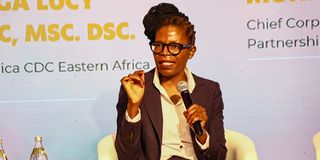
Whilst delivering her speech at the conference, Dr Mazyanga Mazaba, Regional Director for Eastern Africa at the Africa Centres for Disease Control and Prevention (Africa CDC), looked back on the legacy of the Beijing Platform for Action. She recalled how, 30 years ago, it boldly declared that "women's rights are human rights" and affirmed that all women are entitled to them. "That moment gave us a blueprint, a vision, and a mandate that we must carry to fruition," she said.
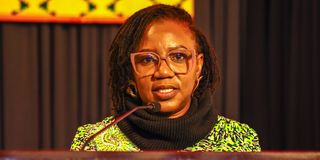
Dr Mazyanga Lucy Liwewe Mazaba, Regional Director of the Eastern Africa Regional Coordinating Centre of the Africa Centres for Disease Control and Prevention, speaking at the NXT HER Summit.
Since then, Africa has made notable progress, she said. "More girls are in school, more women are in parliament and boardrooms, and increasing numbers are building industries, driving scientific innovation, and influencing policy." Yet, she cautioned, "the unfinished business remains."
"African women are still under-represented in the media, underpaid in the labour market, underserved in health care, and under-supported in access to finance and technology, among many other areas," she emphasised.
As the gathering marked three decades since Beijing, Dr Mazaba posed a challenge: "Our question must be, what will the next 30 years look like?"
Women and the media
This critical area aimed to address the stereotyping of women and the persistent inequality in their access to and participation in the media. The goal was also to increase women's opportunities for expression and decision-making in and through the media, as well as to promote balanced and non-stereotyped portrayals of women, including in emerging technologies of communication.

Agnes Kalekye Nguna, the Managing Director and CEO of the Kenya Broadcasting Corporation during a handover media briefing held on May 20, 2024.
A 2022 study by the World Association of Newspapers examined leadership in media across 17 countries in Africa, the Arab region, and Southeast Asia, drawing from 192 media companies. The findings revealed that women held only 10 per cent of top business leadership positions. In Kenya, women accounted for 33 per cent of editorial leadership roles but none in business leadership.
That has since changed with the appointment of Agnes Kalekye Nguna as Managing Director and Chief Executive Officer of the Kenya Broadcasting Corporation
At NMG, CEO Geoffrey noted: "We have trained our journalists in gender-sensitive reporting to ensure stories reflect both men's and women's perspectives and capture the nuances of women's experiences. Since creating a dedicated Gender Desk in 2019, we have published more than 5,000 gender-focused stories in four years."
Women and the environment
Today, a woman in Nyamira whose livelihood depends mainly on tea and banana farming faces the highest risk of starvation due to drought brought about by environmental degradation and pollution. Nyamira is one of 10 counties that the State Department of Gender this year identified as climate change hotspots in its study mapping gender and climate vulnerability in Kenya. The others are Kitui, Meru, Kakamega, Bungoma, Nandi, Kisii, Murang'a, Machakos and Homa Bay.
This focus domain seeks to address gender inequalities in the management of natural resources and in environmental conservation. These inequalities are marked by women's lack of land ownership and their limited participation in conservancy membership and leadership roles, despite their heavy involvement in day-to-day resource use.
A 2018 analysis by the Kenya Land Alliance revealed that less than 2 per cent of title deeds issued between 2013 and 2017 were registered in the names of women. In terms of land area, women received only 1.62 per cent of the total titled land during that period. By 2022, the numbers had improved: KNBS data showed that 13 per cent of women who owned agricultural land and 31 per cent of those who owned non-agricultural land had their names on the title deeds.
The girl-child
In 1995, there were 2,734,091 girls enrolled in primary schools compared to 2,802,305 boys. By the end of 2023, KNBS data showed that 5,029,100 girls and 5,211,900 boys were enrolled. In 2009, school attendance stood at 42.9 per cent for males and 39.3 per cent for females.
One of the key concerns under this priority area was the elimination of discrimination against girls in education, skills development and training. With the return-to-school policy for teenage mothers and the sanitary towels programme aimed at retaining girls in school, the government presents itself as making progress in promoting access to education for girls. However, challenges remain, particularly defilement cases leading to teenage pregnancies, which leave girls with the long-term burden of child care.
The summit's message was clear: the next 30 years cannot pass without decisive action across all 12 critical areas to ensure universal enjoyment of women's rights by 2055.