The widow's rights bill: what it proposes and why it matters
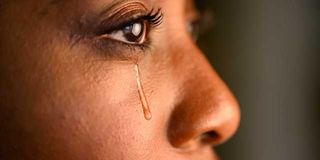
A widow’s silent grief captured in a single tear. A proposed law in Parliament seeks to strengthen legal protections and restore dignity, property rights and social inclusion for widows across Kenya.

What you need to know:
- A proposed law seeks tougher penalties for discrimination and stronger protection for widows’ rights.
- The Bill outlaws harmful practices and safeguards inheritance, custody and economic empowerment for widows.
When Salome Matakwei lost her husband of 18 years in 2008, she was heartbroken. As a housewife and mother of five, her immediate concern was how she would support her young children. Her husband, Wycliffe Matakwei, had served as commander of the Sabaot Land Defence Force, a guerrilla organisation established in 2005 to oppose government evictions and land redistribution in Mount Elgon.
Salome did not anticipate the additional hardships that would follow. She soon found that life for her and her children would be far from easy. Relatives and community members ostracised her, accusing her of complicity in the atrocities committed during the insurgency.


"During the SLDF insurgency, many people lost their lives, and the community linked me to the heinous acts that took place. I knew nothing about those events. I was simply the widow of Matakwei, the leader of the group," she says at her home in Cheptais.
The situation grew so tense that police officers had to provide security at her home until her husband was buried. Despite the hostility, Salome held her ground and resisted efforts to drive her out.
"I resolved that I would not passively accept the discrimination. I did not want to be associated with what happened to the locals, nor could I agree to carry a burden that was not mine."
That experience turned her into a human rights activist. Today, she is among the prominent women's rights defenders in Mt Elgon, advocating for widows and women more broadly.
Her story is far from unique.
Many widows across Kenya face similar challenges, and they may soon have cause for hope. The Widowed Persons Protection Bill, 2026, sponsored by Rarieda MP Otiende Amollo, has been tabled in the National Assembly, where it awaits its first reading.
Among the Bill's key provisions is the protection of widows from harmful practices. It criminalises discriminatory and degrading traditions such as forced widow cleansing, physical assault and sexual abuse. The Bill defines discrimination broadly, to include denial of access to property, inheritance or employment on account of widowhood, as well as exclusion from social, cultural or community activities and unequal treatment in access to services, credit facilities and social protection programmes.
On inheritance, the Bill proposes legal safeguards against disinheritance and seeks to protect widows' rights to inherit and retain matrimonial property, land and investments. To cushion widows and their families against economic hardship, it proposes welfare frameworks and economic empowerment programmes.
Under the proposals, every widow will have the right to remarry, and such remarriage will not extinguish her right to inherit from her deceased spouse. Anyone found guilty of discriminating against a widow will face a fine of Sh1million, one year in prison, or both.
The Bill also proposes amendments to the Law of Succession Act to align succession laws with constitutional principles of equality, dignity and non-discrimination, and calls for structured data collection and the mainstreaming of widowhood issues in national and county planning frameworks.
Should the Bill become law, no person, family, clan or cultural practice will be allowed to deprive a widow of custody of her children unless a competent court determines otherwise in the best interests of the child. A widow will retain ownership, use, control and disposal of property acquired before, during or after marriage, independently of her husband's estate. The government will be required to develop policies to promote and protect widows' rights.
Role of counties
National and county governments will also be required to integrate grief, trauma and mental health services into public health facilities, train healthcare workers to address the specific needs of widows, and establish community-based programmes to prevent mental health challenges arising from bereavement.
The MP says the Bill seeks to establish a comprehensive legal and institutional framework for the protection and advancement of widows' rights. He notes that although the Constitution guarantees equality, dignity, property rights and freedom from discrimination, widows continue to experience systemic violations, often due to customary practices, social pressure and structural inequalities.
"The Bill is intended to bridge the gap between constitutional promise and lived reality, ensuring that widows do not, upon the loss of a husband, suffer further loss of dignity, security, property or equal protection under the law," Otiende says.
Central to the proposals is the establishment of a Widowed Persons Protection Board, which will advise national and county governments on policies and strategies relating to the protection, welfare and empowerment of widows, covering land, inheritance, housing and social protection. The board will also facilitate access to justice and support services, including legal aid, counselling and referrals to government and non-governmental programmes.
Read: ‘My husband was a criminal, I’m not’: Young widows of Mathare on fight against poverty and rejection
"The board will promote awareness and build capacity through public education, information dissemination, training and programmes aimed at eliminating discrimination, stigma and harmful practices, while enhancing the capacity of public officers, community leaders and administrators on laws protecting widows," the Bill states.
Dianah Kamande, founder of Come Together Widows and Orphans, says the Bill addresses a longstanding gap. "It will help tackle discrimination, property disputes, harmful cultural practices and economic exclusion faced by many widows," she says.
The need for such protection is well documented. The Loomba Foundation's World Widows Report identifies Kenya as a country where widows face severe socioeconomic discrimination, estimating that millions of Kenyan women in widowhood experience systematic disinheritance, eviction by in-laws, forced remarriage and harmful traditional practices.
The report further notes that widows are not consistently recognised as a distinct vulnerable group in national statistics, making it difficult to design targeted government interventions.


