Turning the tide: How Kenya's widows are reclaiming their land and other rights
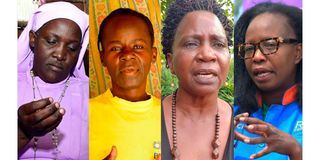
From left: Mildred Atieno Mayeye, Everlyne Atieno Owino, Scholastica Masidis Madowo, and Roseline Orwa.

What you need to know:
- Widows across Kenya are winning legal battles, yet poverty, dispossession and harmful traditions still persist.
- Landmark court decisions and new laws are giving them renewed hope for dignity and inheritance.
Everlyne Atieno Owino was 32 years old when she lost her husband to suicide. In 2011, her husband returned from their matrimonial home in Kakamega County distraught over a bitter family dispute over land.
He earned a living selling magazines and shining shoes in Kisumu City. “He was so frustrated,” Everlyne recalls.
His death left her in a hostile environment. With three children to raise, Everlyne became a stranger in her own matrimonial home. Instead of support, she faced accusations of killing her husband. Worse still, the very land that had driven him to despair was taken away.


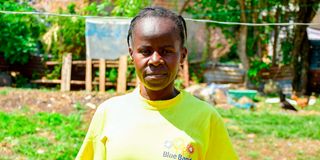
Everlyne Atieno Owino outside her rented house in Nyalenda, Kisumu, during the interview with Nation on June 23, 2026. Her property dispute began after her husband's death in 2011. Alex Odhiambo | Nation Media Group
“Even the land the father-in-law had allocated to him, they took it away and sold it. They even demolished our house,” she says. “My children and I had nowhere to stay or farm. We feared for our lives. We could not go anywhere near the home. That was the land where I used to farm maize for our consumption.”
With no option left, she retreated to Nyalenda in Kisumu County. There, she rented a house and survived by cleaning offices in the lakeside city. For 13 years, she shed painful tears, helpless and displaced, until her sisters urged her to seek legal aid from the Federation of Women Lawyers-Kenya (Fida-Kenya).
In 2024, when she finally walked into Fida-Kenya’s Kisumu office, her tears began to turn into hope.
Today, Everlyne speaks with cautious optimism. “I now have a grant and I’m supposed to appear before the Kakamega Land Control Board. I don’t know what they will tell me or what they expect from me, but now I know I will get the title deed,” she says, her voice filled with hope.
While she puts her progress in a few words, the reality is far more complex. The legal process is long. Yet, the official number of widows across Kenya who have faced dispossession and other violations like hers remains unknown.
The paradox of widowhood
But official data from the Kenya National Bureau of Statistics gives a picture of how widowhood shapes women’s access to assets. Figures from the Kenya Demographic and Health Survey (2022) show that 34.8 per cent of widowed women aged 15-49, do not own a house at all, leaving a significant minority without secure shelter.
Further, 51.4 per cent remain without agricultural land, underscoring how widowhood can close doors to productive resources. Worse still, an overwhelming majority of 88.5 per cent do not own non‑agricultural land, highlighting the limited access widows have to higher‑value assets.
Taken together, the data reveal a paradox: widowhood can sometimes increase women’s chances of holding housing and farmland, but it also exposes deep inequalities. That ownership is partial, precarious, or absent altogether, leaving widows to navigate life without the security of land or a home.
The lengthy succession process
And Everlyne’s case shows just how difficult it can be for widows to gain access to property. Even with determination, the process often requires the intervention of organisations with the power to help, such as Fida‑Kenya. Navigating succession demands knowing where to begin and how to see it through to the end; knowledge that Everlyne did not have, but which other widows can now draw from her experience.
“For women to have access to land, they need the title deed. Without it, they face endless challenges from in-laws,” says Humphrey Otieno, a legal counsel at Fida-Kenya
The process begins with filing a succession case. Widows like Everlyne pay only Sh1,000 for registration and file opening; Fida Kenya covers the rest. They must present the deceased’s death certificate and the title deed, or, if unavailable, request a search at the land registry. A crucial step is obtaining a letter from the area chief listing all beneficiaries, including widows and children.
Humphrey explains, “The court recognises that all children, whether male or female, must be included.”
Once filed, the case moves to court. The choice of court depends on the property’s value: estates worth more than Sh20 million go to the High Court, while smaller ones are handled by magistrates’ courts with varying jurisdictional limits.
Notices are then published in the Kenya Gazette, at a fee of about Sh3,500, inviting objections within 30 days. “The gazettement is to inform the public that the deceased died and that the petitioner has filed a succession case and wants to be appointed as an administrator,” Humphrey says.
If no objections arise, the widow is granted letters of administration. But the real test comes at the confirmation stage. Six months later, the administrator must sit with the family to agree on how the estate will be divided.
Mediation is encouraged, though disputes are common, especially in polygamous households. “If they are able to agree, they will now decide what share the widow is entitled to and agree on what is known as the mode of distribution,” Humphrey explains. “If consensus fails, the court applies the Law of Succession Act to determine distribution.”
Once confirmed, the grant is taken to the land registry for transmission, where new titles are issued after survey and, in agricultural areas, approval from the land control board. For widows who were not formally married, the law still offers protection.
“Whether married or not, she is still entitled to a share of the property,” Humphrey stresses. “Courts recognise cohabitation and, most importantly, the rights of children born in such unions.”
Yet even with a title deed, hostility can persist. Some widows are evicted violently; others face threats that make living on the land impossible. In such cases, Humphrey says, widows are often advised to sell the property and relocate - a path Everlyne herself is considering.
“I cannot stay in that place,” she says. “I’d rather only farm there and go during the day when everyone can see us, but not stay there. I’d rather sell it and settle somewhere else.”
Her voice hardens when she thinks of her children’s future. “I cannot imagine my children living there when I’m gone. They won’t have peace.”
Courts upholding widows’ rights
Since the 2010 Constitution, progress has been significant, Humphrey says. Courts now consistently uphold women’s rights to inherit property, he adds. “No one can argue that a widow is not entitled to inherit the property of her late husband,” Humphrey says. “It is automatic.”
At the organisation’s Kisumu office, which serves 21 counties across Nyanza, Western, and parts of Rift Valley, about 10 women seek help with succession and land matters every week. Humphrey says mediation is always the first step, but when families refuse to cooperate, cases inevitably proceed to court.
He is, however, quick to clarify that while mediation is encouraged, the court process cannot be avoided. “All succession matters must go through the courts. Whether there was mediation or not, you must get the authority of the court,” he explains. “Without it, widows remain vulnerable to dispossession.”
For Everlyne, the journey was long but ultimately hopeful.
Landmark court victories for widows
In 2022, women’s rights groups won a landmark case in Ripples International v Attorney General, challenging provisions of the Law of Succession Act – including Sections 35 and 36 - that stripped widows of inheritance rights upon remarriage and treated them differently from men in intestate succession.
The High Court in Meru agreed, ruling that these clauses violated Article 27 on equality and Article 45 on family rights. It declared the sections unconstitutional, affirming that widows cannot be disinherited simply for remarrying and that succession law must treat widows and widowers equally under the Constitution.
Then, in 2025, the High Court in Nairobi struck down another discriminatory clause. Justice Lawrence Mugambi declared Section 29(c) of the Law of Succession Act unconstitutional because it required widowers to prove dependency on their deceased wives to benefit from their estate; a condition not imposed on widows.
“I find that there is discriminatory definition of the word ‘dependant’ whereby Section 29(c) of the Law of Succession Act requires the husband of a deceased wife to prove dependency while no such condition is required under Section 29(a) of the Law of Succession on a deceased husband’s wife. Hence Section 29(c) cannot stand constitutional scrutiny,” Justice Mugambi ruled.
Legislative progress
Kenya has also begun to recognise the challenges widows face and taken legislative steps to address them. In 2025, Siaya became the first county to pass a dedicated law: the Siaya County Widows Protection Act. It was sponsored in the County Assembly by Scholastica Madowo, a widow elected in 2022 to represent South East Alego.
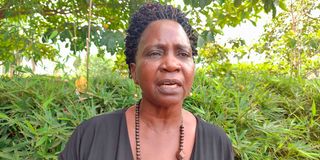
Scholastica Masidis Madowo, a widow elected to Siaya County Assembly to represent South East Alego ward during an interview at a hotel in Siaya. File | Nation Media Group
Having lost her husband in 2015, she had endured the same struggles that thousands of widows across the county and the country confront daily. She was determined to tackle them through law. Her candidacy was contested even within her own family. Her brother‑in‑law sought the same seat, and relatives urged her to step aside.
“They asked me to shelve my ambition and support him, but I declined,” she recalled in an interview in April 2023. “I said I have enough support, so let the people decide.”
She went on to defeat him for the Orange Democratic Movement ticket and later secured the seat. “Widows in our community are still seen as a nobody,” she said. “When women are married here, they are viewed as outsiders and the husband is her protector. Once that man is no longer there, then you are open to all manner of abuses.”
With that conviction, she committed to sponsor and support laws that protect the rights and dignity of widows. However, the law did not emerge from her efforts alone. It took the unity of widows across Siaya, whose collective advocacy found its way into the hands of Scholastica.
The push for legislation had deeper roots. As early as 2015, widow and activist Roseline Orwa had begun pressing then Governor Cornel Rasanga to confront systemic injustices against widows, laying the groundwork for what would eventually become Siaya’s pioneering law.
Her persistence bore fruit in 2017 when the Governor directed the creation of a technical committee. For the first time, widows felt their suffering might be recognised, formally. But when Rasanga left office, the momentum stalled and the group collapsed before achieving change.
When James Orengo campaigned for governor, Roseline and a delegation of widows made their support conditional. “Stand with us, and we will stand with you,” they told him.

Widow and activist Roseline Orwa during an interview at Rona Centre in Wagoma village, Siaya County.
He pledged to complete the journey Rasanga had left unfinished. And once in office, Roseline did not let him forget. She mobilised six other widows, including Scholastica, and together they repeatedly knocked on his door- sometimes even at his home- retelling their painful stories until he was moved to act.
This persistence worked. Governor Orengo revived the technical committee, and from it came a historic document: the Siaya County Widows Protection Act (2025), the first of its kind in Kenya. The law establishes Ward Widows Welfare Committees tasked with safeguarding the safety, rights, and dignity of widows at the village level.
The committee is chaired by a widow nominated by a joint forum of widows’ organisations, with membership drawn from the chief, ward administrator (as secretary), youth representatives, persons with disabilities, faith‑based organisations, civil society, and gender and social development officers.
The committees’ work includes collecting data on the number of widows at the ward level, reporting violations of their rights to the relevant authorities, and raising awareness. They are also required to promote sensitisation programmes, implement policies, maintain a database, and submit monthly reports to the directorate on the status of implementation.
The law explicitly prohibits the eviction of a widow from the house of her in‑laws or parents where she was residing at the time of her husband’s death. It also affirms that a widow is entitled to inherit the property of her late husband.
Anyone who interferes with or destroys equipment meant to enforce the law commits an offence and is liable, upon conviction, to a fine not exceeding Sh200,000 or imprisonment for up to one year, or both.
At the national level, Rarieda MP Otiende Amollo is sponsoring the Widowed Persons’ Protection Bill, 2026, which, unlike the Siaya law, covers both widows and widowers across the country.
The bill seeks to prohibit harmful cultural practices. These include any custom, ritual or traditional act that violates dignity, equality or bodily integrity. They also include practices that deprive a widowed person of property, inheritance or land rights. Or those that subject them to degrading treatment such as widow cleansing, widow inheritance, retrogressive burial rites or community‑based harassment.
It imposes heavy penalties on violators. Discriminating against a widowed person would attract a fine of up to Sh1 million or imprisonment for up to one year, or both.
Discrimination is defined broadly. It includes denial of access to property, inheritance or employment opportunities. It also covers exclusion from social, cultural or community activities. Unequal treatment in access to services, credit or social protection programmes is also included. Finally, it extends to any act or omission that impairs the recognition or enjoyment of rights on an equal basis with others.
Those who evict, dispossess, harass or otherwise interfere with a widowed person’s occupation or enjoyment of their matrimonial home or property would face prosecution and, upon conviction, a fine of up to Sh1 million or imprisonment for up to three years, or both.
Setbacks
When Mildred Mayeye lost her husband in 2022, she was left to raise three children alone while coping with a disability. Her injury, sustained after slipping on soapy water outside her house, never fully healed.
Though her left leg and back recovered, the pain lingered. It limited her mobility and ended her ability to do physically demanding work - walking long distances, carrying heavy loads, or standing for extended periods.
Living in Korogocho, one of Nairobi’s informal settlements, she faced the harsh realities of grief, poverty and single parenthood all at once. After her husband’s death, the burden of caring for her family grew heavier. He had contributed through casual labour, while Mildred supplemented the income by selling green groceries at Korogocho market.
One of her children suffers from a spinal cord condition requiring frequent hospital visits. Mildred says the constant medical expenses drained her meagre earnings, making it impossible for her family to survive.
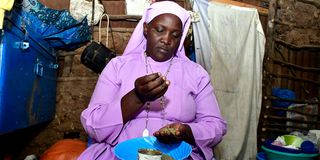
Mildred Atieno Mayeye sorts cereals at her home in Korogocho, Nairobi, on June 19, 2026.
Then, hope came in 2024 when friends helped her raise Sh30,000 in start‑up capital to establish a small cereals business. “I started selling a few varieties of beans, rice and other food items from a rented stall,” she recalls.
The business expanded, allowing her to add more stock, support her family and pay rent. For a brief period, it offered stability. But her daughter’s recurring medical needs meant she was often away from the stall. As absences increased, the business faltered. Rent arrears mounted, disputes with her landlord intensified, and she was eventually forced to leave the premises.
Today, Mildred runs the business from her house, but sales have dropped dramatically. “I used to make Sh1,500 to Sh2,000 a day from the shop because there was a steady stream of customers,” she says. “Now making even Sh400 in a week is by God’s grace, and I spend it all. I can’t restock because there is nothing to restock with.”
On days when she has no money, she relies on a friend who has consistently helped. But even that support is shrinking. “These days, she also tells me things are tight with the withdrawal of global funding and can offer little help. I had hoped she could help get a shop where I can sell from,” Mildred says.
That friend is Jaynepaul Wasonga, chief executive officer of Friendly Integrated Development Initiative in Poverty Alleviation, an organisation that empowers widows with disabilities in Kenya. She says their work has been severely affected since USAid withdrew funding and terminated much of its foreign assistance in 2025.
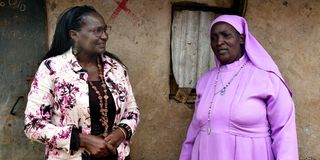
Friendly Integrated Development Initiatives in Poverty Alleviation chief executive officer Jaynepaul Wasonga (left) with Mildred Atieno Mayeye outside her home in Korogocho, Nairobi, on June 19, 2026.
“Unfortunately, we had to halt the economic empowerment programmes for widows because of a lack of funds. We were supporting more than 500 of them,” she explains. "What we need now is for the government to provide dedicated budgets to support income‑generating activities for widows. Donor‑funded initiatives are not sustainable.”
Meanwhile, the government had made progress in 2021 with the launch of Thamini, a special loan facility under the Women Enterprise Fund (WEF) designed to meet widows’ financial needs. The interest‑free loan was accessible to groups of at least 10 members, 60 per cent of whom had to be widows, and the group had to be operating for at least three months before applying.
But in 2023, the facility was suspended. By then, it had benefitted 215 widow groups, translating to 2,420 women, and disbursed Sh35,750,000 between July 2021 and February 2023, according to WEF’s chief executive officer Racheal Musyoki. She says relaunching the facility requires dedicated capital allocation, which WEF is currently working to secure.
Looking ahead
For Jaynepaul, protecting widows, including those with disabilities, is not just about passing laws. Rights must be felt in everyday life, she argues, not just written into statutes.
Low literacy levels among many widows remain a barrier to justice and services, she highlights. She says that as government systems move online, these women face new challenges. “They are forced to depend on others to interpret information or handle mobile money transactions, and they are exploited,” she says.
To close these gaps, she calls for adult literacy programmes, digital training, and the simplification of laws and policies into local languages. All these, she says, should be friendly to widows with disabilities. She also urges tougher enforcement against relatives who dispossess widows of land and property.
“We are making progress,” she says. “But we need to do more. We need to reach the grassroots, implement the policies, and ensure that widows and women with disabilities are not left behind.”