Millions of Kenyan women are now caught up in a contraceptive crisis.

When Anne Wanjiku* walked into her local public health facility in Nairobi’s Eastlands last month to get her routine long-acting injectable pill, it was out of stock.
She was told to return, but no one could tell her when the supplies would arrive.
Anne is one of millions of Kenyan women now caught up in a contraceptive crisis that has been building quietly for years and has now become impossible to ignore.
According to data from the Division of Reproductive Maternal Neonatal Child and Adolescent Health (RMNCAH) at the Ministry of Health, Kenya risks recording 1.2 million unintended pregnancies, 290,000 unsafe abortions and 4,000 maternal deaths, figures that the report has put on paper as the direct consequence of a family planning commodity system in collapse.
The stocks are not running low. They are gone.
As of May 7, 2026, the Kenya Medical Supplies Authority (Kemsa) central warehouse reports complete stockouts of DMPA IM injectable, Kenya’s most commonly used contraceptive, utilised by approximately 100,000 women each month, with zero stock available. The DMPA self-care injectable also shows zero stock.
Combined oral contraceptive pills, zero stock and emergency contraceptives, which young girls frequently use, had zero stock. The one-rod etonogestrel implant recorded zero stock.
The only item with any stock remaining is the two-rod levonorgestrel implant, with barely one month of supply left, according to data presented by Kemsa in Mombasa this week during a Legislative Health Committee briefing on the crisis in family planning commodity financing.
Women, according to the information, will have to wait for 13 months for the commodities to be here. This is the minimum procurement lead time from the moment cash is released to Kemsa to the day products hit health clinic shelves.
Last year, the United States government effected reductions in global health assistance targeting Kenya’s contraceptive co-financing structures.
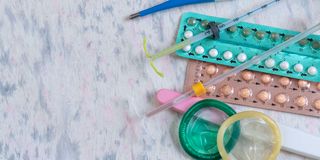
As of May 7, 2026, Kemsa central warehouse reported a complete stockouts of DMPA IM injectable, Kenya’s most commonly used contraceptive.
For decades, Kenya had relied on international co-financing systems to cover nearly 90 per cent of its national reproductive health commodity requirements; this has since collapsed.
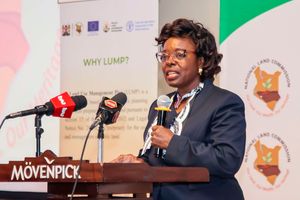
Dr Mohamed Sheikh on the ministry’s Division of Reproductive Maternal Neonatal Child and Adolescent Health (RMNCAH) said under the global FP2030 Commitment Framework, Kenya formally pledged to scale up domestic allocations to achieve 100 per cent domestic financing of family planning commodities by 2026.
The deadline is here but the commitment has not been met.
Over the last four years, actual disbursements have stagnated, declined, or been omitted from national budgets entirely.
In this Financial Year 2026/2027, the government’s current allocation of Sh500 million meets less than nine per cent of the country’s verified annual requirement of Sh5.8 billion.
“Without a dedicated, legally ring-fenced appropriation from Parliament, the transition to self-reliance has completely stalled,” Dr Sheikh said.
For the majority of Kenyan women who depend on short-acting methods, DMPA injectable accounted for 50 per cent of all family planning visits in 2025. With the shortage, there is a forced interruption of contraceptive coverage, with immediate consequences.
According to the data by the Ministry, DMPA IM visits peaked at 675,776 in the July–September 2024 period and have been falling since, dropping to 468,484 in the final quarter of 2025. Oral pill uptake has followed the same trajectory, with combined oral contraceptive dispensing falling from a peak of 207,000 to under 120,000 in the same period.
These are not women choosing to stop. These are women who came and found nothing.
Adolescent access is a particular concern.
Ministry of Health data shows that the proportion of young people aged 10 to 19 receiving family planning services has been rising steadily, from 10 per cent of all FP recipients in 2021 to 21 per cent in 2025.
That trend is now directly threatened. For teenage girls who accessed contraception through public facilities specifically because private options are unaffordable, a stock out is total.
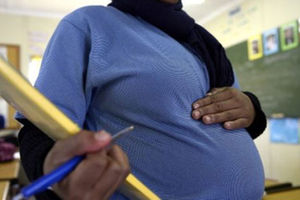
The consequence projected by RMNCAH revealed a 15 per cent adolescent unintended pregnancy nationally, with one in seven adolescent girls in Kenya already pregnant or having given birth.
The Government of Kenya/United Nations Population Fund (UNFPA) Compact Agreement, signed in May 2024, was designed to secure match-funding and protect routine supplies. Kenya’s $618,473 (Sh80.4 million at current exchange rates) obligated matching contribution for 2024/2025, remains unpaid.
Millions of Kenyan women are now caught up in a contraceptive crisis.
For 2026/2027, the status is listed as pending budget. UNFPA covers only six per cent of the national commodity demand.
From the National Treasury, Kenya has historically maintained the government’s allocation of approximately $7 million (Sh910 million) annually, a figure already insufficient and capped.
Long-acting reversible contraceptives, IUCDs and implants, cost between $4.87 (Sh633) and $9.50 (Sh1,235) per couple per year of protection. The DMPA injectable, which Kenya has depended on most heavily, costs $23.68 (Sh3,078) while oral pills cost $38.60 (Sh5,018).
The parliamentary briefing lays out a roadmap. In the immediate term, “Pass a supplementary budget of Sh2.5 billion to prevent total Kemsa stock outs and honor the GoK/UNFPA compact commitments.
“By 2027, enact a Health Financing Bill to legally ring-fence commodity budgets from administrative cuts and by 2028, scale the county compact model across all 47 counties.
By 2030, achieve a modern contraceptive prevalence rate of 64 per cent and reduce unmet need below 10 percent nationally.
“Kenya is at a critical inflexion point,” the Ministry of Health briefing concludes. “FP commodity security is now a policy, governance, and continuity issue.”
Follow our WhatsApp channel for breaking news updates and more stories like this.