Why Kenyan women creatives are leaving the industry despite its promise
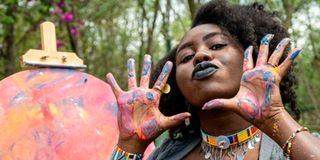
Wanja Githua, a tribal body artist, shows the paintings on her face. Wanja creates sacred, symbolic or decorative art on human skin using methods like painting, scarring, or tattooing. She also draws and creates different artworks according to the preference of the client.

What you need to know:
- A new ICRW report reveals the systemic barriers pushing women out of Kenya’s growing creative economy and limiting opportunities.
- Women artists and content creators want stronger protections, fair pay, financial support and action against sexual and digital abuse.
When Wanja Githua walked away from a promising career in 2020 to become a tribal body artist, most of those close to her thought she had lost her mind. Friends and relatives had watched her build a promising banking career. Now they could not understand why a graduate would give it up for painting on skin.
But Wanja had made up her mind. The career she felt passionate about was calling and there was no turning back. Today, she is involved in tribal body art, which entails creating sacred, symbolic and decorative art on the human skin using painting, scarring and tattooing. The work speaks to her heart and she has no regrets. Yet the path she chose has been far from easy, she says.
Most of Wanja's work happens at night during events, which means her safety is often on the line. “As a female creative, I have to always be on high alert whenever I work at night during events. I have to either leave early or look for good company. I have to always be conscious of my surroundings to ensure I am safe,” she tells the Nation.


Beyond safety concerns, Wanja says sexual harassment is common in her line of work. She often faces unwanted remarks about her body while working. “I always experience unwanted comments about my body – casual and disrespectful comments that make me uncomfortable. I always make sure I draw the line and never entertain such moves.”
Money is another constant worry. Income from creative work is unpredictable, and Wanja feels the country does not do enough to support artists. “We have a country that does not appreciate its creative industry the way it should be. There is no government assistance that I know of and help from nongovernmental organisations (NGOs) is limited.”
She is now urging event organisers to take safety more seriously. “Corporates and event organisers need to put in extra care for female creatives by hiring more women as staff and security officers.”
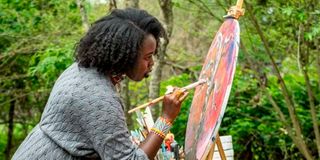
Wanja Githua, a tribal body artist, paints an artwork.
She points to the pay gap between male and female creatives doing the same work with the same qualifications, and is calling for equal pay across the board. Wanja gets most of her gigs through exhibitions, art-related events, conferences and word of mouth. Like other tribal body artists, she uses natural materials to mark milestones such as coming-of-age, social status or tribal identity.
A report released last Friday by the International Centre for Research on Women (ICRW) points to a wide gender gap running through Kenya's creative economy. Although women make up nearly 70 per cent of creative arts graduates, fewer than 35 per cent of them are still active in the sector five years later, held back by systemic and structural barriers.
Young creatives, women in particular, struggle to afford the equipment they need to showcase their work, from cameras to studio time and costumes. The report also flags a lack of gender-sensitive facilities, such as changing rooms; one participant from Mombasa described having to change outfits in spaces where men were present.
The study, which interviewed 400 young female creatives across the country, found that many have limited knowledge of contracts, intellectual property protection, and their rights when dealing with employers or clients. It also uncovered patterns of workplace harassment, sexual exploitation, transactional gatekeeping, gender discrimination, pay disparities and poor access to equipment and finance.
About 68 per cent of the female creatives surveyed said they had experienced workplace harassment, and 64 per cent reported sex-for-work situations, where access to opportunities was tied to giving something in return. Many also spoke of being objectified, with a focus on their physical appearance rather than their work, both offline and online.
That online dimension is something Branice Okanga, a content creator in Vihiga, knows all too well. She never imagined that posting content would expose her to abuse, but that is exactly what happened once she started sharing videos on TikTok and Facebook. What began as isolated comments soon became persistent attacks from followers she had never met, judging her purely on her looks.
“I have experienced cyberbullying; often when I share my content on TikTok and Facebook, a few of my followers mock my height. They frequently leave hurtful comments that sting by judging me based on my physical appearance,” Branice says.
As time went on, the bullying took a quieter, more unsettling form: stalking, with fans silently following her online without ever leaving a comment. She admits that the attacks have hurt her but says they have never stopped her from building a living through social media. Her advice to other female creatives is simple: stay strong, ignore online intimidation, and never let digital abuse get in the way of your goals.
Despite everything, more than 90 per cent of the creatives surveyed said they still found their work dignified and fulfilling. Many have leaned on coping mechanisms such as solidarity with other creatives, assertiveness, self-care, social media networks, community and family support, counselling and faith. For most of them, creative work remains meaningful and a genuine means of putting food on the table.
Evelyne Opondo, Director of ICRW-Africa, says the creative economy deserves urgent attention. “The sector has enormous potential for innovation, cultural influence and economic growth, but young women continue to experience unequal pay, precarious work arrangements, discrimination, harassment and entrenched gender norms. This demographic potential cannot be realised unless young women have opportunities, protection and supportive systems that enable them to thrive.”
Policy and Bill
Dr Josephine Atenyi, Secretary of Development in the Department for Youth Affairs and Creative Economy, says the report will help shape existing policies and inform new interventions responding to the realities facing young Kenyans in the creative industry. She notes that the government has already taken steps in this direction, including the development of the Creative Economy Policy and the Creative Economy Bill, as well as the Kenya Youth Development Index, which tracks young people's progress and wellbeing across selected areas.
“Young people, including female creatives, should be treated as partners and co-creators of national development, rather than merely beneficiaries. The research findings, therefore, should not remain in reports, but should translate into practical action, policy, programmes and measurable outcomes,” says Josephine.
Dr Juliet Kaindi, a lecturer at the School of Law, Arts and Social Sciences, Kenyatta University, says the industry needs practical strategies for navigating gatekeeping. She stresses that creatives must move away from informal verbal agreements towards formal written contracts, and that legal awareness around contracts and intellectual property is essential if workers are to protect themselves and build safer, more decent working environments.
“If young and female creatives cannot find a seat at the established tables, they should create their own tables and actively mentor and welcome others who are eager to learn and grow,” she says.
She adds that independent creatives should build complementary professional skills alongside their core creativity, to better position themselves within the sector. Among the recommendations put forward by the female creatives in the report are the finalisation and strengthening of the Creative Economy Policy and Creative Economy Bill, the development of minimum rates and rate cards, and closing the gender pay gap.
They are also calling for a zero-tolerance approach to sexual exploitation and harassment, dedicated grants, loans and financial support for young women creatives, measures to address cyberbullying and digital abuse, and platforms where government, creatives, associations and industry players can jointly tackle the challenges facing the sector.