Women who wouldn’t stay silent: The hidden history of Labour Day
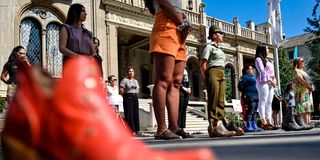
Women from different labour sectors during the "100 Shoes" intervention to pay tribute in front of the Falabella Palace in Santiago, on March 4, 2023.

What you need to know:
- Women led and endured in the historic labour movement, demanding rights, safety, and dignity, helping shape the meaning of May Day.
- Despite oppression, women like Lucy Parsons pioneered worker advocacy, securing reforms such as equal pay, safety, and labour protections for all.
May 1 is Labour Day to honour the workers who died in the Haymarket Square, Chicago, on May 4, 1886. In this massive labour movement, women led and participated. Women were physically and intellectually weak then. Some localities practically forbade women to work. These include jobs in coal mines and long-haul flights.
The Chicago International Working People's Association proclaimed all workers equal in every way, rejecting gender inequity. Women in the association fulfilled this egalitarian aim. In the 10 days from April 25 to May 4, 1886, city workers, reformers, socialists, and anarchists met in the streets to improve their working conditions. They added 35,000 staff on May 1. Another 10,000 skilled and unskilled labourers joined the caravan on May 3–4. They demanded eight hours of labour every day, since these people had previously worked 10–2 hours. At least 12 agitators and police clashed, with police firing rounds.
Violence broke out at the McCormick Reaper facility on May 3 during a strike. Police shot and murdered two or three workers. In reaction, workers on Haymarket Street called for a massive walkout. May 4's strike was calm and included speakers. The mayor, C.H. Harrison, also ordered the police not to disrupt the gathering. An explosive fell from the crowd towards the police. From there, officers fired randomly. The incident wounded 60 police officers and killed eight. There were no published reports about worker injuries and deaths.


However, they generated concerns about a large-scale labour movement motivated by revolutionary ideology, which eventually occurred. Police also made several arrests. Whoever tossed the bomb was unknown until the end. Speaking and writing led to a prosecution against eight workers. Seven received death sentences. They disregarded the other colleagues' pleas. The Cook County prison executed four of these labourers on November 11, 1887; one committed suicide. Lack of proof freed the other three.
This massive labour action in Chicago, America, became May Day or Labour Day. This movement focused on minimising labour hours. Later, the Soviet Union and other communist nations backed it. In 1955, during the Cold War, Americans renamed this day Loyalty Day. This Labour Day, women mattered. Women workers learned their rights to join labour unions and speak out to improve their working conditions. Mary John was the first woman to advocate for workers. Lucy Parsons, Alice Paul, Harriet Stanton, and others supported this campaign alongside men.
Read more: Explainer: The origins of Labour Day
Lucy Parsons was May Day's first notable woman. As president of the International Ladies Garment Workers Union, she was the first to demand eight-hour days at factories. Lucy Parsons and Lizzie Holmes discreetly disseminated revolutionary material and educated other women about their rights. Both gave clear, powerful statements during rallies. Due to their bravery and remarks, police and authorities abused them. Numerous intimidations occurred. Lucy Parsons, wife of hanging victim Albert Parsons, carried an embroidered red flag during demonstrations. She encased her spouse properly. She wanted to put this red flag on her husband’s grave, despite the mayor’s request to avoid it during the funeral procession. With 125,000 workers, this funeral procession passed through Chicago calmly. In 1887, Lucy Parsons and other women workers published Albert's book, distributing 300 copies. However, police seized the rest.
On May Day, workers hold marches, conferences, and gatherings to commemorate the Haymarket Massacre. Before and after this slaughter, women risked their families for workers' rights. Some have persisted in fighting societal injustices. Women finally had their job demands recognised due to their continuous efforts, including a fixed eight-hour workday, holidays, safety equipment, separate washrooms for women, transport for women working night shifts, safe working conditions, equal pay for equal work, and eliminating the wage gap between men and women for different work.
Read more: Labour Day: There’s nothing to celebrate
Women also protested against employer exploitation of their workforce. There was also no tolerance for gender-based discrimination. Even later, rights struggles persist. These battles led to the creation of the Department of Labour in 1913 after a 1911 shirtwaist factory fire killed 150 women owing to unsafe conditions. Its major goal was to inform the US government of labour issues. The US Congress created the Department of Labour Women's Bureau in 1913 to defend working women's rights. The 1920 constitutional amendment gave women the vote. The Supreme Court there allowed women to enter and create unions.
Labour Day in Kenya serves as a holiday for all workers, but it also provides an opportunity to recognise the accomplishments and challenges faced by women in the workforce. Today is a moment to acknowledge their impact on the economy and the continuous work being done to enhance their rights and conditions.
As a lesson from Labour Day, all awareness groups, institutions, and notably women's organisations should work together to attain their rights. We assure you that any issues after today won't be caused by a governing party or to incite unrest. This applies to those who are fighting, including teachers, physicians, attorneys, farmers, and others. Only after recognising proper demands and removing barriers to acquiring rights should we strive. Take every precaution to save life. This will honour May Day martyrs.
Surjit Singh Flora is a veteran journalist and freelance writer based in Brampton, Canada.