Young HIV-positive mothers requested jobs and Shif cover: Mbadi Budget gave none
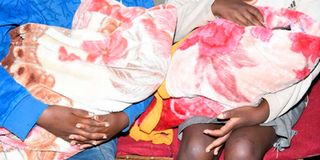
Young HIV-positive mothers with their babies. Kenya continues to suffer from chronic underfunding of the gender sector.

What you need to know:
- Kenya’s latest budget has sparked concern over shrinking gender funding and neglected support for vulnerable women.
- Young mothers living with HIV say the national budget ignores urgent realities facing families in informal settlements.
When you ask Ezzie*, a 19-year-old woman living in Korogocho, Nairobi, who is HIV-positive and solely raising three children, about the budget read in Parliament on Thursday, she has a list of needs she wishes the government would address.
“Is there anything in it for young mothers in informal settlements who are living with HIV and have no jobs?” she asks. “Is there anything about jobs, food relief, bursaries for educating our children, or support to help us enrol in the Social Health Insurance Fund (Shif)?”
Unfortunately, none of these issues featured in the 2026/27 budget presented by Cabinet Secretary for the National Treasury and Economic Planning John Mbadi. Ezzie says the government should pay greater attention to the unique challenges faced by young mothers living with HIV.


Chronic underfunding
Yet Kenya continues to suffer from chronic underfunding of the gender sector, with sub-sectors such as gender-based violence (GBV) prevention and response and gender mainstreaming among the hardest hit.
Even the Parliamentary Budget Office's sectoral expenditure analysis for 2025/26 and 2026/27, which compares allocations across government sectors and reveals shifting spending priorities, does not provide a dedicated budget line or sector for gender.
Instead, gender remains a cross-cutting issue spread across various sectors, making it difficult to track the government's overall investment in advancing women's rights and gender equality.
In its report, the Presidential Technical Working Group on Gender-Based Violence, including Femicide, established last year, found that chronic underfunding of sexual and gender-based violence prevention and response interventions is severely affecting efforts to tackle the problem. It noted that critical services are often donor-dependent, leaving them vulnerable to geopolitical shifts.
Stakeholders who appeared before the taskforce observed that gender desks suffer from chronic underfunding and insufficient staffing, severely limiting their ability to support GBV survivors effectively.
These desks, typically located within police stations, often lack essential resources such as trained personnel, private spaces for survivor consultations, and basic supplies such as reporting forms and referral directories.
Survivors discouraged
As a result, officers are forced to handle cases with limited tools, leading to delays, mismanagement and incomplete follow-up. Consequently, the lack of investment discourages survivors from seeking help, as they perceive the desks as ineffective or unresponsive, further entrenching distrust in formal systems.
Budget documents from the Parliamentary Budget Office show that the programme on strengthening GBV prevention and response had an approved budget of Sh254 million in the 2025/26 financial year, of which Sh200 million was grant funding.
A recent analysis on the impact of devolution on women and girls, prepared by the Council of Governors' Gender Committee with support from UN Women and the UN Capital Development Fund, shows that gender departments often receive minimal funding, making it difficult to implement planned interventions.
In Kajiado, the approved budget for 2013/14 was Sh3.76 billion, but there was no documented allocation for gender mainstreaming. In 2020/21, with Sh8.86 billion available, the Gender, Social Services, Culture, Tourism and Wildlife department received Sh147.86 million, of which only Sh4.09 million was allocated to gender mainstreaming.
In Busia County, the equitable share of nationally raised revenue in 2020/21 was Sh6.11 billion, alongside Sh761.84 million in conditional grants and Sh322.56 million in own-source revenue, bringing the total available resources to Sh7.19 billion.
HIV vulnerable ignored
Despite this, there was no direct allocation for women- or girl-specific interventions, even though the county had identified challenges including vulnerability to HIV/Aids, early marriage, rape and defilement. The gender department received just 1.77 per cent of the budget. “Inclusion programming requires availability of budgets for effective implementation,” the report states.
The report attributes the funding gaps to limited political goodwill and a lack of understanding of gender-responsive budgeting techniques. Although the National Gender and Equality Commission developed gender-responsive budgeting guidelines in 2013 and revised them in 2018 to include county governments, they have not been fully adopted.
The committee recommends that “Every county establish a well-resourced gender department in terms of human and financial resources. This will enable county governments to comply with the gender equality, diversity and inclusivity principles provided by the Constitution of Kenya 2010 and the County Governments Act 2012.”
Deliberate funding
According to Victoria Justus, senior programmes officer at the Institute of Public Finance, a think tank, public investments in women's economic empowerment (Wee) in Kenya are often fragmented, inconsistently funded, and more vulnerable to cuts during periods of fiscal constraint.
“Wee financing should be deliberately structured, clear, and safeguarded within public financial management systems,” Victoria says in her analysis, #GiveToGain: Make Women's Economic Empowerment Financing a Key Budget and Economic Priority. “Additionally, Kenya does not have a clear and comprehensive mechanism to track the use of public resources for Wee, making it hard to determine whether investments target priority areas or address structural barriers.”
She notes that gaps in gender-disaggregated data and analytical capacity further limit effective budget oversight and weaken legislative scrutiny of these commitments. She raises concern that Wee is not consistently reflected in the financing of the State Department for Gender, which remains the primary institution responsible for implementing women-focused economic empowerment programmes.
Worrying gender budget cut
According to the analysis, allocations to the State Department for Gender show a declining trend over the medium term, decreasing from Sh6.3 billion in 2025/26 to Sh6.25 billion in 2026/27, with further reductions projected thereafter.
Particularly concerning, she says, is the projected reduction in funding for the gender empowerment programme, which is set to decrease from Sh1.16 billion in 2025/26 to Sh1.079 billion in 2026/27, with additional cuts forecast over the medium term according to the 2026 Budget Policy Statement.
She says the National Integrated Monitoring and Evaluation System provides a framework for tracking public sector performance, but it is not yet fully linked to budget processes and plans. This, she says, limits its ability to monitor how resources contribute to women's economic empowerment.
No more symbolic financing
Without integrating gender-sensitive indicators and expenditure tracking into the system, she argues, it is difficult to establish whether budgets, plans and strategies are translating into investments that address women's priority needs and structural barriers.
“Without measurable outcomes, financing risks remain symbolic, fragmented, or misdirected,” she warns. “Our call is that Kenya should move beyond policy rhetoric to strategic, outcome-driven investment in women's economic empowerment by institutionalising, safeguarding and monitoring Wee financing.”
*Name changed to protect identity.