Hospitality costs in government continue to pose a challenge to fiscal consolidation, with the latest audit revealing that the government spent Sh11.72 billion on hospitality during the 2025/26 financial year.
The expenditure was almost double the Sh6.33 billion spent in the previous financial year, raising questions over the effectiveness of President William Ruto’s austerity measures , which have targeted non-essential spending and sought to rationalise government expenditure.
The August 2026 National Government Budget Implementation and Review Report for the 2025/26 financial year, tabled before Parliament, singles out the National Lands Commission (NLC) as the highest spender on hospitality, at Sh1.71 billion during the period under review.
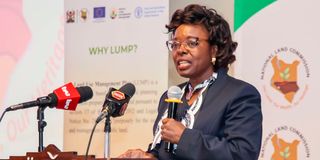
The report by Controller of Budget (CoB) Dr Margaret Nyakang’o is the official annual assessment of how national government funds were utilised.
Controller of Budget Margaret Nyakang'o.
Photo credit: Jared Nyataya | Nation Media Group
The spending comes despite the Public Service Commission (PSC) having developed hospitality and gift policy guidelines aimed at promoting integrity in the public service.
“The government fiscal policy for the financial year 2025/26 and over the medium term was fiscal consolidation by reducing debt vulnerabilities, supported by expenditure rationalisation and revenue mobilisation efforts to strengthen expenditure control,” says Dr Nyakang’o.
Hospitality and gift rules are anchored in the Public Service Code of Conduct and Ethics and are administered by the PSC alongside regulations enforced by the Ethics and Anti-Corruption Commission.
The framework is intended to promote institutional integrity, transparency and prevent conflicts of interest.
The CoB report also shows significant expenditure on other goods and services, including Sh30.15 billion on insurance, Sh11 billion on rent and rates for non-residential buildings, Sh17.47 billion on specialised materials and supplies, and Sh5.07 billion on fuel, oil and lubricants.
Fiscal consolidation also improves efficiency and effectiveness in public spending by rationalising and reducing non-essential expenditure.
Among measures undertaken include the rolling out of an end-to-end e-procurement system “to maximise value for money and increase transparency in procurement.”
Other than hospitality, some of the budget items under use of goods and services, including travel, printing and advertising, rent and rates for non-residential buildings, training, legal fees, insurance, maintenance expenses for motor vehicles and other assets, were among budget items targeted for rationalization by the government.
This aimed at reducing debt vulnerabilities, supported by expenditure rationalization and revenue mobilization efforts to strengthen expenditure control in government.
On June 26, 2024, following widespread anti-tax protests in the country that led to the fall of the Finance Bill 2024, the first in the history of the country, President Ruto announced immediate government austerity measures targeting hospitality and operational budgets.
The president ordered immediate cuts to operational expenditures within the presidency, specifically eliminating confidential votes and reducing allocations to travel, hospitality, vehicle purchases and renovations.
“I am directing immediate further austerity measures to reduce expenditure, starting with the Office of the President, the entire presidency and extending to the entire executive arm of government,” President Ruto said at State House.
The President went on: “I direct that operational expenditure in the Presidency be reduced to remove allocations for the confidential vote, reduce travel budget, hospitality and purchase of motor vehicles, renovations and other expenditures.”
The president went on to call on parliament, judiciary and county governments to adopt similar budget cuts “to ensure the government lives within its means” in response to the public demands.
The presidential directives had been preceded by the December 2023 National Treasury austerity measures for Ministries, Departments and Agencies (MDAs), which slashed allowances for official travel as it banned non-essential lunch, tea and water for civil servants to save the country unnecessary expenditures.
It was also in June 2024 that President Ruto directed the scrapping of the budgets of the offices of the first lady, and those of the spouses of the deputy president and the Prime Cabinet Secretary, as part of austerity measures to align government spending with reduced revenue.
At the time, Sh1.3 billion had been earmarked for the two offices not established under any laws of Kenya.
Of the Sh1.3 billion, the Office of the First Lady had been allocated Sh696.6 million and the Office of the Spouse of the Deputy President Sh557.6 million.
The withdrawal of the funds left various programmes initiated by the offices- “faith diplomacy” and “empowering the boy child” without formal government funding.
Since then, the two offices have not been allocated any funding, one of the few austerity measures announced by the president to have succeeded.
Despite efforts to support expenditure rationalisation, the CoB report shows that during the period under review, travel expenses amounted to Sh30.69 billion, comprising foreign travel at Sh21.98 billion and domestic travel at Sh8.71 billion.
This was an increase compared to Sh25.45 billion recorded in the financial year 2024/25 that had domestic travel of Sh18.05 billion and foreign travel of Sh7.40 billion.