Hello

Your subscription is almost coming to an end. Don’t miss out on the great content on Nation.Africa

Ready to continue your informative journey with us?

Hello

Your premium access has ended, but the best of Nation.Africa is still within reach. Renew now to unlock exclusive stories and in-depth features.

Reclaim your full access. Click below to renew.

John Mbadi
Caption for the landscape image:

Government sets tough new rules for donor-funded projects

Scroll down to read the article

National Treasury Cabinet Secretary John Mbadi.  


Photo credit: Billy Ogada | Nation Media Group

Ongoing donor-funded projects will be reviewed as the government sets new conditions that will govern such programmes.

National Treasury Cabinet Secretary John Mbadi told the Senate Public Accounts Committee (PAC) that the government is reviewing donor-funded projects.
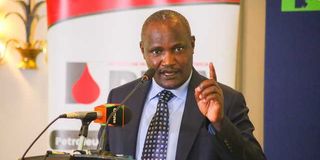
Mr Mbadi said the government would not allow a donor-funded project to start if it does not meet set conditions.

He told the team chaired by Homa Bay Senator Moses Kajwang that donor-funded projects must help the government fulfil at least one of the Vision 2030 goals.

Vision 2030 aims to transform Kenya into an industrialised middle-income country.

The projects must also be aligned with the Bottom-Up Economic Transformation Agenda (BETA) or the manifesto of the government of the day.

The pillars of BETA – a Kenya Kwanza administration manifesto – are agriculture, micro, small and medium enterprise economy; housing and settlement; and the digital superhighway.

“We will tie funding of any project to this vision,” the minister said.

Mr Mbadi told the team that projects that require state financing will only be allowed to proceed if there is money.

“If the requirement is co-funding and we don’t have cash, the project will not start,” he said.

Incomplete projects

The CS told the senators that donor-funded projects would be reviewed first to ensure they conform to the laws of the land before being given the green light. He added that a team from the Office of the Deputy President and the National Treasury is working on the review of ongoing projects.

According to Mr Mbadi, the government took the position after realising many projects are never completed but continue to gobble money.

He added that the review would help free up the space in the management of government finances.

The minister told the lawmakers that the government has committed a lot to donor-funded projects to the point that the national budget is being affected.

He said the review would cushion the government against excessive commitment fees for undrawn loans tied to the projects.

“We end up being charged commitment fees for money we have not used,” he said.

In May, a report of the Auditor-General tabled before the National Assembly Liaison Committee showed that Sh515 billion intended for donor projects had not been utilised at the end of the 2023/24 financial year.

“Some of the projects have clauses that attract commitment fees for undrawn amounts, leading to wastage and lack of value for money,” the audit reads.

According to the Parliamentary Budget Office, the government paid Sh18.9 billion as commitment fees in the last eight years.

In her latest report for the 2023/24 financial year, Auditor-General Nancy Gathungu says taxpayers incurred an additional Sh4.8 billion in interest to contractors undertaking donor-funded development projects.

Nancy Gathungu

Auditor-General Nancy Gathungu.

Photo credit: Dennis Onsongo | Nation Media Group

Taxpayers incurred what the Auditor-General terms as “avoidable interest” in 17 projects that were sampled during the period under review.

The report also says Sh2.5 billion was paid to contractors working on 22 donor-funded projects without adequate supporting documentation.

According to Ms Gathungu, payments were made without work plans, contracts, invoices or delivery confirmations, contrary to Regulation 104 (1) of the Public Finance Management (National Government) Regulations, 2015, which requires accounting officers to ensure proper use of resources and maintain supporting records for financial transactions.