Delays in the payment of certified works led to taxpayers incurring an additional Sh4.8 billion in interest to various contractors undertaking donor-funded development projects across the country, according to an audit report tabled in Parliament.
The audit report on the summary of donor-funded projects under the 2023/2024 financial year indicates that taxpayers incurred what the Auditor-General termed “avoidable interest” in 17 projects that were sampled during the year under review.
“These instances reflect weak contract oversight, which undermines value for money and effective donor fund utilization,” said Auditor-General Nancy Gathungu.
According to the report, the government was slapped with Sh930 million in interest arising from the Covid-19 health emergency response project.
The amount relates to interest accrued on payments made by the African Vaccine Acquisition Trust (AVAT) to the vaccine manufacturer for 13,333,333 doses that had been made available for delivery under the contractual agreement, but whose shipment was delayed by the country.
The report notes that the delay in settlement of certified and invoiced works under the Northern Collector Phase 1 and Additional and Development of the Network Project led to the government paying Sh2.7 million in interest.
Under the East Africa Regional Transport Trade and Development Facilitation Project, the country paid Sh18.9 million in interest on late payment for an interim payment certificate.
A similar case of late payment of an interim certificate to a consultant for the Kenol–Sagana–Marua Road also led to taxpayers paying Sh24.9 million in interest.
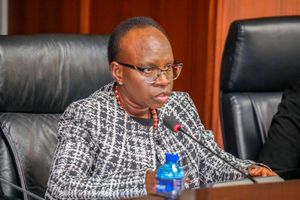
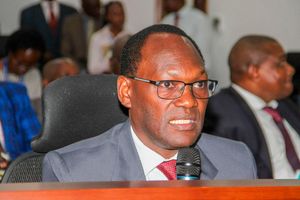
Auditor-General Nancy Gathungu.
Photo credit: Dennis Onsongo | Nation Media Group
Delayed payment to the contractor upgrading the Kibwezi–Mutomo–Kitui–Migwani Road also resulted in interest payments amounting to Sh70.5 million, which Ms Gathungu says “could have been avoided with proper cash flow for the project.”
On the Mombasa–Mariakani Highway Project, the country could have saved Sh856 million that was paid to the contractor due to failure to settle the bills on time.
For Phase Two of the Central Kenya Rural Roads Improvement and Maintenance Project, the report indicates a consultancy firm was paid Sh4.8 million as accrued interest.
According to the report, the country also paid a total of Sh564 million to the contractor undertaking the Kenya Water Security and Climate Resilience Project. The amount includes Sh494 million for cost adjustments due to delayed commencement of the project and Sh70 million in late payments to the contractor.
In the Thwake Multipurpose Water Development Program Phase I, taxpayers paid Sh383 million to the contractor as interest due to failure to settle dues on time.
A further Sh22 million was paid to a contractor undertaking the Water Sanitation Development Project at various sites in the country.
More projects, more spending
Ms Gathungu also says in the report that the country used Sh178 million of donor funds to pay a contractor undertaking the Coastal Region Water Security and Climate Resilience Project—contrary to the funding terms.
“Interest amounting to Sh178 million was charged on delayed settlement of certified works for the Mwache Multipurpose Dam Project. The interest was inappropriately settled using IDA funds, contrary to the funding terms,” reads the report.
The report states that in the dualling of the Magongo Road Phase II project being undertaken by the Kenya National Highways Authority, the government paid Sh190 million in interest to the contractor due to delayed payments.
Ms Gathungu also pointed out in her report that due to delays in the implementation of the Kapchorwa–Suam–Kitale and Eldoret Bypass roads by the employer, the government paid the contractor Sh318 million in interest charges.
In the Kenya Nairobi Western Bypass Project, which was being funded by the Exim Bank, the government paid Sh4.6 million in interest due to delayed payments to the contractor.
The government was also slapped with Sh615 million in accrued interest from non-payment and delayed payment of pending bills to the contractor undertaking the Kenya Transport Sector Support Project.
The report also states that the government paid Sh657 million in interest to the contractor on the Sirari Corridor Accessibility and Road Safety Improvement Project (Isebania–Kisii–Ahero Road).
For the upgrading of the Gilgil Machinery Road Project, the government paid Sh38 million in interest that had accumulated due to delayed payment of interim certificates.
Ms Gathungu noted in her report that most donor-funded projects had common weaknesses such as financial reporting gaps, delayed or stalled projects, low absorption of funds, procurement irregularities, and non-compliance with contract conditions.
The report also identified governance and oversight challenges in the management of donor-funded projects.
“The issues observed point to broader weaknesses in project management and oversight which require immediate corrective actions,” reads the report.
The Auditor-General says that while the majority of donor-funded projects’ financial statements were fairly represented, a significant number still exhibited weaknesses in financial reporting.
Ms Gathungu says in her report that key interventions—such as enhancing capacity, developing and implementing standard operating procedures, strengthening internal controls, and reinforcing risk management processes—should be adopted urgently.