Hello

Your subscription is almost coming to an end. Don’t miss out on the great content on Nation.Africa

Ready to continue your informative journey with us?

Hello

Your premium access has ended, but the best of Nation.Africa is still within reach. Renew now to unlock exclusive stories and in-depth features.

Reclaim your full access. Click below to renew.

Caption for the landscape image:

He lost his son to extremists, now he faces jail over Sh3m bond

Scroll down to read the article

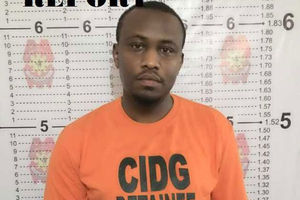
Salim Mohamed Rashid when he appeared before Mombasa Court on June 6,2019. He is accused of being a member of Al-Shabaab terror group. 

It is every parent’s prayer that their children walk a path brighter than their own, yet for some, that hope collapses under the weight of choices they never made.

Nothing wounds a parent more deeply than watching the child you once cradled spiral beyond your reach, drift into darkness, and still be forced to pay the price for a life you can no longer influence and for an offence you know nothing about.

For Rashid Mohamed, this agony is not a poetic reflection but his lived reality. Six years after losing his brightest son, Salim Mohamed alias Chotara, to the deadly grip of Al-Shabaab, he now faces the possibility of imprisonment, not because of anything he did, but because of everything his son became.

Believing there was still hope for his son, Mr Rashid did what any caring parent would do. He stood in court as a surety, offering two vehicles as security for Salim’s temporary freedom while he faced terror-related charges. 

But that decision, made out of love, now hangs over him like a curse. He has four days left to raise Sh1.5 million in bail forfeiture, a debt he never imagined would land on his shoulders. This is what happened. 

On June 6, 2019, Salim was charged with being a member of Al-Shabaab and with possessing improvised explosive devices. He denied the charges, and after two months in pre-trial detention, the court granted him bail of Sh3 million, which would later be reduced to Sh1.5 million, with two sureties of a similar amount. 

Al-Shabaab

Al-Shabaab fighters.

Photo credit: File | AFP


He attended court diligently at first, but by October 7, 2020 he had disappeared. Salim skipped bail and fled to Mozambique, where he joined the Islamic State and eventually assumed a leadership role after fully immersing himself in militancy. 

When he failed to appear on October 7, 2020, the two sureties were summoned to show cause why they should not forfeit the security they had deposited for failing to produce Salim in court. 

In May and October 2021, Mr Rashid appeared before the court and explained that Salim had not returned home from work on December 4, 2020. “I reported the matter to the police under OB 15/5/12/2020 and informed the Anti-Terror Police Unit,” he told the court. 

Meanwhile, on February 10, 2021, the court directed the sureties to liaise with the investigating officer and report on Salim’s whereabouts. It held that if the officer confirmed that it was impossible to locate Salim after all due diligence, the sureties’ security could be forfeited. 

On July 10, 2023, Mr Rashid informed the court that the family had received information indicating that Salim was being held in the Democratic Republic of the Congo and had been sentenced to death for killing a Congolese soldier. 

A picture of the Mombasa Law Courts| Pool
Photo credit: Pool


On May 27, this year, a magistrate’s court ruled that there was nothing concrete to show that Salim was deceased, and found that the sureties had failed to discharge their obligations. 

The court ordered the two sureties to pay Sh1.5 million each, failing which each would serve six months’ imprisonment. 

Dissatisfied with the decision, Mr Rashid sought a revision in the High Court, asking it to examine the legality, correctness and propriety of the orders requiring them to provide proof that Salim was dead. 

The situation worsened. In a ruling delivered on November 27, the High Court dealt a major blow to Mr Rashid, concluding that the sureties had indeed failed to fulfil their obligations. The court held that Salim’s right to bond had been forfeited and that the applicants, as sureties, were required to pay the full amount of the recognisance, Sh1.5 million each. 

The court further directed that if they failed to pay, the two vehicles offered as security should be sold to recover the amount, noting that imprisonment would only follow if the security could not satisfy the debt. 

“I therefore order that the applicants pay Sh1.5 million each by December 11, 2025. If the penalty is not paid, and cannot be recovered from the asset offered as security, the applicants shall each serve six months’ imprisonment,” the court ruled. 


Today, Mr Rashid is a broken man, caught between grief and the cold machinery of justice. He must now raise the money or exchange his freedom for his son’s mistakes. But who is Salim? 

Salim was once the brightest child in the household of Mr Rashid, a Mombasa businessman. From an early age he carried his family’s hope of becoming one of the country’s top engineers. His brilliance was evident from childhood. 

Rare academic aptitude

His school records show that from the moment he was enrolled, he consistently topped his class. His parents were certain his future would shine, guided by a rare academic aptitude. 

Raised in Kizingo, Mombasa, Salim progressed from Qubaa Nursery to Qubaa Primary before transferring to Abu Hureira Academy, where he sat his KCPE in 2010. His results were exceptional, earning him admission to a private secondary school in Mombasa in 2011. By the time he sat his Kenya Certificate of Secondary Education (KCSE ) in 2014, he was among the top students, scoring a straight A. 

Throughout his schooling, and even upon his selection to join Jomo Kenyatta University of Agriculture and Technology, Salim had no criminal record and had never exhibited any signs of indiscipline. 

“He was only known for his excellent academic performance,” his father previously told the Nation. 

When Salim declined the JKUAT offer, his father enrolled him at the Technical University of Mombasa for an engineering course. When he failed to complete it, he was placed in a local computer course, still without raising concern. But it was during this period, as he moved from one cybercafé to another, that friends believed something in his life began to shift. 

Read: Tanzanians rush to stock up food, water ahead of Tuesday's planned protests
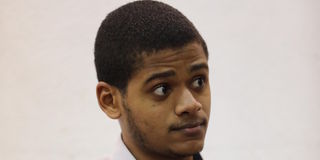
Still hopeful, his father sent him to Turkey for further studies. That hope was short-lived. In 2016, Salim was deported after abandoning his studies in an attempt to join Islamic State fighters in Syria. He was arrested in the company of a woman suspected of involvement in terrorism and was returned to Kenya to face terror-related charges. 

After a two-year trial, he was acquitted in 2017 and resumed life with his family in Mombasa. 

In 2019, however, he resurfaced in Kwale, where he was arrested with materials used to make explosives. A year later, in October 2020, he disappeared again, shortly after another terror suspect, Juma Athman Mwengo, was shot dead by security agencies. 

Then came the shocking transformation. Salim reappeared in an Al-Shabaab propaganda video, not as the brilliant student he once was, but as “the ISIS butcher”, a rising face of global extremism. 

His run came to an end in the Democratic Republic of Congo, where he and two associates were arrested by the Armed Forces of the DRC in Beni, near Virunga National Park and the Rwenzori Mountains. They were attempting to travel to South Africa when soldiers, suspecting them of being part of the Allied Democratic Forces, detained them. 

In the DRC, Salim was accused of killing a soldier and was swiftly sentenced to death. Back home, his family hoped the Kenyan government would engage their Congolese counterparts to bring him back to serve his jail terms in Kenya, but that never happened. 

By the age of 28, he was among five terror suspects for whom the DCI issued a reward of Sh10 million on November 9, 2021. 

Investigators later traced his journey through Mozambique and the DRC to a radicalisation cell in Kwale, part of an active recruitment network feeding Al-Shabaab and Islamic State in the region.


Follow our WhatsApp channel for breaking news updates and more stories like this.

[email protected]