Independent Electoral and Boundaries Commission Chairperson, Erastus Ethekon addresses MPs during the 2026 Legislative Retreat for Members of the National Assembly in Naivasha, on January 27, 2026.

Kenya’s electoral agency has issued a stern warning to political figures amid rising tensions, violence, and premature campaign-style mobilisation across the country, as the race for the 2027 general election intensifies.
Mr Erastus Ethekon, the chairperson of the Independent Electoral and Boundaries Commission (IEBC), noted that the commission was concerned about the increasing number of cases of political intolerance.Condemning what he described as “violence, disorder, intimidation and unlawful conduct” linked to recent political gatherings, Mr Ethekon said that this trend threatens public safety and undermines the constitutional principles that govern political competition.The commission stated that reports of injuries and confrontations at recent rallies and political events had raised “grave concerns” regarding compliance with the law and the responsibilities associated with exercising political rights.“Political rights must be exercised responsibly,” Mr Ethekon said, urging political parties, candidates, supporters and event organisers to uphold public order and respect the rule of law.Read: Weekday rallies, lost income, deaths: The true cost of Kenya’s early campaigns
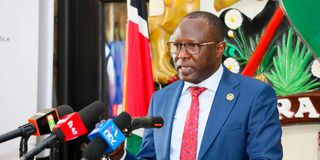
The Independent Electoral and Boundaries Commission Chairperson Erastus Edung Ethekon.
The warning comes against the backdrop of escalating political activity across the country, with leaders already positioning themselves for the 2027 contest even though the official campaign period remains several months away.In recent months, Kenya has witnessed an uptick in political rallies, roadside meetings, youth mobilisation drives and billboard campaigns by leaders across the political divide.While President William Ruto and his deputy Kithure Kindiki have framed their countrywide tours as economic empowerment initiatives, and the Rigathi Gachagua-led United Opposition branded their gatherings as public engagement forums, the meetings bear many of the hallmarks of early political campaigns.At the same time, the Orange Democratic Movement (ODM) led by Dr Oburu Oginga has rolled out nationwide rallies under the banner Linda Ground (Protect the Ground) aimed at protecting its traditional political bastions, while the party’s embattled Secretary-General Edwin Sifuna has been spearheading a parallel mobilisation drive dubbed Linda Mwananchi (Protect the Citizen).The camps have all intensified their countrywide engagements, often drawing large crowds and setting the stage for what analysts say could be an early contest over political narratives ahead of the next election.These activities have occasionally been marred by clashes between rival supporters, disruptions of political meetings and accusations of intimidation, raising fears that the country may be sliding into an early campaign season characterised by heightened tensions.It is these developments that prompted the electoral commission to step in with what observers describe as a “warning shot” to political actors.The commission said the incidents reported during recent political gatherings are incompatible with the principles enshrined in the Constitution, particularly the right to life, the right to security of the person and the freedoms of association, assembly and political participation.Read: How Ruto fought Uhuru over same troubles Gachagua now battles

Mr Vincent Ayomo.
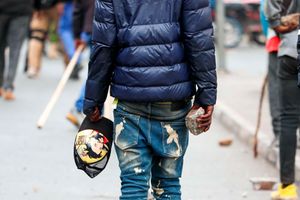
Vincent Ayomo recently lost his life while violence broke out at a rally in Kitengela. In Kakamega, several youths were injured after clashes broke out at political gatherings.According to the electoral body, political actors and their supporters have a legal obligation to conduct their activities in a manner that respects human dignity and safeguards the safety of all citizens.Mr Ethekon said political competition must be conducted within the confines of the law and should never expose citizens to harm or normalise violence as a tool of mobilisation.“Any conduct that contravenes these constitutional norms and statutory duties is unlawful and unacceptable,” the commission said, warning that it would exercise its mandate where necessary to protect the integrity of the electoral process.Although the commission’s direct enforcement powers are triggered mainly during the official campaign period, the chairperson stressed that acts such as violence, bribery, intimidation or misuse of public resources remain illegal at all times and fall under the jurisdiction of other enforcement agencies.The agency’s concerns also extend beyond the immediate safety risks posed by violent confrontations.Mr Ethekon raised alarm over the economic and social consequences of prolonged political mobilisation long before the official campaign period began.According to IEBC, sustained and unregulated political activity disrupts livelihoods and commerce while diverting both public and private resources away from productive economic use.Read: Curb high, deadly cost of early election campaignsFrequent political gatherings require heightened security deployment and policing costs, which strain public finances. At the same time, heightened political tensions often create uncertainty that affects investor confidence, tourism and local enterprise.Kenya Association of Manufacturers (KAM) has warned that prolonged political uncertainty dampens business confidence.

Kenya Association of Manufacturers CEO Tobias Alando.
KAM Chief Executive Tobias Alando cautions that, from experience, political gatherings and protests have a significant effect on economic activity, particularly in surrounding areas.These effects typically include supply chain delays due to road blockages, worker absenteeism arising from safety concerns and transport disruptions, and temporary closure of businesses.Mr Alando points to past anti-government protests as a case study.“During that period, the manufacturing sector recorded tangible losses as reflected in the KAM Barometer. Key impacts included reduced productivity driven by worker absenteeism, restricted movement and safety concerns; supply chain disruptions caused by road closures and logistical delays; vandalism and looting that compromised business continuity and heightened security costs; and production downtime and property damage that imposed direct financial losses.”In his interview, the IEBC Chairman, Mr Ethekon, warned that such cumulative effects place an additional burden on ordinary citizens while contributing to social fatigue and deepening political polarisation.Political analysts say Kenya has historically experienced lengthy pre-election campaign seasons, sometimes stretching several years before polling day.While the Constitution protects political participation, critics argue that the absence of clear rules governing early campaigning has allowed political actors to maintain almost permanent campaign modes.The commission acknowledged that its ability to regulate campaign conduct is legally limited outside the officially gazetted campaign period.Read: How Farouk and Itumbi built Ruto’s grassroots election machineUnder Article 88 of the Constitution of Kenya and provisions of the Elections Act, the enforcement of the Electoral Code of Conduct and regulations under the Election Campaign Financing Act becomes active only during the formal campaign window.For a general election, the code takes effect from the date the notice of election is published until the swearing-in of elected candidates. In the case of by-elections, it begins when a vacancy is officially declared and runs until the elected candidate takes office.This legal framework also governs the use of billboards, campaign branding and other forms of political advertising, including spending limits and disclosure requirements.Because these provisions apply primarily during the regulated campaign period, the commission’s enforcement authority over campaign conduct is significantly constrained before that stage, Mr Ethekon says.However, he emphasised that political engagement before the official campaign period remains subject to other laws, particularly those governing public order, corruption, misuse of public resources and criminal conduct.Even so, the commission acknowledged that the growing wave of political activity has presented a difficult regulatory challenge.Many events described as civic engagement, development tours or voter mobilisation often resemble campaign rallies in tone, scale and messaging.IEBC pointed to a landmark court decision that addressed this issue. In the case of Kituo Cha Sheria v IEBC & Others (2022), the High Court ruled that political campaigning outside the prescribed period undermines key constitutional principles, including equality before the law and the integrity of elections.The court also highlighted a legislative gap and directed that steps be taken to develop a clearer legal framework for regulating such activities.Read: Early campaigns costing Kenyans dearlyThe electoral commission said it supports reforms aimed at bringing clarity, fairness and predictability to the regulation of political conduct outside the formal campaign period.As the country moves closer to the next electoral cycle, IEBC said it has been engaging political actors and institutions through consultations and advisory guidance.The message, according to the commission, has been that leaders must exercise restraint and prioritise the safety and wellbeing of citizens.The commission urged political parties and leaders to avoid inflammatory rhetoric, confrontational activities and actions that could heighten tensions across the country.Observers say such appeals are particularly significant given Kenya’s history of election-related violence.Since the return of multiparty politics in the early 1990s, nearly every election cycle has been accompanied by heightened tensions, with the 2007–2008 crisis representing the most severe episode of post-election violence in the country’s history.More than 1000 people were killed, and over 600,000 were displaced from their homes.Although subsequent elections have been relatively more peaceful, sporadic clashes and localised violence have continued to occur during campaign periods.The 2027 General Election is expected to be one of the most competitive political contests in recent years, with both the government and opposition forces seeking to consolidate support across the country.Political alliances, regional mobilisation and grassroots campaigns have already begun to take shape, even as the official election timeline remains some distance away.Analysts say the early start to political mobilisation reflects both the high stakes of the next election and the evolving nature of Kenyan politics, where continuous engagement with voters has become central to political strategy.Read: Keep off Mt Kenya region, it is my backyard, DP Kithure Kindiki tells Rigathi GachaguaHowever, the IEBC warning signals growing concern within the electoral management body that such early mobilisation, if left unchecked, could heighten tensions and undermine the credibility of the electoral process.Despite the concerns, the commission said it remains committed to safeguarding constitutional freedoms while ensuring that political competition unfolds peacefully and within the law.Mr Ethekon said the electoral body would strictly enforce the Electoral Code of Conduct and all applicable campaign regulations once the official campaign period begins.“IEBC remains committed to safeguarding constitutional political freedoms while advocating for peaceful, lawful and economically responsible political engagement,” the commission said.The chairperson emphasised that the electoral process is a collective national undertaking that requires cooperation from all stakeholders, including political leaders, parties, civil society organisations and security agencies.He said national stability and public safety must take precedence over partisan interests.Follow our WhatsApp channel for breaking news updates and more stories like this. [email protected]