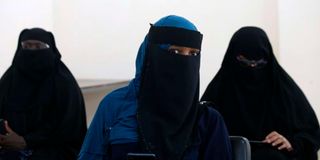
If you are a woman dreaming of becoming a Kadhi in Kenya, the numbers offer little encouragement. The country has no female Kadhis among its 40, and there is little sign that this is about to change.
It is a contested issue, but there is no religious consensus that the role is exclusively male.
"It is not a must that the Kadhi position go to men. It is not a reserve for them," Islamic law scholar Fatuma Juma told Nation in 2021.
Her remarks did little to shift the thinking of decision-makers. As confirmed by the Kenya Economic Survey 2026, the position remains the most male-dominated role in the country, with not a single woman holding it.
Kadhi courts handle disputes where both parties profess the Islamic faith and agree to be bound by their rulings. There have been arguments that women in the role could bring different perspectives to bear. Under the Constitution, the courts are restricted to matters of personal status, marriage, divorce and inheritance under Islamic law.
Beyond the Kadhi question, the data points to other roles where women remain strikingly underrepresented.
Only two of Kenya's 47 county assembly speakers were women as of December 31, 2025. The pattern holds with county assembly clerks, where only six out of 47 were women, though that is an improvement from December 2024, when only three female clerks were in post.
County commissioners, who are appointed by the Interior ministry, tell a similar story. Only five of the 47 are women. Among chiefs, women number 480 out of a total of 4,008, representing 12 per cent, an increase of 105 from the 375 recorded in 2024. For assistant chiefs, women account for 1,818 out of 9,575, roughly 19 in every 100.
Senior Principal Kadhi Sukyan Hassan Omar is the newly appointed Acting Chief Kadhi.
Photo credit: Robert Nyagah | Nation Media Group
The male dominance extends across several other decision-making positions. Women hold just 12.8 per cent of county secretary roles and an equal share among governors. The figures are slightly better for deputy governors at 21.3 per cent, National Assembly members at 23.6 per cent, Cabinet Secretaries at 27.3 per cent and ambassadors at 30.6 per cent.
The Constitution is unambiguous on what the law requires. Article 27 states that "women and men have the right to equal treatment, including the right to equal opportunities in political, economic, cultural and social spheres."
It further provides that "the State shall take legislative and other measures to implement the principle that not more than two-thirds of the members of elective or appointive bodies shall be of the same gender."
The judiciary is one area where women are faring relatively better, at least in the lower courts. Among magistrates, 335 of the 573 are women, a majority of 58.5 per cent. The Economic Survey notes that "in the superior courts about six in every 10 judges were men, while for magistrates, six out of 10 were women."
In the High Court, women account for 45.5 per cent, while in the Court of Appeal, which has a total of 34 judges, women hold 44.1 per cent of positions.