A Kenyan organisation has emerged as one of the inaugural winners of Earthna Prize for climate change and sustainability.
Blooming World International (BWI) is among four organisations, from a list of 12 finalists, feted on Tuesday in Doha, Qatar, for its efforts in reviving traditional agricultural practises geared towards addressing food insecurity in East Africa for a food-secure and prosperous Africa.
Under the Seeds of Change Initiative (Soci), the organisation has reached over one million smallholder farmers in a bid to improve their agricultural productivity through high-quality African indigenous vegetables seeds and good agricultural practises.
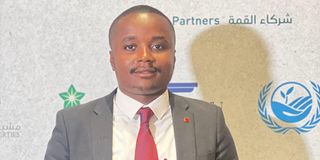
Speaking on the sidelines of the Earthna 2025 Summit, BWI Executive Director Elisha Caleb said over a million consumers and growers have been engaged through community outreach, resulting in improved food security and climate resilience.
He explained that the initiative bridges traditional and modern practices by documenting time-tested cultivation methods, training smallholder farmers, especially women and youth, and enhancing seed quality to ensure sustainability.
According to Mr Caleb, African indigenous vegetable seeds' adaptability to local conditions ensures sustainability, enabling East African farmers to combat climate change while preserving biodiversity.
The project aims to document and promote traditional farming practices while integrating them with modern agricultural techniques in East Africa.
Most importantly, the project focuses on the training of the younger generation and facilitating intergenerational dialogues.
The youth receive training in traditional farming techniques and seeds in order to continue with the traditions of their elders and rebuild the practices of what was lost and destroyed, and their once-endangered culture has been safeguarded through the creation of community seed banks and community training workshops.
By focusing on African Indigenous Vegetables (AIVs), SOCI empowers smallholder farmers through the promotion of high-quality seeds and traditional farming methods with the aim of enhancing crop yields and economic outcomes.
"The goal is to preserve and enhance traditional knowledge, improve food security, and address climate change and biodiversity loss," said Mr Caleb.
"Receiving this prize is a profound validation of our efforts and a testament to the impact of our work. It underscores the importance of traditional knowledge and sustainable practices in addressing contemporary challenges," says Mr Caleb.
Her Highness Sheikha Moza bint Nasser (fourth left), Chairperson of Qatar Foundation, posing with inaugural winners of the Earthna 2025 Prize during the Summit's opening ceremony on Tuesday, April 22, 2025. Picture.
Photo credit: Photo | Pool
He explains that a key part of SOCI programme is the revival of traditional crops and seed-saving practices.
He observes that many of the indigenous crops once grown by the people in the rural Sub-Saharan Africa have been displaced by hybrid varieties like maize and wheat, which were introduced during colonial times.
"Over the years, these crops, while more productive in the short term, have led to a loss of biodiversity and have made farmers more vulnerable to pests, diseases, and climate change."
He explains that sustainable agriculture cannot thrive without access to high quality, locally adapted seeds.
The project’s work focuses on identifying, preserving, and reintroducing indigenous crops that were once abundant in the area.
This is by working with local farmers to source seeds of indigenous varieties from different parts of Kenya, including Narok, Laikipia, Meru and Kisii.
The crops include traditional vegetables like Terere (amaranth), Nightshed (black nightshade), and Rema (African spinach), which have been largely forgotten in favor of more commercial crops.
In addition to vegetables, SOCI has also helped introduce tubers like cassava and sweet potatoes, as well as fruit-bearing plants like bananas and sugarcane, which were not originally grown in the region.
“You cannot practice agroecology if you don’t have your own seeds, and seed-saving is not just about growing food; it’s about protecting the knowledge and the culture that comes with it," says Mr Caleb.
Despite the progress the programme has made, Mr Caleb says the challenges are far from over as climate change, population growth, and the encroachment of urban development continue to threaten both the environment and the livelihoods of smallholder farmers.
“It’s not easy, but every day we see progress. People are starting to realise that their survival depends on the health of the land and the forest. They are beginning to understand that they can’t keep taking from the land without giving something back.”
He says that following the recognition, the next step is to expand SOCI programme’s reach and impact across Kenya and later to other regions in Sub-Saharan Africa.
This is by establishing community seed banks and innovation platforms in multiple regions in Kenya, where
"Ultimately, the prize is a catalyst that will enable us to scale our initiatives and reach a broader audience, amplifying our impact across Sub-Saharan Africa."
The Earthna Prize focuses on four key areas dealing with water resource management, food security, sustainable urbanism and land stewardship.
The other three winners include the Farmer Tantoh Foundation from Cameroon, Wuasikamas Econeera from Colombia and Thriving Fishers, Thriving Oceans by Blue Ventures.
The initiatives focus on water conservation and access to clean water in Western highlands of Cameroon, indigenous knowledge and solutions for future of life, and rebuilding tropical fisheries with coastal communities, respectively.
The winners were selected from 12 finalists who were shortlisted from 400 entries from more than 100 countries globally.
The prize, a brainchild of Qatar Foundation, supports and celebrates projects, actors and systems that are working towards the preservation, integration, adaptation and adoption of ancestral knowledge and cultural heritage in addressing contemporary environmental challenges.
"By showcasing outstanding efforts, the Prize aims to inspire a wider community to champion environmental stewardship and contribute to a more resilient and environmentally conscious world."
Speaking during the opening ceremony of the 2025 Summit themed, Building our Legacy: Sustainability, Innovation and Traditional Knowledge, Dr Abdullah bin Abdulaziz, Qatari's Minister for environment and climate change said they are focused on pioneering programmes that cement environmental preservation by tapping the nexus between traditional knowledge and innovation.
"We want to go back to eras of our forefathers in preservation of our environment. They adapted to the environment and lived happily," said Mr Abdulaziz.
"We want to borrow on preservation lessons derived from our forefathers," he added.
For his part, African-British actor Mr Idris Elba said it is time to engage in agricultural practises that borrow heavily from traditions to enhance sustainability.
"I want to use my voice as an actor to bring change in society. Our forefathers taught us who we are today. We must play that knowledge forward to influence the next generation," said the actor and filmmaker.
"Earthna is a good lead and example to the world. History makes a man. Let's find different ways to innovate the traditional ways rather than doing away with them," he added.