A Kenyan woman froze to death in a forest along the Belarus-Latvia border, while a male compatriot remains missing after the group they were travelling with was reportedly pushed back into the freezing wilderness by Latvian border guards.
The incident has raised concerns over the dangers facing African migrants using irregular routes through Eastern Europe in search of opportunities in Europe, particularly as winter sets in and temperatures plunge below freezing.
The woman, identified only as Habiba, reportedly died after the group was left stranded in a heavily forested border area with limited food, water and shelter.
Her body remains in Belarus as authorities await formal consent from her family before proceeding with burial arrangements.
Meanwhile, her compatriot, Abdi Ibrahim Adan, has been missing for nearly 17 days after disappearing in the same forest.
According to accounts from survivors, the group comprised seven ethnic Somalis, three of them Kenyans. They had reportedly travelled through Russia into Belarus before attempting to cross into Latvia.
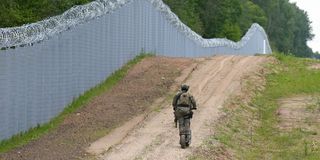
The travellers were intercepted by Latvian border guards and subsequently returned to the Belarusian side, where they were left in a forested area along the frontier.
Accounts of Mr Adan’s disappearance differ slightly. Some survivors reportedly told the family that he became too weak to walk and was left behind, while another account indicates that he walked away from the group in search of water after spending a night outdoors in freezing conditions.
He was reportedly suffering from severe stomach pain, was vomiting and had difficulty walking.
His companions searched for him, moving approximately one kilometre towards the main road while calling out his name, but found no trace of him.
Belarusian servicemen later apprehended the remaining travellers and took them back to Minsk, the country’s capital. Five members of the group reportedly made it back, while Mr Adan remained unaccounted for.
His disappearance has plunged his family in Donholm, Nairobi, into anguish, with relatives appealing to the Kenyan government to intervene and help trace him.
His mother, Sharifa Adan Ibrahim, said she only learnt that her son had travelled to Belarus after he had already left Nairobi.
“When he was last in Nairobi, I wasn’t aware. I only got information that he was in Belarus. It’s almost 17 days since he disappeared and no one knows where he is. He was walking while sick,” she said.
Mr Adan’s nephew, Abdullahi Mowlid, said his uncle had been travelling with other people when they attempted to cross a forested area along the Belarus-Latvia border.
According to Mr Mowlid, the group initially managed to cross the forest before they were intercepted by Latvian border guards and returned to the Belarusian side.
“They had crossed the forest when they were arrested by border police in Latvia who returned them to the forest where they had come from,” recounted Mr Mowlid.
The family says it has not received any communication from Mr Adan since the incident and fears his condition may have deteriorated after he was left in the forest without medical assistance.
His sister, Siman Kadei Mumin, has also appealed for diplomatic intervention, saying a local coordinator in Belarus informed the family that authorities require formal confirmation of Mr Adan’s Kenyan citizenship before deploying additional personnel to search for him.
In a report published by Reform News, an independent Belarusian media outlet in exile based in Warsaw, Poland, Ms Mumin said officials also needed an official letter from Kenya’s diplomatic mission detailing where her brother disappeared.
In an earlier public appeal, Ms Mumin said her brother’s companions had informed the family that he became too weak to walk and was left behind near an area identified as “Kent 149”, also referred to as “Forest 149” in a separate Somali-language post.
Kenya does not have a resident embassy in Belarus. Its diplomatic and consular interests in the country are handled through its accredited mission in neighbouring Russia.
Ms Mumin said the family remained deeply worried about the harsh weather conditions and the possibility that her brother might not survive the prolonged exposure to freezing temperatures.
“We are very worried about the freezing temperatures and harsh weather conditions. We fear the worst, but we are still hoping,” Ms Mumin wrote in her public appeal.
Kenyan journalist Yassin Juma, who has reported on the ordeal, also said Ms Habiba died of hypothermia in the same forest. Her burial in Belarus remains on hold pending formal consent from her family.
The Belarus-Latvia frontier is part of a wider migration corridor used by people from Africa, the Middle East and Asia seeking entry into the European Union through its eastern borders.
The route attracted international attention in 2021 when thousands of migrants began arriving in Belarus before attempting to cross into neighbouring EU countries, particularly Poland, Latvia and Lithuania.
European governments have repeatedly accused Belarus of facilitating migrant movements towards EU borders as part of a wider political confrontation. Minsk has disputed aspects of those accusations.
According to I Want to Help Refugees, an organisation monitoring the Latvia-Belarus border situation, the corridor remains active, with migrants frequently relying on facilitators and smugglers to reach the frontier.
Its reports describe how migrants can become trapped between the two countries after Latvian border guards prevent them from entering while Belarusian authorities make it difficult for them to return to Minsk or other urban centres.
By November 11, Latvian border authorities had reportedly deterred 12,857 attempted crossings, although the figure includes repeat attempts by some individuals.
Deaths of migrants in forests along the Belarusian and neighbouring EU borders have also been documented since the migration crisis intensified in 2021.
A 2024 report titled No Safe Passage: Migrants’ Deaths at the European Union-Belarusian Border, supported by European Union funding, documented 116 deaths across Belarus, Latvia, Lithuania and Poland by the end of March 2024. Researchers also recorded at least 26 additional deaths reported through migrants’ testimonies.
Among the documented cases was an Iraqi woman who died of hypothermia in Lesnoye, Belarus, on September 19, 2021. Three other people, including two Iraqis and a Yemeni, also died of hypothermia in the Polish border region during the same period.
In December 2022, a 27-year-old Afghan man died in Belarus after suffering fatal frostbite. Another Afghan national died in March 2023, with hypothermia identified as a suspected cause.
The Belarus-Latvia border has also recorded migrant fatalities. An Afghan man died after suffering fatal frostbite and being taken to hospital in Latvia in late December 2022. In April 2023, a Syrian woman died in hospital in Daugavpils after being found in critical condition following her time in the border region.
The organisation has also documented unidentified bodies discovered in Latvia’s border area, highlighting the challenges of tracing missing migrants and establishing their identities.
The latest incident comes as much of Eastern Europe transitions into winter, when temperatures increasingly fall below freezing, daylight hours shorten and forest conditions become more difficult to navigate.
For migrants without proper winter clothing, shelter, food, drinking water or access to emergency assistance, spending even one-night outdoors can be life-threatening.
Prolonged exposure to cold, exhaustion, malnutrition and wet clothing can accelerate hypothermia, particularly among people who are already ill or physically weakened.
Mr Adan’s family is now appealing to the Ministry of Foreign and Diaspora Affairs to urgently engage Belarusian and Latvian authorities, facilitate the required citizenship verification and help establish his whereabouts.
They are also appealing to anyone who may have encountered him or has information about the group he was travelling with to come forward.
For now, his relatives remain without answers, while fears grow that the freezing conditions in the forest could turn his disappearance into another fatality along one of Europe’s deadliest migration corridors.