The Kenya Union of Post-Primary Education Teachers (Kuppet) has dismissed President William Ruto’s proposed comprehensive school model as a “fallacy”, setting the stage for a fresh dispute between the government and teachers’ unions over the management and governance of basic education.
Since the introduction of Competency-Based Education (CBE) almost a decade ago, Kuppet and the Kenya National Union of Teachers (Knut) have been locked in a bitter turf war over the control and representation of junior school.
Kuppet and junior school teachers have consistently pushed for the complete administrative autonomy of Grades 7, 8, and 9, arguing that post-primary educators cannot be supervised by primary school headteachers. However, both the state and Knut have defended the domiciling of junior school within existing primary school compounds.
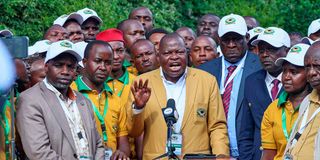
Head Teachers attending the Kenya Comprehensive School Heads Association (KECSHA) National Annual General Meeting in Mombasa on November 11, 2026.
Photo credit: Kevin Odit | Nation
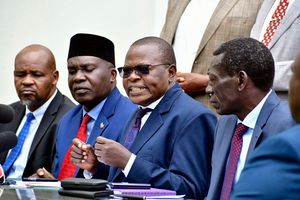
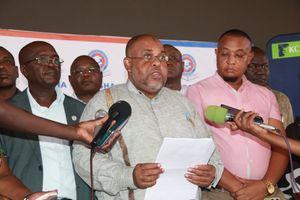
Responding to the President’s plan to legally anchor different levels of basic education under a single administration, Kuppet Secretary-General Akelo Misori questioned the feasibility and legality of the arrangement, warning that the proposed structure fails to address the deep-seated challenges facing institutions.
“When you go to our Kenyan Constitution, not even an Article, but Schedule Four, which explains the details of what needs to happen where the Constitution is silent it gives us the parameters of the kind of schools we are supposed to have: pre-primary, primary, secondary, tertiary, and universities,” Mr Misori said.
He said the push for a comprehensive school model is designed to appease certain individuals rather than address core educational challenges.
“Comprehensiveness applies to the curriculum, not school governance. Operating this structure without a constitutional amendment amounts to mere trial and error,” he warned.
The Kuppet boss emphasised that because junior school implements a secondary-level curriculum, placing it under a primary school headteacher creates a fundamental leadership disconnect.
“Making a primary school headteacher the person administering a secondary-level curriculum is in itself a terrible mistake. A primary school head has the orientation of managing a primary school, whereas junior school is implementing a secondary school curriculum,” Mr Misori stated.
Distinct administrative structures
He noted that co-location within the same compound should not preclude independent management, pointing out that junior school learners already wear distinct uniforms and operate in separate classrooms and staffrooms.
Drawing parallels to Kenyatta University Primary School which runs independently despite being situated inside a university compound, Mr Misori maintained that distinct administrative structures can seamlessly coexist within a shared physical space.
Furthermore, Mr Misori dismissed the ongoing union representation dispute as a political distraction manufactured to create competition for membership numbers.
He pointed out that Teachers Service Commission (TSC) appointment letters explicitly designate junior school educators as post-primary teachers, and raised the alarm over competency mismatches where primary-trained teachers without the requisite subject grades or those with strictly arts backgrounds have been forced to teach technical and science subjects at the foundational junior school level.
“If you get it wrong at this foundational level where learners are preparing to choose senior school pathways, you compromise the country’s future. Education cannot be managed through political excitement. The government must listen to the experts,” he warned.
Kuppet’s opposition comes directly on the heels of President Ruto’s directive to formalise the comprehensive school structure.
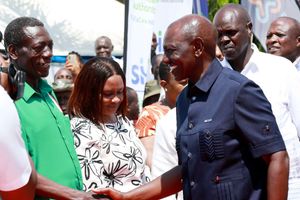
President Ruto, while officially closing the Kenya Comprehensive Schools Heads Association conference in Mombasa on November 13, directed the Ministry of Education to work with the association to develop proposals to amend the Basic Education Act and provide a firm legal framework for comprehensive schools.
President Ruto gave the ministry and the association 90 days to present the legislative proposals, stating that the changes must comprehensively address the governance, staffing, and financing of the institutions.
“I have heard your request. I agree and consequently direct the Ministry of Education to work with the Kenya Comprehensive Schools Heads Association (Kecsha) and to present, within 90 days, proposals to amend the Basic Education Act so that the governance, staffing, and financing of comprehensive schools rest on firm legal ground,” Dr Ruto said.
The President noted that the responsibilities of school heads had expanded far beyond traditional primary education, with institutional administrators now overseeing learners from pre-primary all the way to Grade 9.
During the Mombasa conference, school heads also urged the government to establish a new career progression structure that recognises their expanded mandate under the comprehensive school system, while fast-tracking legislation to clarify how the merged institutions will be governed and funded.
Kecsha is specifically asking the TSC to review and harmonize promotion structures for heads of institutions to reflect their heightened leadership and administrative burdens.
“Fast-track the development and implementation of the legislative and policy frameworks governing Comprehensive Schools, with clear provisions on governance, administrative structures, roles and responsibilities,” the Kecsha conference resolutions stated.
While the government’s 90-day legislative push is intended to streamline the management of learning institutions and eliminate administrative ambiguity, Kuppet has remained unyielding, taking its battle for junior school autonomy directly to Parliament.
Kuppet National Chairman Omboko Milemba revealed that the union’s top leadership recently engaged the National Assembly Departmental Committee on Education, chaired by Tinderet MP Julius Melly, to push for independent governance.
“I led the Kuppet leadership to the National Assembly Education Committee chaired by Mr Melly to chart the way forward on junior school autonomy. We presented our position on the need for a clear legal framework, distinct governance structure, adequate staffing, and proper resource allocation to strengthen junior secondary schools,” Mr Milemba said.
The Emuhaya MP lauded the parliamentary committee for its continued engagement with sector stakeholders, expressing hope that the voices of teachers, parents, and learners will be reflected in its final report on the proposed legal reforms.
As the 90-day window set by President Ruto counts down, the clash between Kecsha’s push to consolidate leadership under comprehensive school heads and Kuppet’s demand for autonomous Junior School principals threatens to ignite a major legislative and industrial standoff in the education sector.