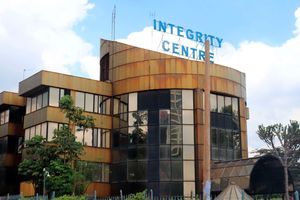
The anti-corruption agency is facing a court petition seeking to compel it to investigate the sources of money and assets distributed by politicians, including Deputy President Kithure Kindiki and other senior government officials.
The petitioner, Kelvin Kipchirchir, argues that the officials have been giving out cash, vehicles, motorbikes and other items outside approved government programmes.
He wants the High Court to order the Ethics and Anti-Corruption Commission (EACC) to investigate the source of the money and establish whether the distributions violated laws governing public officers.
The case returned to court on Wednesday, but did not proceed to oral arguments after Mr Kipchirchir failed to attend. Lawyers for the government and the National Assembly asked Justice Roselyne Aburili to adjourn the proceedings.
Filed on July 31, 2025, the petition questions the source and accountability of money distributed at public empowerment events.
He says the public officers “engaged in the distribution of money and material assets from unverified sources and outside official government programmes”, a move he argues constitutes a breach of the Constitution.
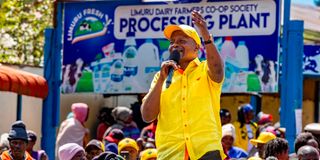
Deputy President Kithure Kindiki flags off milk coolers for dairy farmers' cooperatives in Limuru, Kiambu County, on October 2, 2026.
Photo credit: DPCS
Mr Kipchirchir argues that the initiatives were not gazetted or managed as official programmes by government ministries or agencies. He says no public record shows that funds for the activities were allocated in the national budget.
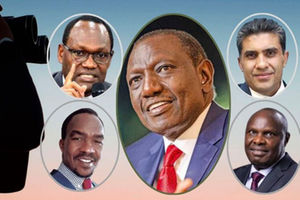
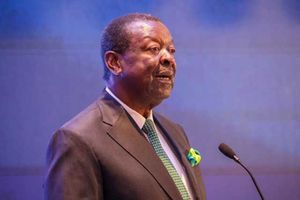
The petition names Prof Kindiki, Prime Cabinet Secretary Musalia Mudavadi, National Assembly Speaker Moses Wetang’ula, Majority Leader Kimani Ichung’wah, President William Ruto’s aide Farouk Kibet, MPs Didmus Barasa, Oscar Sudi and Silvanus Osoro, and Kericho Senator Aaron Cheruiyot as respondents.
The Attorney-General, EACC and Treasury Cabinet Secretary John Mbadi were also named.
“The opaque and unsystematic distribution of money and material assets by State and public officers, while basic services remain inadequately funded by the government, offends the legitimate expectation of the Kenyan public for transparent, accountable, and equitable allocation of public resources,” he argues.
Mr Kipchirchir alleged that Prof Kindiki had distributed more than Sh1 billion, while MP Sudi had given out Sh145 million in cash and goods.
The petition also challenged donations at events in Taita Taveta and Kilifi in July 2025, including claims that Prof Kindiki gave Sh4.5 million at several gatherings.
He claims that the actions constitute an abuse of public office and influence, and a breach of the Public Officer Ethics Act, 2003, and the Leadership and Integrity Act, 2012.
The petitioner wants the court to declare the distributions unconstitutional and an abuse of public office. He cites constitutional provisions on national values, integrity, conduct of State officers and responsible use of public resources. He also relies on the Public Officer Ethics Act, the Leadership and Integrity Act and the Bribery Act.
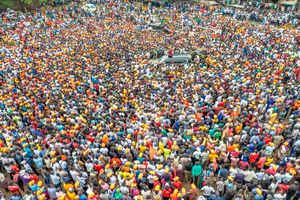
Deputy President Kithure Kindiki addresses residents at a public engagement rally at Karura Ka Nyungu Shopping Centre after inspecting the construction of Karura Ka Nyungu TTI and launching the tarmacking of the Karura Ka Nyungu-Muthure Road in Kabete Constituency, Kiambu County.
Photo credit: DCPS
In his court papers, Mr Kipchirchir described the initiatives as “not gazetted, documented, or managed as official government policies, programmes, or projects”.
“There is no public record of budgetary allocation for these specific activities,” he said.
He wants a permanent order stopping the officials from distributing money, vehicles, motorbikes, sewing machines or other valuable items outside authorised government programmes.
He also seeks an order compelling EACC to “commence thorough and comprehensive investigations into the sources of wealth and assets distributed by respondents and other implicated State and public officers, and to file a report with this court within a specified period”.
The petition further asks the commission to examine whether public officers used official vehicles, security personnel or other State resources to organise or support the events.
The petition further asks the Treasury Cabinet Secretary to issue guidelines barring State officers from distributing funds unless the spending is budgeted, approved and accounted for under the Public Finance Management Act.
He says public platforms and official resources were used even where the money was described as private.
Mr Kipchirchir alleged the distributions took place at public gatherings and political events and could influence public opinion and electoral choices. He asked the court to find that the activities amounted to bribery under the law.
“The activities of the third to twelfth respondents, involving the distribution of money and material assets, are tantamount to bribery as defined under the Bribery Act, 2016, and undermine the integrity of the electoral process,” he says.
After he failed to appear in court for the hearing, Justice Aburili directed the registry to notify him of the next mention date scheduled on January 19, 2027 to fix a judgment date.
“The petitioner is absent, but submissions are on record,” Justice Aburili said. “The court does not dismiss a matter in which parties have filed the submissions.”