Hello

Your subscription is almost coming to an end. Don’t miss out on the great content on Nation.Africa

Ready to continue your informative journey with us?

Hello

Your premium access has ended, but the best of Nation.Africa is still within reach. Renew now to unlock exclusive stories and in-depth features.

Reclaim your full access. Click below to renew.

cash handouts
Caption for the landscape image:

How Kenya's handouts politics turned into a monster out of control

Scroll down to read the article

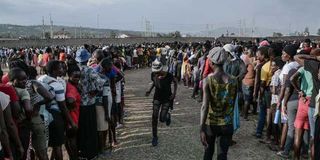
Women and young men queue for cash handouts from a politician in Kisumu on July 16, 2022. Politicians have begun campaigns for 2027. 

Photo credit: File | AFP

Raila Odinga, the veteran politician who died in October 2025, was never known for giving handouts at political rallies.

He openly denounced tokenism, castigating leaders who paid youths or women to fill venues, cheer them on or heckle rivals.

His response to those demanding handouts, commonly referred to as gonya in Dholuo, meaning “untie me” or “give me something”, was often blunt: “In dher ng’a mondo agonyi?” — “Whose cow are you that you are demanding to be untied?”

The stance earned Mr Odinga a reputation for stinginess, but also imposed discipline on his political gatherings. The political culture he publicly disavowed has taken an even more troubling turn.

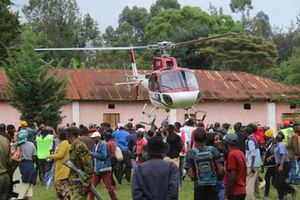
Across parts of the country, cash handouts have moved beyond a tactic for attracting crowds. They are becoming an expectation, with politicians confronted by groups demanding money before listening to them, allowing them to leave or, in some cases, letting vehicles or helicopters pass.

What began as lunch money, mobilisation fees or transport refunds has evolved into a transactional relationship in which political participation is assigned a price. The paradox is that politicians may be confronting a culture they helped create. Some now complain that cash-dependent crowds make genuine public meetings increasingly difficult, even as others defend handouts as unavoidable.

The question ahead of the 2027 General Election is whether the practice can be contained after creating expectations that are difficult to satisfy.

Dr Oburu Oginga, leader of the Orange Democratic Movement, is among those who say they have fallen victim to the phenomenon.

Oburu Oginga

ODM party leader Dr Oburu Oginga.

Photo credit: Pool

At a public fundraising event organised by the Kenya Union of Post Primary Education Teachers in Siaya County on June 28, Dr Oginga said people in the crowd took Sh200,000 from his bag as his bodyguards protected another Sh3 million donation from President William Ruto.

“I am a victim, and they do not even respect my advanced age. I was attacked when I went to a fundraiser for teachers in Siaya, and goons made away with Sh200,000 from my bag. This was personal money and not what I had prepared to give out at the fundraiser. This culture has to stop,” he told the Nation.

Dr Oginga also described another incident at a women’s empowerment event in Nyando, where chaos erupted, and one person was reportedly killed.

He said his bodyguard was beaten, Kisumu Deputy Governor Dr Mathew Owili was chased to his car and the pilot of his helicopter was prevented from taking off. Security officers fired into the air and used teargas to clear a path.

In May, Mr Atandi said, youths confronted him as he attempted to leave an empowerment programme in Kisumu and demanded money. He handed over some cash, only for another group to demand more. Security officers then whisked him away as the confrontation turned violent.

One person was stabbed during the melee, with blood staining the MP’s shirt, he said.

“There are youths who immediately jump onto their motorcycles the moment they hear a politician will be somewhere because of money. I am not against engaging with the youth. But if you are not invited to a function, do not come there. Let your representatives book an appointment if you want a forum with me,” he said.

Jubilee Deputy Party Leader Dr Fred Matiang’i has complained about the cost of political mobilisation and the demands made by people who approach leaders even during private moments.

“Everywhere you go, when you park your car and walk into a supermarket, by the time you come out they are around your vehicle shouting ‘one term’ and ‘the sixth’ while demanding money. Then you ask yourself, when will it end? It is a culture of blackmail,” Dr Matiang’i said.

Homa Bay Senator Moses Kajwang has also spoken against the practice. At a thanksgiving service for Dr Oginga’s bodyguard, he was reportedly prevented from leaving until he gave money to people at the venue. At another thanksgiving event hosted by Homa Bay Woman Representative Joyce Osogo Bensouda, Mr Kajwang warned that such behaviour could not become the community’s future.

Yet some politicians openly acknowledge that money has become part of the political bargain.

Lang’ata MP Phelix Jalang’o Odiwuor argues that leadership comes with an obligation to share personal resources with constituents.

“There are three things that define a leader. You must come back and sit with your people, deliver on your development agenda and be ready to give them money. You have to be ‘eaten’. I really pity those aspiring to leadership who are either stingy or do not have money. They are going to have a very difficult time,” he said.

Homa Bay Governor Gladys Wanga has expressed a similar view, arguing that leaders should share what they have with the people who elected them.

“Once you become a leader, as I have been entrusted to serve as chairperson, you have to share what you have. You must suffer some loss because you are not elected for free. Even when I come here, I have to leave something behind because I am the chairperson of a party. If you are stingy and refuse to give people something, they will not listen to you,” she said.

Their remarks expose the contradiction: politicians complain about cash demands while some believe refusing to give money carries a political cost.

Some politicians now organise recipients into queues according to gender or age before distributing cash.

In Nyaribari Chache, for example, area MP Zaheer Jhanda was reported to have given residents between Sh1,000 and Sh5,000.

This old photo shows businessman Zaheer Jhanda posing with piles of cash. The MP for Nyaribari Chache has been openly distributing money in his constituency.

At a Nyando MP Jared Okello event, crowds were reportedly seen fighting over money.

Oscar Omondi, an opinion leader from Kondele, said genuine public meetings were becoming increasingly difficult.

“We have seen politicians addressing nearly empty grounds because the crowd is already queuing for cash. Others are forced to watch people fight over money even as the meeting continues,” he said.

The practice did not emerge in a vacuum.

For young people facing unemployment and rising living costs, even small payments can provide an immediate benefit. Politicians have also presented rallies and empowerment events as opportunities to earn. The absence of a direct youth voice is a gap, but the available evidence points to a relationship shaped by both economic need and political incentives.

Mr David Orogo, a political commentator, argues that once politicians establish the expectation of payment, it becomes difficult to reverse.

“Once you make young people believe that attending these rallies is a way of getting instant money, you will never sustain that because they equate rallies with economic gain. They attend for survival, and that is why it is a matter of life and death for them,” he said.

His argument points to a deeper problem. The issue is not simply that some young people demand money; years of monetising mobilisation may have changed expectations on both sides.

Audi Ogada, a human rights defender and chairman of Kisumu City Residents Voice Association, believes some politically mobilised youths are driven less by ideology than by economic opportunity.

“The young men flooding political rallies and street confrontations today are not driven by ideology but by opportunity. They are drawn by quick money, easily swayed and just as easily abandoned,” he said.

But that explanation should not obscure politicians’ role. If leaders pay people to attend meetings, applaud speeches or mobilise support, they create an incentive for others to attend for the same reason.

The cycle becomes self-reinforcing: politicians pay because they fear empty venues; crowds attend because they expect payment; and those who do not receive it may become hostile.

Mr Orogo sees the trend as an early warning sign for the 2027 election, arguing that political participation risks becoming increasingly transactional.

“It is an early warning sign for the elections we are going to have. In the future, you may see people insisting on being paid first before they queue or vote. This will have dire consequences for our democracy because of the crop of leaders we will get,” he said.

Such concerns should, however, be distinguished from proven electoral bribery. Not every handout or rally payment amounts to voter bribery. The practice can range from transport refunds and mobilisation payments to inducements intended to influence electoral conduct.

The more immediate concern is that political gatherings themselves are becoming harder to manage.

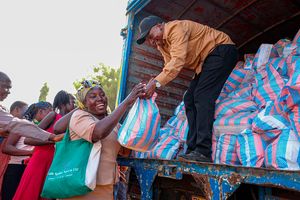
At a recent United Democratic Alliance-Orange Democratic Movement rally in Malava, women complained that after dancing throughout the day they received only Sh200. In Ol Kalou, residents were reportedly given gas cylinders, blankets, mattresses and cash without attending a political event.

Energy Principal Secretary Alex Wachira gifts an Ol Kalou ward electorate with a six kilogram gas cylinder on July 7, 2026.

Photo credit: Boniface Mwangi | Nation Media Group

Such comparisons illustrate how quickly expectations can change. Once a level of payment becomes normal, a smaller amount can be perceived not as a gesture but as an insult.

That is where the culture becomes volatile.

Politicians who turned mobilisation into a transaction may now be negotiating with an electorate that regards it as an entitlement.

Raila Odinga’s old refusal to “untie” the cow offered a very different political logic. Whether one agreed with his methods or not, his position rejected the idea that political participation had to be purchased.

Ol Kalou

Residents of Ol Kalou Constituency in Nyandarua County receive mattresses, blankets, and gas cylinders as campaigns for the July 16 by-election gather momentum.

Photo credit: Pool

The challenge is not merely controlling unruly crowds. It is dismantling a political marketplace in which leaders and citizens have both been taught to expect something in return.

With the 2027 election approaching, restoring politics to a contest of ideas will require more than telling crowds to stop demanding money. Politicians must also stop treating cash as the easiest way to buy attendance, applause and loyalty.

Follow our WhatsApp channel for breaking news updates and more stories like this.