Matatu association wants NTSA to keep most revenue to fight road carnage
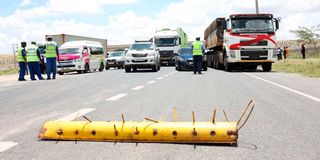
Police officers and officials from the National Transport and Safety Authority inspect vehicles at a roadblock in Lukenya, Machakos County.

Matatu owners want the government to allow the National Transport and Safety Authority (NTSA) to retain at least 60 per cent of the revenue it collects, arguing that inadequate funding is undermining its ability to regulate the transport sector and curb road crashes that kill more than 5,000 people annually.
In a petition submitted to Parliament, the Matatu Welfare Association (MWA), chaired by Dickson Mbugua, says NTSA’s annual budget of Sh4.9 billion is insufficient to meet its operational costs and finance critical road safety interventions.
The proposal comes as NTSA Director-General Nahashon Kodhiwa has raised concerns over the authority’s limited access to the revenue it generates, telling MPs that it collects between Sh9 billion and Sh10 billion annually but receives only a small portion of the money.


“NTSA needs to be well facilitated to handle the sector. We generate between 9 and 10 billion annually of own-source revenue; however, we access a very small percentage of this money, making it difficult for us to do what is required by law,” Mr Kodhiwa told the National Assembly's Departmental Committee on Transport and Infrastructure on August 11.
The authority has asked Parliament to support its request to retain Sh3 billion annually from its collections to finance road safety interventions, enforcement and public education.
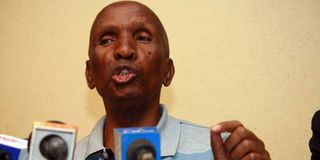
Matatu Welfare Association chaired by Dickson Mbugua.
MWA, however, wants a larger share of the revenue returned to the regulator, proposing that the Exchequer plough back at least 60 per cent of the money collected, alongside support from development partners.
Mr Mbugua said the current allocation was inadequate even to meet NTSA's staff recurrent expenditure, leaving little money for other statutory responsibilities.
“NTSA's Sh4.9 billion is not adequate for its staff recurrent expenditure and other essential assignments as outlined. Right now, its County Transport and Safety Committees are idle in the counties, which are unable to allocate them any money at all,” he said.
“At least if the Exchequer could plough back 60 per cent of its revenue generated, together with development partners' assistance, that will do,” he added.
The association argues that the funding constraints have reduced NTSA’s capacity to undertake important assignments beyond motor vehicle registration and licensing.
These include research into road safety challenges, surveys to establish the supply and demand of public service vehicle routes, accreditation of civil society organisations involved in safety campaigns and regular audits of compliance by road users.
It says the authority also lacks the resources to effectively support County Transport and Safety Committees, which are expected to coordinate road safety interventions at the local level.
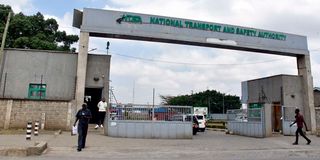
The National Transport and Safety Authority (NTSA) inspection yard along Likoni Road in Nairobi.
The petition wants Parliament to reconsider the current funding arrangement, arguing that the government cannot expect NTSA to deliver on its mandate while denying it adequate resources.
It also calls for a National Road Safety Conference bringing together government agencies, transport operators, motorists, pedestrians and county governments to develop a comprehensive National Transport Management and Road Safety Policy.
MWA argues that increased funding must be accompanied by greater accountability among transport operators.
Mr Mbugua wants investors in the transport sector to ensure their employees are properly trained and meet professional and ethical standards before recruitment.
“Every investor in this should make sure their employees in all spheres are properly trained in their line of duties. During the employment recruitment, code of conduct/ethics, authenticated certificate of good conduct are essential,” he said.
The proposal wants the Kenya Transport Association to take greater responsibility for training truck drivers, ensuring compliance with traffic laws and maintaining vehicle roadworthiness.
Boda boda associations would similarly be expected to ensure their members are trained and observe traffic regulations.
For matatus and buses, the association wants route-based Savings and Credit Co-operative Organisations (Saccos) and transport companies to strengthen the self-regulation system introduced in 2011.
“The PSV Saccos and companies must adhere to the hard-lobbied self-regulation principles from the passenger commuting end by taking charge of their employees,” Mr Mbugua said.

NTSA Director of Road Safety Dr Andrew Kiplagat.
The association also recommends introducing road safety education into the school curriculum and conducting public awareness campaigns targeting schoolchildren, college students and other vulnerable road users.
It further wants renewed attention to the implementation of the Bus Rapid Transit (BRT) system under the Nairobi Metropolitan Area Transport Authority (NAMATA).
The funding debate comes as NTSA’s Director of Road Safety, Dr Andrew Kiplagat, has called for the country's road safety crisis to be declared a national disaster to mobilise emergency resources and coordinate government interventions.
Dr Kiplagat said such a declaration would help unlock funding from the Treasury and bring together government agencies, including the police, health sector and county governments, in a coordinated response.
“Road safety is not just a transport issue; it is a national development and security priority. We need everybody on the table. We cannot act alone as NTSA. We need everyone as what is happening will continue and we cannot allow it to continue,” Dr Kiplagat said.
NTSA estimates that roughly 20,000 road crashes occur annually in Kenya, claiming more than 5,000 lives.
Data from the Kenya National Bureau of Statistics' Economic Survey 2026 shows that reported road traffic fatalities rose to 5,009 in 2025, up from 4,748 in 2024.
MWA argues that the government must move beyond policy declarations and provide the regulator with the resources needed to enforce safety standards, while making transport operators and other road users accountable for their conduct.
Follow our WhatsApp channel for breaking news updates and more stories like this.