The government, through the office of the Prime Cabinet Secretary, has drafted a raft of radical measures meant to govern religious activities in the country.
The Draft Religious Organisations Policy, 2024 and Draft Religious Organisations Bill, 2024, are set to provide a framework for the regulation of religious organisations, to combat religious extremism and the abuse of the freedom of religion and connected purposes.
According to the government, the proposals in the draft Bill were developed by the Presidential Taskforce on the Review of the Legal and Regulatory Framework Governing Religious Organisations in Kenya, chaired by Reverend Mutava Musyimi.
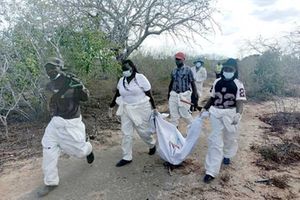
This comes in the wake of the Shakahola Massacre, in which over 500 people were lured into a doomsday cult by a self-proclaimed pastor, Paul Mackenzie, and subsequently lost their lives.
The draft Bill has highlighted some of the areas that the government will implement to prevent Kenyans from falling into the traps of people masquerading as pastors or religious leaders with harmful religious teachings and practices, and taking advantage of unsuspecting Kenyans with the intention of extorting them.
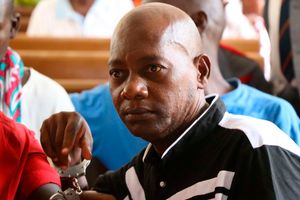
Pastor Paul Mackenzie with other accused persons who is charged with the murder of 191 Children in the Shakahola Massacre.
Photo credit: Kevin Odit| Nation Media Group
Part VII of the draft Bill says that a religious institution shall not engage in any political activity in order to gain political power or organise a debate to support any political party or political candidate.
“A religious institution that contravenes subsection (1) commits an offence and is liable on conviction to a fine not exceeding five hundred thousand shillings, or to imprisonment for a term not exceeding six months or to both,” the proposal says.
On harmful religious practices, the draft Bill says that “a person shall not coerce or intimidate another person to engage in any religious practice that is harmful to the health or detrimental to safety or endangers the life of the other person.”
“A person who contravenes subsection (1) commits an offence and is liable on conviction to a fine not exceeding five million shillings or to imprisonment for a term not exceeding twenty years or to both,” the proposals say, stating penalties that await those who would go against it.
Parliament building in Nairobi.
Photo credit: File | Nation
If the proposed Bill sails through Parliament, it will crack down on religious leaders who coerce Kenyans into religion or some beliefs against their wishes.
The draft states that a person shall not use force, threats, intimidation, fraud or violence to coerce another person into believing or not believing in a religion or belief, recruit a member of a religious organisation, or prevent a member from exiting a religious organisation.
“A person who contravenes subsection (1) commits an offence and is liable on conviction to a fine not exceeding one million shillings or to imprisonment for a term not exceeding three years or to both.”
However, the Bill states that it will not be an offence for a parent or legal guardian of a child to determine the religious upbringing of a child and provide religious direction to the child.
Additionally, the Bill states that a religious leader who by means of any false and fraudulent representations, tricks or schemes as to healing, miracles, blessings or prayers, extorts or fraudulently obtains any financial gain or material benefit from any person or induces the person to deliver money or property to the religious leader commits an offence and is liable on conviction to a fine not exceeding Sh5 million or to imprisonment for a term not exceeding ten years or to both.
“Any person who, under the guise of religion, disparages any divergent religious belief of another person and does anything that causes harm to or threatens the safety, health or life of that other person commits an offence and is liable on conviction to a fine not exceeding Sh5 million or to imprisonment for a term not exceeding twenty years or to both.”
Religious Affairs Commission
Also, the proposal has created a commission which will be referred to as the Religious Affairs Commission, which will be a body corporate with perpetual succession and a common seal.
The commission will be in charge of registering religious organisations, umbrella religious organisations and religious associations in the country.
The body will also provide and promote oversight of religious affairs, as well as develop and publish a code of conduct for religious organisations.
The proposals have, however, been rejected by a number of religious organisations in the country, who claimed that the government was seeking to control the churches and the mosques in the country.
Church and Clergy Association of Kenya (CCAK) National Chairman, Bishop Hudson Ndeda (third left), speaks to the media in Nairobi on October 29, 2025.
Photo credit: Wilfred Nyangaresi | Nation Media Group
In a press address on Wednesday, the Church and Clergy Association of Kenya (CCAK) asked President William Ruto to intervene and allow religious groups to give their views on the matter.
“The constitution is clear that State and religion shall be separate. We wonder why the government is keen or regulating religious institutions while introducing punitive fines and jail terms,” CCAK National chairperson Bishop Hudson Ndeda said.
According to CCAK, the government is targeting to crack down on online preaching, targeting Christian television networks and to intimidate the clergy from discharging their duties.
Deliverance Church in Kenya, and the Supreme Council of Kenya Muslims (Supkem), among other religious groups have expressed their disappointment with the proposed Bill, saying that it does not reflect the views which they presented to the taskforce.