The government wants to establish a dedicated digital intelligence unit to police abuse of the digital space, raising fears of State snooping into private conversations and breaches of privacy.
A presidential report tabled in Parliament shows that the State is also working on rapid response protocols as well as a legal framework for digital policing.
This follows what the government says is the growing abuse of social media platforms, which are largely foreign-owned, in mobilising demonstrators, coordinating protests, and propagating misinformation, propaganda, disinformation, and hate speech.
The annual report on the state of national security, covering the period from September 1, 2024, to August 2025, indicates that demonstrators exploited social media platforms and mainstream media to mobilise protests.
“Going forward, the government intends to enhance law enforcement efforts by introducing suburb-level patrols, establishing a dedicated digital intelligence unit and rapid response protocols, as well as developing legal frameworks for digital policing,” states the report tabled in Parliament by President William Ruto.
“Further, the exploitation of social and mainstream media played a significant role in mobilising demonstrators, coordinating protests, and propagating misinformation, propaganda, disinformation, and hate speech.”
The planned formation of a new unit will further step up State surveillance following recent enactment of radical amendments to cybercrime laws that hand the government broad authority to block websites and online applications considered a national security threat.
President Ruto on October 15 signed into law the Computer Misuse and Cybercrime (Amendment) Act, 2024.
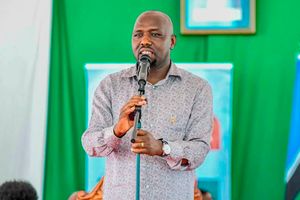
President William Ruto.
Photo credit: PSC
Under the new changes to the law, the National Computer and Cybercrimes Coordination Committee- whose membership is largely security officials- is empowered to order internet providers to make websites or applications inaccessible if they are deemed to promote pornography, terrorism, or “extreme religious and cultic practices.”
These actions have raised concerns that the State wants to crackdown on civil liberties including freedom of expression.
President Ruto has defended the new law changes, stressing the law was passed in 2018 and that the new amendments seek to protect Kenyans from cyberbullying and other criminal activities committed online.
The report states that Kenya in 2024 experienced the highest number of protests and riots in over three decades, with 2,005 demonstration events recorded. It notes that July 2024 saw 250 demonstrations, the highest monthly count.
The report indicates that the protests occurring in the year to August 2025, mainly led by activists, a section of youths, and politicians, were largely driven by concerns over the rising cost of living, claims of highhandedness by law enforcement personnel, and incitement of the public.
“While the right to peaceful assembly is enshrined in the Constitution under Articles 33, 36, and 37, the protest mobilisers disregarded statutory procedures such as the requirement to formally notify the police of planned demonstrations, thus creating security gaps,” Dr Ruto said.
“Criminal gangs and hired goons capitalised on the situation to infiltrate the demonstrations, leading to violence, looting, and destruction of property.
During the period under review, the commemoration of Saba Saba and the 2024 Gen Z protests culminated in violence, leading to deaths and injuries to both police officers and civilians, and destruction of property.”
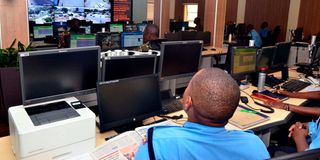
Surveillance operators at the Integrated Command Communication Control Center at Jogoo House in Nairobi.
Photo credit: File " Nation Media Group
The report shows that police responded to the protests by killing 42 civilians and injuring another 66 civilians. Police also arrested 1,732 protesters across the country.
The riots saw 496 police officers injured, damage to 179 government vehicles, destruction of 16 government offices, and the arrest of 1,792 civilians.
Twelve police stations or posts were destroyed, eight firearms were stolen, four firearms were destroyed, 16 government offices were destroyed, 18 supermarkets were vandalised, destroyed, and looted, while five banks and microfinance institutions were looted.
The report noted that political realignments based on ethnic considerations threatened to polarise the country and undermine national unity.
In order to quell the violent protests, the report observed the government strengthened multi-agency coordination, including deployment of rapid tactical teams and aerial surveillance, for effective crowd control and operational efficiency.
Authorities also enhanced checks at access points to critical government installations, including Parliament, State House, and the Supreme Court.
“To effectively handle the violent protests, the government expedited investigations on perpetrators, mobilisers, and facilitators of acts of lawlessness, leading to 1,732 arrests across the country,” the report states.
A presidential report tabled in Parliament shows that the State is working on rapid response protocols as well as a legal framework for digital policing.
Photo credit: Shutterstock
“Media engagement and public communication were scaled up to combat misinformation and foster public trust.”
Dr Ruto said the government also embraced political inclusivity, revitalised youth empowerment initiatives such as the Kazi Majuu and Climate Worx programmes, and commissioned the Panel of Experts on Compensation of Victims of Demonstrations and Public Protests.
“Despite the above efforts, prevailing challenges are undermining government efforts to address the threat. These include continued exploitation of rights enshrined in the Constitution to agitate for frequent protests, political polarisation, and proliferation of criminal gangs across the country,” the report states.
“Other challenges include the growing abuse of social media platforms, which are largely foreign-owned, increased youth vulnerability owing to high unemployment rates, and drug and substance abuse,” the report adds.
To address the challenges, Dr Ruto said the government will continue to promote dialogue to address underlying public grievances and enhance the capacity of relevant bodies to deploy modern surveillance and intelligence technologies for early identification, monitoring, and assessment of security threats.
The government is also enhancing its law enforcement efforts, promoting human rights-based and de-escalation-focused training for all security personnel, adopting non-lethal crowd control tools, and reducing overreliance on the use of force.