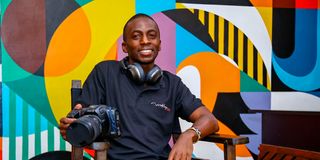
The creative community is in mourning following the death of renowned filmmaker Nicholas "Nick" Wambugu, who won critical acclaim for his documentary “The People Shall”.
“It has hit us very hard, but we have accepted, and we have allowed God’s will to take place. I spent the day with him yesterday at the hospital, and there was no indication of him going anywhere. He developed a challenge in his breathing. There wasn’t much. They were trying to stabilise him,” he said.
Wambugu, 34, had been living with hypocellular Myelodysplastic Syndrome (MDS), a rare blood disorder that he was diagnosed with in October last year.
While grappling with the illness, he was also dealing with the aftermath of a high-profile arrest in May last year after authorities linked him to BBC’s "Blood Parliament" documentary.
BBC cancels 'Blood Parliament' screening citing pressure from Kenyan authorities
His death comes on the day mention of the case against him and three other filmmakers was set to happen at the Milimani Law Courts.
During a previous interview with the Nation , the storyteller described life after the diagnosis, while describing 2025 as an extraordinary year for him. It was the year that brought acclaim for his "People Shall", a documentary that chronicled the Gen-Z-led anti-Finance Bill protests through the eyes of seven voices bound together by loss, anger and online activism.
However, would also face arrest over claims linking him to the BBC exposé ‘Blood Parliament’, which both he and the broadcaster denied. He was among four filmmakers roughed up by police at their Karen studio on May 2, 2025. The documentary alleged that the Kenya Defence Forces and the National Police Service were involved in some of the killings during Gen-Z protests of June 25, 2024.
For Wambugu, MDS began quietly. He started feeling unusually tired, but did not immediately realise he was sick.
“That was around October. The ‘People Shall’ documentary was premiering at NBO film festival. At the time, I was high on adrenaline and working long hours. I told myself, we work hard right now and rest after the festival,” he said at the time.
There was also a persistent whooshing sound. One that he remembers too well, but his film, one that depicts the 2024 anti-finance bill protest, was his priority. So, this too he ignored.
“I was resting but feeling even more fatigued, and the whooshing sounds. It was then that my sister suggested that I see a doctor. The specialist said my condition was serious and required urgent admission to the high dependency unit for close monitoring. I was admitted for five days. On the fourth day, they did a bone marrow biopsy. Three weeks later, I learned that I had hypocellular MDS. I had never heard of it before,” he said.
According to Dr Rohini Radia, a haematologist, MDS stands for Myelodysplasia.
“Myelo is blood cells, and dysplasia is where they are disorganised. The common type of Myelodysplasia is hypocellular, where there are a lot of cells, but essentially, the bone marrow has become non-functional. It is disorganised and produces too few blood-forming cells.”
The specialist adds: "There are no obvious known causes. Hypocellular myelodysplasia is rare, and it accounts for about 10 per cent of patients with myelodysplasia."
At the time of his interview, he revealed that the condition demanded at least Sh100,000 every week from his pocket to manage it.