Happening Now: NTV KENYA LIVE | Senate Proceedings
Respite for Kenyans as fuel prices remain unchanged despite war in Iran
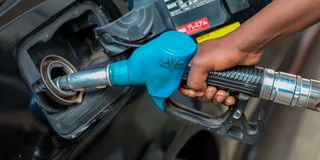
An attendant fuels a vehicle at Rubis Petrol Station on Koinange Street in Nairobi County.
What you need to know:
- The effects of the US-Israel war with Iran likely to be felt in the next pricing cycle as the conflict continues.
- EPRA and the Ministry of Energy have in recent days assured the country that there was enough supply of fuel in Kenya.
Fuel prices in Kenya will remain unchanged for the next one month.
This is after the Energy and Petroleum Regulatory Authority (EPRA) stabilised the retail prices of diesel, petrol and kerosene.
On Saturday, EPRA said the crisis in the Middle East has not affected the costs of received cargoes.
However, the effects of the US-Israel war with Iran likely to be felt in the next pricing cycle as the conflict continues.
EPRA announced that retail price of a litre of petrol would remain constant at Sh178.28 in Nairobi and diesel and kerosene at Sh166.54 and Sh152.78, respectively.
War in the Middle East
This shields consumers from an increase of Sh6.53 on diesel and Sh6.66 on Kerosene, which the government will shoulder through a price stabilisation fund.
Petrol prices would have increased by Sh0.14 a litre without support from the stabilisation fund amid fears that the country has enough cargo to last only to the end of the month due to supply disruptions in the wake of war in the Middle East.
EPRA and the Ministry of Energy have in recent days assured the country that there was enough supply of fuel in the country.
The Kenyan government has previously avoided the use of the word subsidy, with the regulator saying it was using the petroleum development levy to stabilise prices, rather than asking for exchequer support.
The current cargo was shipped to Kenya before war broke out in the Middle with the barrel of crude averaging $63.06 in February, says EPRA.
Effects of supply disruptions
As of Friday, global crude prices remained above $100 a barrel despite US President Donald Trump and western allies announcing the biggest-ever release of emergency reserves.
The war has brought transportation through the vital Strait of Hormuz route at a standstill after Iran announced its closure as a retaliation measure. Before the conflict, about a fifth of global supplies travelled via the route.
The effects of supply disruptions and surge in global prices are likely to be felt in Kenya in April, fueling inflationary fears and concerns over stock outs. Retail fuel prices are set in the middle of each month.
Fuel prices have a big effect on inflation in Kenya, which relies heavily on diesel for transport, power generation and agriculture, while kerosene is used in many households for cooking and lighting. Inflation stood at 4.3 percent in February, down from 4.4 per cent in January.