From Monday, motorists committing certain minor traffic offences will no longer need to appear in court immediately. This follows the introduction of an alternative enforcement framework under Sections 117 and 117A of the Traffic Act CAP 403.
This announcement comes barely a month after the National Transport and Safety Authority (NTSA) withdrew the camera-based Instant Fines Management System, which was opposed by many Kenyans.
National Transport and Safety Authority Director-General Nashon Kondiwa (centre) speaks to the media in Nairobi on March 10, 2026.
Photo credit: File | Nation Media Group
Speaking at the launch on Thursday, NTSA Director-General Nashon Kondiwa told Kenyans that the government would implement a modernised enforcement framework to enhance road safety for all users, increase compliance with traffic laws, reduce congestion in traffic courts and promote transparency, accountability and efficiency in traffic enforcement.
“In the new frameworks, motorists who commit certain traffic offences will no longer need to appear in court immediately. Instead, they will receive police notification of traffic offence. Offences can be detected either by police officers during routine enforcement or electronically via traffic cameras and other digital monitoring systems,” Mr Kondiwa said.
He said that the modern system is being introduced in collaboration with the National Police, the Office of the Director of Public Prosecutions, the judiciary, and other relevant enforcement agencies.
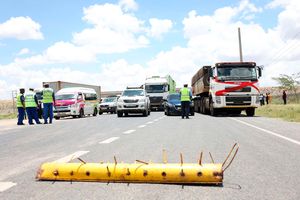
Police officers inspect vehicles along the Nyeri-Nyahururu road during a routine traffic check.
Photo credit: File | Nation Media Group
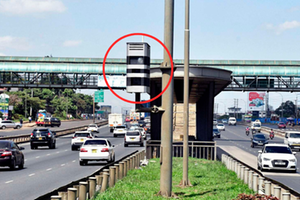
According to the Director-General, evidence of offences will be detected by police officers during routine inspections, or via automated systems such as speed cameras, CCTV and digital traffic monitoring devices.
“Once sufficient evidence is gathered, the notification will be issued to the driver or the registered vehicle owner. These notifications may be served in several ways, including personal delivery by police officers, affixing the notice to the vehicle or electronically via SMS, email or approved the digital traffic enforcement platform.”
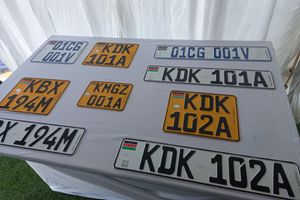
The authority has asked motorists to update their details to ensure that their registration is accurate.
“Each notification will contain key details such as the nature of the offence, the date, time and location it occurred, the prescribed penalty, payment instructions and response deadline.”
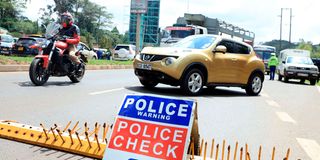
A police check point.
Photo credit: File
According to the authority, once the motorists receive the notice, they must either admit liability and pay the prescribed fine within the stipulated period or dispute the allegation in court.
“If motorists choose to pay the fines, the matter can be settled without need for court appearance. Failure to respond, pay fines, or appear in court when required may result in harsher penalties imposed by the courts.”
Mr Kondiwa also announced that motorists will have the right to access evidence, such as photographs or video recordings, supporting the alleged offences.
“NTSA assures the public that all personal data collected will be handled in accordance with the constitution.”