The latest bribery allegations against MPs have revived concerns about inaction, with the spotlight on the powerful House Powers and Privileges Committee, which has yet to crack the whip despite rising complaints on rogue lawmakers.
National Assembly Speaker Moses Wetang’ula , who chairs the committee that has not sanctioned any member despite rising complaints about corrupt MPs, on Tuesday revisited the subject at a meeting of lawmakers.
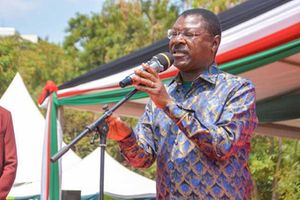
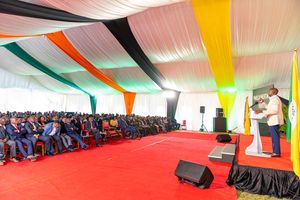
Speaker of the National Assembly Moses Wetang'ula, makes his address during the Legislative Retreat for lawmakers in Naivasha on January 27, 2026.
Photo credit: Bonface Mwangi | Nation Media Group
The President cited intelligence reports that exposed how MPs extort cash from governors appearing before watchdog committees, but no action has ever been taken against the implicated lawmakers until the Speaker made the latest allegations.
Mr Wetang’ula told MPs that scheduled recruitment drives by state agencies and pending audit queries are some of the occasions exploited by rogue MPs to extort money from heads of parastatals or officers from the executive arm of government.
These entities are vulnerable at this time as they want budgetary approval from lawmakers, who usually grant their demands in return.
In cases involving audit queries or the theft or misappropriation of public funds, such members demand substantial bribes in exchange for favourable reports or the deletion of adverse recommendations.
“My attention has been drawn to a peculiar and concerning trend that has been exhibited in some of our committees. Whenever there has been a pending employment process within our public institutions, the heads of those institutions are repeatedly invited to appear before multiple committees on the same matter,” Mr Wetang’ula said.
“I get a lot of complaints of some of us bullying members of the executive who appear before us, some of us constituting welfare officers in our committees, and all those kinds of things, which I discourage you,” Mr Wetang’ula told the lawmakers.
A ‘welfare officer’ is a person of contact for issues relating to the well-being of society members.
In this case, they act as a go-between to collect bribes on behalf of members.
Mr Wetang’ula is the chairman of the House’s powerful committee, the Powers and Privileges, which is charged with among others, wiping out the rot by inquiring into the conduct of a member alleged to constitute a breach of privilege and report to the House.
The rot in parliament largely constitutes the opportunities the MPs exploit to extort public and private officials facing not limited to audit queries and other forms of scrutiny.
Speaker of the National Assembly Moses Wetang'ula, makes his address during the Legislative Retreat for lawmakers in Naivasha on January 27, 2026.
Photo credit: Boniface Mwangi | Nation Media Group
Although bestowed with this responsibility, Mr Wetang’ula, while addressing the MPs in the ongoing retreat in Naivasha, expressed concern that some members have turned themselves into 'welfare officers' in committees demanding bribes from whoever appears before their committees in exchange for favourable reports.
Despite admitting that the executive arm of the government has complained to him numerous times about being bullied by MPs when appearing before committees, he did not explain what he had done to address the issues brought forth.
Mr Wetang’ula cited a case where an institution that has an audit query of Sh400,000 sought the help of his office after being harassed by a committee, which he didn’t mention.
In performing its responsibilities, the Wetang’ula-led Powers and Privileges Committee draws its mandate from the Constitution, the Public Officers Ethics Act, the Leadership and Integrity Act, the Parliamentary Powers and Privileges Act, and the National Assembly Standing Orders, which assign the committee various functions.
These functions, among others, include inquiring into the conduct of a member whose conduct is alleged to constitute a breach of privilege and the enforcement of the rules governing the conduct of MPs.
The breaches include “conducting himself or herself in a manner which, in the opinion of the committee, is intended or is likely to reflect adversely on the dignity or integrity of parliament, or of the members or to be contrary to the best interests of parliament or its members.”
Section 15(4) (a) of the Parliamentary Powers and Privileges Act mandates the committee to inquire into the conduct of a member whose conduct is alleged to constitute a breach of privilege.
However, in his three years as Speaker of the House and chairperson of the Powers and Privileges Committee, no investigations have been instituted against a member bordering on the breach of privileges.
But instead of cracking the whip, Mr Wetang’ula pleaded with the lawmakers that in the process of conducting their constitutional oversight duty, “they should not give parliament a bad name.”
“While oversight is a constitutional duty of this house, it must be exercised without creating the perception of undue pressure or causing administrative paralysis,” Mr Wetang’ula said.
In the 12th parliament, then speaker Justin Muturi chaired an inquiry into allegations of bribery of MPs during consideration of the report of the joint committee on Trade, Industry and Co-operatives and Agriculture and Livestock on the inquiry into importation of illegal and contaminated sugar. This led to some MPs being sanctioned.
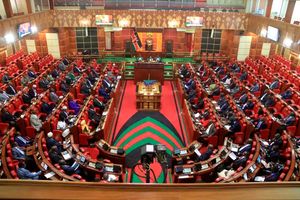
Members of the National Assembly during a past sitting.
Photo credit: File I Nation Media Group
Mr Muturi, fed up with cases of misconduct among members, also issued tough guidelines on the conduct of MPs while conducting their business in committees, including limiting and regulating “friends of the committees.”
Other regulatory measures undertaken by Mr Muturi were that no MP was allowed to escort a witness who appeared before them after the meeting.
In August last year, during the opening of the devolution conference in Homa Bay, President William Ruto accused MPs of breeding corruption in demanding bribes from cabinet secretaries and governors.
President Ruto, while addressing the Devolution Conference in Homa Bay County, called out members of parliament who, he says, have turned house committees into money-minting rings instead of exercising oversight responsibilities.
“There is something happening in parliament that must be called out. There is money being demanded from the executive, from governors, from people in the executive, especially those who are for accountability.”
President Ruto said without providing the MPs involved or through the DPP, demanding that the investigative agencies look into the matter.
During another forum with the private sector again last year, President Ruto again accused corporate executives of bribing MPs in order to influence the passage of laws and policies in parliament.
Parliamentary committees have in the past been rocked with bribery allegations, with witnesses facing investigations over various matters being let off the hook after lining the pockets of MPs.