It was July 1993 when a young man walked into Jaramogi Oginga Odinga’s office — the fiery patriarch of opposition politics, whose defiance had long unsettled the colonial government, Jomo Kenyatta, and Daniel arap Moi.
The visitor was smooth-faced, stocky, and carried himself with the quiet assurance of someone already familiar with power. His name was Kamlesh Pattni.
In his hands, he carried a shoebox. Inside it lay Sh2 million in crisp notes. At that very moment, Ford-Kenya was leading a fierce campaign against Pattni and Vice President George Saitoti, naming them as the chief architects of the multi-billion Goldenberg scandal.
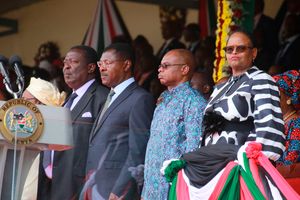
Kamlesh Pattni.
Photo credit: File | Nation Media Group
Jaramogi would later insist that he believed the money came from a “patriotic Kenyan” offering support for Ford-Kenya’s upcoming by-elections. Few believed him. Gitobu Imanyara, the party’s secretary-general, scoffed at the explanation: “It was a bribe to shut Odinga up.” The timing made the suspicion unavoidable.
When the Commission of Inquiry later probed Goldenberg, a troubling picture emerged. Evidence was tabled showing that Pattni had cultivated relationships with parliamentarians through what he called “donations.” He himself admitted making financial contributions to several MPs and even to leaders of political parties.
The Commission stopped short of calling them outright bribes, but its warning was stark: these so-called gifts had created a dangerous precedent in Kenya’s politics. They blurred the line between generosity and graft, and they risked turning parliamentary proceedings into little more than auctions, where speeches and votes could be swayed by a discreetly delivered envelope — or a shoebox.
In 1994, the Public Accounts Committee produced a damning report calling for prosecutions and recovery of stolen Goldenberg funds. Interestingly, Jaramogi had not tabled this report by the time of his death in 1994. His successor, Michael Kijana Wamalwa, shocked the nation when he sided with those exonerating Kamlesh Pattni, the scandal’s architect, and even recommended he be paid an additional Sh2.1 billion. Rumours swirled that MPs had been bribed, but nothing stuck. Attorney General Amos Wako did not prosecute.
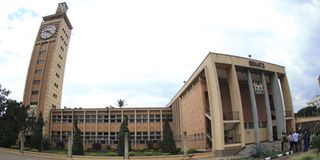
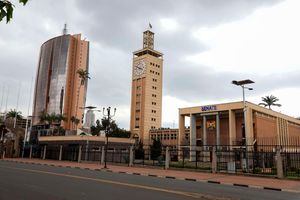
The National Assembly during a past session.
Photo credit: File I Nation Media Group
Whistleblower David Munyakei, the Central Bank clerk who first exposed Goldenberg, was fired, vilified, and died in obscurity in 2006. Pattni re-emerged as “Brother Paul,” preaching redemption even as the country reeled from the damage.
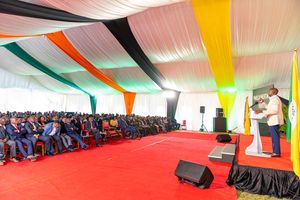
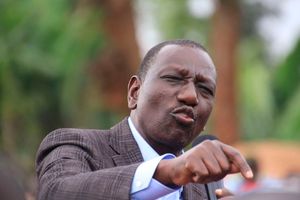
When President William Ruto recently described Kenya’s Parliament as a corrupt House where Members of Parliament demand bribes to pass Bills or shield the powerful, his words may have shocked casual observers. But was the kettle calling the pot black? For decades, the august House has been tainted by allegations of corruption, its chambers echoing less with debates for the public good than with whispers of secret deals and stuffed envelopes.
The opposition has said that the President himself has not always stood apart from the murky currents he now condemns. Wafula Buke, a former ODM activist and former parliamentary staff, punctured the self-righteousness. He claimed in a Facebook post that during Ruto’s own brush with being ousted in the 2009, he was part of a delegation dispatched to carry money to Juja MP George Thuo, who was the parliamentary Chief Whip for the ruling PNU, to distribute among Central Kenya MPs. The alleged bribes worked and the censure motion spearheaded by Ikolomani MP Boni Khalwale (now Kakamega Senator) over maize importation failed.
In 2024, Juja MP George Koimburi alleged that legislators had each been paid Sh2 million to pass the controversial Finance Bill that ignited the Gen Z uprising. But as outrage spread across social media, Parliament compelled Koimburi to retract his statement and apologise.
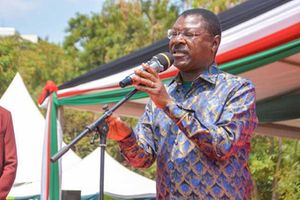
National Assembly Speaker Moses Wetang’ula during the Kenya Kwanza Kisumu County Tuk Tuk Sacco empowerment event on August 2.
Photo credit: Alex Odhiambo | Nation Media Group
The Speaker, Moses Wetang’ula, in the stern cadences of parliamentary procedure, declared that such “wild allegations” stained the dignity of the House. Cameras caught MPs nodding gravely as Koimburi was made to eat humble pie, publicly confessing that he had “lied”. To cleanse itself, Parliament conducted a ritual of unity that elevated collective honour over accountability.
But has Parliament truly stood as an untainted chamber in Kenya’s sea of corruption — a sea that has touched all the three arms of government? Are MPs the saints they claim to be? While public scrutiny has often fallen heavily on the Executive, and in recent years the Judiciary has also come under the spotlight, Parliament has largely managed to shelter itself from the same intensity of examination. Yet history tells another story.
In 1982, when a few radicals within Parliament dared raise the issue of corruption in the chambers, President Daniel arap Moi leapt to Parliament’s defence with a stinging rebuke: “How can those who are unable to look after their beards be expected to look after the interests of other people?”
Behind the bluster, however, lay a different reality. President Daniel Moi’s State House had already become synonymous with the infamous briefcase stuffed with cash — the currency of loyalty in his regime. It was here that MPs and political operatives lined up, not for policy discussions, but for handouts that guaranteed obedience. Money changed hands in brown envelopes and black briefcases, cementing the patronage networks that defined his presidency.
The practice not only tainted Moi’s government but also entrenched a culture of transactional politics in Kenya. Parliament became less a chamber of oversight and more a marketplace, where conscience was routinely traded for cash. What began as whispers of corruption in the early 1980s hardened into a legacy of compromised institutions, one that would haunt Kenya’s democracy long after Moi left the scene.
The Charterhouse Bank saga, like Goldenberg before it, became another breeding ground for scandal. Shut down in 2006 over money laundering and for helping Nakumatt Supermarket dodge Sh18 billion in taxes, the bank should have been buried. Instead, Parliament morphed into its most vocal lobby for a comeback.
By 2010, the Finance Committee under Chris Okemo — himself later wanted in Jersey Island over graft linked to Kenya Power projects — was insisting the closure was biased. Central Bank officials, led by Jacinta Mwatela, pushed back, warning bluntly: “This is not a bank!”
But the resistance only fuelled the theatrics. MPs rallied with unusual zeal to resurrect Charterhouse. Juja MP William Kabogo, who admitted to having an interest in the bank, would later allege that opponents of its reopening had pocketed a Sh60 million bribe to smear its record. From whom? He didn’t say.
For years, MPs openly acknowledged the temptations of graft, often framing it as a problem of pay. In 1994, during a heated debate on salaries, legislators earned Sh63,000 a month plus a Sh6,000 housing allowance. They demanded more, warning that meager wages were driving them toward corruption.
Ugenya MP James Orengo (now Siaya Governor) cautioned colleagues against ignoring the “subtle connection between remuneration of leaders and corruption.” Kamukunji’s Norman Nyaga was blunter, insisting that MPs were corrupt “because they are not well looked after.” Others pushed the argument further. Adams Karauri turned the spotlight on the public, arguing that voters themselves were complicit. Constituents, he said, expected their MP to bankroll funerals, harambees, and community events — all in cash.
“That MP, whether he is a minister or not, will look for an opportunity to steal so that he can prove that he has money,” Karauri declared.
What emerged was a rare moment of candour: leaders admitting, on the record, that the political culture demanded theft as proof of generosity. Parliament wasn’t just debating pay; it was confessing to the very architecture of corruption that would come to define Kenya’s politics.
Through the 2000s, corruption in Parliament often took smaller, more brazen forms. In 2012, during debate on a motion to cap bank interest rates, MPs openly accused each other of pocketing Sh50,000 “lunches” as lobbying to kill the proposal went into overdrive. Nominated MP (now Suba North MP) Millie Odhiambo quipped: “I did not eat lunch, but I am going back home with a better conscience.” She was one of the few who refused to get compromised.
The tide soon turned. The motion was quietly abandoned after sustained pressure. Gem MP Jakoyo Midiwo, then Chief Whip, later alleged that banks and the Treasury were wining and dining MPs in posh hotels, even dangling a Sh3.7 million send-off package to bury the motion. In the end, the banks prevailed — and ordinary Kenyans were left to drown in punishing credit costs.
By 2018, the rot was so deep that the media openly dubbed the legislature a “House of Bribes.” That year, the focus was the so-called Sugar Report — a parliamentary inquiry into the importation of contaminated sugar into the country. The Joint Committee on Trade, Industry and Cooperatives, together with Agriculture and Livestock, had spent months investigating. But when the report reached the House for debate, bribery allegations erupted. The People Daily reported MPs were bribed to sink the findings. Witnesses told the Committee of Powers and Privileges, which was tasked with investigating, that MPs were openly offered money. Kimilili MP Didmus Barasa claimed some colleagues were given Sh10,000 to vote down the report. Kiambu Woman representative (now Githunguri MP) Gathoni Wamuchomba hinted at hotels and facilities where money had changed hands. Others alleged that a female MP may have been involved in distributing bribes, though proof never emerged.
The committee sat 12 times, conducted site visits, reviewed media clips, and even sifted through footage of the House on the day of the debate. In the end, it recommended that the Directorate of Criminal Investigations and the Ethics and Anti-Corruption Commission should investigate the matter. Nothing ever came of it. The report was rejected, and the scandal was buried.
We also have cases where MPs have sold their seats turning the House into a literal marketplace — where parliamentary seats are traded like commodities, and democracy reduced to a cash transaction.
In 1984, a Commission of Inquiry heard startling allegations against former Attorney-General Charles Njonjo. He was accused of paying former Kikuyu MP Amos Ng’ang’a Sh160,000 to vacate his parliamentary seat that Njonjo eventually took over. Initially, the former Attorney General denied any memory of such a payment. Later, under pressure, he admitted to it. The Commission’s findings were damning: “Njonjo corruptly made payment of Sh160,000 in his office to Ng’ang’a upon his reporting that he had handed in his resignation to the Chief Secretary. The corrupt payment was to seek political support and undermine the process of democracy.”
Nearly two decades later, in 2002, Gatanga MP David Murathe found himself embroiled in a strikingly similar scandal. Businessman S.K. Macharia accused him of accepting Sh10 million in exchange for his resignation — a resignation that never materialised. The saga played out dramatically on Speaker Francis ole Kaparo’s desk, when two letters arrived in quick succession: one declaring Murathe had stepped down, and another disowning the resignation. The Hansard of April 7, 1998, records the Speaker as finding both letters authentic — a paradox that only deepened the mystery.
The affair devolved into a bitter public spat. Macharia insisted Murathe had pocketed his millions but failed to vacate the seat; Murathe dismissed the claims as baseless. Parliament launched investigations, police probed the signatures, but in the end, the scandal fizzled out, unresolved.
These episodes laid bare a sobering truth: corruption in Parliament was not limited to padded allowances, shady tenders, or “lunches” from lobbyists. At its darkest, it involved MPs literally selling — or attempting to sell — the very seats entrusted to them by voters. Democracy itself became just another item up for sale.
After the first multiparty elections in 1992, President Daniel arap Moi perfected the art of weakening his opponents not through ideology, but through inducements. With the ruling party Kanu lacking a comfortable majority, Moi turned to the most potent tool at his disposal: cash and patronage. Opposition MPs soon discovered that their parliamentary seats were less a mandate from the people and more a tradable commodity at State House.
The president embarked on what came to be known as “defection” on rival parties. No outfit felt this more acutely than Mwai Kibaki’s Democratic Party (DP) and Kenneth Matiba’s Ford Asili. Both had emerged as strong challengers in the 1992 elections, yet their ranks were soon hollowed out. MPs were lured with ministerial appointments, fat allowances, government contracts, and the ever-present briefcase of cash. Those who crossed the floor were rewarded; those who resisted risked political marginalization and harassment by state machinery. Martin Shikuku’s allies in Ford Asili defected to Kanu en masse, crippling Ford Asili’s influence in Western Province. By late 1994, the party was left with only two MPs there, down from seven just two years earlier. By 1995, Ford Asili had been reduced to a hollow shell, surviving mainly in Murang’a, Kiambu, Nairobi, and Nakuru.
The Democratic Party was not spared from Moi’s predatory raids. One by one, its senior figures defected to Kanu, lured by promises of power and patronage. Among those who crossed the floor were Secretary-General John Keen, Vice-Chair Agnes Ndetei, and former ministers Eliud Mwamunga and Kyale Mwendwa. By the time the party convened its National Delegates’ Convention in 1996, the DP had lost 11 of its national officials — a devastating blow that hollowed out its leadership and sapped its momentum.
In the 1960s, ministers were known to take bribes that Dr Gikonyo Kiano acquired the nickname ‘Mr Ten Per Cent’. One expatriate civil servant prepared a dossier on Kiano’s involvement in Japanese textile imports, on which he was paid a 10 per cent commission. Njonjo, on instructions from Jomo Kenyatta, declined to take action.
British American Tobacco (BAT) was long accused of running an elaborate syndicate to block the passage of anti-tobacco legislation in Kenya. Lobbying within Parliament turned into outright manipulation, with claims that lawmakers were bribed or sponsored to frustrate public health reforms. Whistleblowers pointed to covert funding of MPs’ campaigns, luxury trips abroad, and “consultancy fees” designed to ensure that harmful products remained untouchable by law.
Thus, President William Ruto’s own remarks only confirmed what many Kenyans had long suspected: that Parliament is not just vulnerable to capture, but often actively hosts rackets. It is a space where votes can be bought, seats can be sold, and debates can be hijacked, and even the most urgent public health concerns are traded away for envelopes, favours, and campaign war chests.