The National Assembly beat a hasty retreat to abandon a controversial proposal in the Elections (Amendment) Bill 2024, whose passage would have locked ‘outsiders’ out of the 770 County Assembly nominative seats in a win for party bosses seeking to consolidate power and promote loyalists.
Although the Bill, passed by the National Assembly, now heads back to the Senate, the originating House, for review, consideration and concurrence, the MPs’ move protects the absolute power of political parties to handpick nominees.
This, while ensuring top leadership keeps total control over who gets the coveted slots. The Bill is a product of the National Dialogue Committee (Nadco) report that was adopted by Parliament and which sought to provide that for an individual to be nominated in a county assembly, they must be registered voters in one of the wards in the county they are seeking nomination.
Defending the sudden U-turn, the lawmakers argued that stripping parties of this authority violates their internal autonomy, insisting it is entirely up to the parties to decide who gets nominated, where and for what role.
“The justification is that we want to maintain the autonomy of political parties with respect to party lists,” Wajir East MP Aden Mohamed said while moving for the deletion of clause 19 of the Bill that sought to lock outsiders from the nominative slots in the county assemblies.
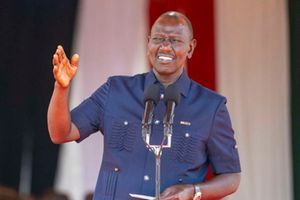
Member of Parliament for Suna East Junet Mohamed speaks during ODM party's Youth Convention at Jamhuri showgrounds in Nairobi on April 20, 2026.
Photo credit: Billy Ogada | Nation Media Group
The House leader of minority Junet Mohamed (Suna East) defended the political parties, saying “this should be the prerogative of a political party." said Mr Junet, the Director of Elections in ODM.
"Even if you legislate here, political parties will find a way to circumvent it. I am a party operative, and I know what I am talking about. Do not waste your time. You can legislate, but they will find a way around it. I assure you," said Mr Junet, the ODM Director of Elections.
Party bosses have also won a blank check to punish regions perceived as hostile to their camp, in the nomination of MCAs while favouring supportive ones.
By striking down a proposal meant to guarantee fair representation for all wards, the MPs are effectively clearing the way for party elites to completely starve "unsupportive" areas of the nomination slots.
Clause 19 of the Elections (Amendment) Bill 2024, as passed in the Senate, sought to amend section 34 of the Elections Act by introducing new subsection 8A.
“A person shall not be nominated by a political party unless the person is, on the date of submission of the party list by the political party, a registered voter in any of the wards in the county in which the person is nominated,” read the proposed new law.
Funyula MP Dr Wilberforce Oundo was among the few lawmakers who supported ring-fencing county assembly nomination slots, arguing they should only be awarded to registered voters within the specific wards of the counties they intend to represent.
“This is meant to prevent abuse by political parties and cure all mischief,” Dr Oundo said in support of Clause 19 of the Bill.
Funyula MP Wilberforce Oundo.
Photo credit: Dennis Onsongo | Nation Media Group
“For example, in Busia, you will find that the nominated MCAS are individuals nobody has ever seen. They do not live there. They merely come… and some of them actually reside in America,” said the Funyula MP.
With the Bill heading back to the Senate, it is not clear whether the changes adopted by the National Assembly will stand.
However, Mr Mohamed noted that “it is within the province of the political parties to decide who they will nominate in which area and for what position,” with city lawyer David Ochami warning that the MPs’ actions “confirm our fears.”
“The MPs’ actions confirm what insiders have long known; that any attempt to legally restrict party nominations is practically dead on arrival,” said Mr Ochami.
A proposal to ensure that these nominations by a political party “shall ensure equitable representation from all wards comprising the respective county,” was also deleted from the Bill.
This hands party honchos a blank cheque to disregard areas they consider “hostile” while handing more slots to “supportive” areas.
Article 177 (1) (b) of the Constitution provides that a county assembly consists of the number of special seat members necessary to ensure that no more than two-thirds of the membership in the assembly are of the same gender.
Currently, the Elections Act provides that a person qualifies for nomination to a county assembly if the person is a member of a political party on the date of submission of the party list.
Section 35 of the Elections Act provides that a political party shall submit its party list to the IEBC at least 45 days before the date of the general election.
With the next general election due on August 10, 2027, it means that registered political parties have until June 25, 2027, to submit their party lists to the Commission.
Every election year since the 2013 general election, 770 positions are reserved as special seats for the nomination of Members of County Assembly (MCAs) across the 47 counties.
The Independent Electoral and Boundaries Commission (IEBC) allocates these 770 slots to political parties proportionately based on the total number of elected seats each party wins in a specific county during the general election.
These nominees serve alongside the 1,450 MCAs directly elected by the people in the Wards, constituting single-member constituencies.
The vast majority of the 770 slots are gender top-up seats and are allocated to ensure that no more than two-thirds of the membership of any county assembly is of the same gender.
The nominative slots also cater for the interests of the marginalised groups and are designated specifically to represent the youth, persons with disabilities (PWDs) and ethnic/ religious minorities.
Currently, the regime governing the nomination of MCAs in the county assemblies is such that anyone can be nominated in any of the 47 county assemblies, provided that the sponsoring political party has indicated as such in the party list submitted to the electoral commission.
The Elections (Amendment) Bill of 2021 by then Ndaragwa MP Jeremiah Kioni, through the Constitutional Implementation Oversight Committee (CIOC) was introduced in the 12th Parliament to amend the Elections Act to promote “local solutions to local issues” in the counties.
The argument in Mr Kioni’s Bill was that the failure to have nomination slots in the county assemblies filled by those who are registered voters there “presents the current legal framework with a gap that must be filled.”
Following its approval by the National Assembly in April 2022, the Bill was forwarded to the Senate for debate and consideration, given its direct impact on the counties.
However, because the transmission occurred just weeks before parliament adjourned ahead of the August 2022 general election, the Senate ran out of time to debate or pass it.
Consequently, it remained stuck in the Senate’s legislative pipeline and ultimately lapsed after the 12th parliament adjourned sine die.