Five governors later, nothing seems to be working in Nairobi County, with the latest move by Governor Johnson Sakaja to cede some functions to the national government, laying bare the trouble at City Hall.
More than 13 years since the advent of devolution, every governor who has held fort at City Hall has been unable to crack service delivery expectations.
From inaugural county boss Evans Kidero, Mike Sonko, Benson Mutura, Ann Kananu, to Mr Sakaja – the verdict has been the same: not meeting expectations.
Governorship of Nairobi, the country's capital and economic hub, has proven to be more of a poisoned chalice than a seat of power.
The headquarters of the Nairobi City County Government offices on City Hall Way.
Photo credit: Lucy Wanjiru | Nation Media Group
Vested interests, fight for control of billions in allocations from the national government and development partners as well as access to billions in own-source revenue, have often seen the national government salivate for control of the county.
Nairobi receives more than Sh20 billion as equitable share from the national government, collects more than Sh13 billion in own-source revenue with a potential of over Sh60 billion annually and millions in grants and loans from development partners.
The latest development, where the national government will collaborate in the execution of county functions such as infrastructure development, garbage collection and disposal, public works and water supply – with potential to control billions – was just a matter of when and not if.
Dubbed as “partnership”, the move – which is reminiscent of the time when then Governor Mike Sonko was pressured by President Uhuru Kenyatta into signing off on key responsibilities as part of the Nairobi Metropolitan Services (NMS) – is an admission of failure on the part of the county.
NMS was established in March 2020 to take over four Nairobi County government functions of health, transport; public works, utilities and ancillary services, and county planning and development services.
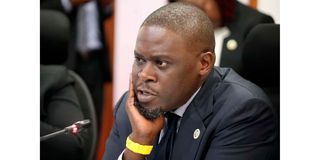
Addressing the Nairobi County Assembly on Wednesday, Governor Sakaja maintained the current arrangement is different from the NMS experiment, saying his administration will not transfer any function to the national government.
He observed that the people of Nairobi trusted him with the Constitutional power to transform the City and he will not betray that trust and Nairobi will continue to be governed as a county government.
“In 2020, Nairobi got into a misadventure that ended up being costly. The NMS experiment left us with a Sh16 billion hole in pending bills, low staff morale and a defilement of devolution,” said Governor Sakaja.
But his admission that being the capital city of Kenya, collaboration between City Hall and the national government is inevitable, lays bare the difficulties faced in running the affairs of the unique county.
During the special sitting address, he pointed out that Nairobi had grown faster than its infrastructure and available systems, leaving ordinary people to suffer despite promises by successive regimes.
“Promises are easy, governing is the real work. What people of Nairobi want is not intentions but outcomes. For too long, the government was distant, slow, unresponsive. Services existed; access did not,” he said.
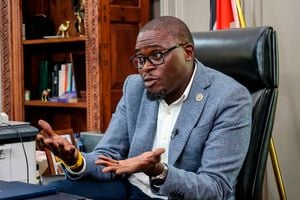
Nairobi Governor Johnson Sakaja at his office in Nairobi.
Photo credit: File | Nation Media Group
According to the governor, the collaboration intends to improve service delivery to the city's millions of residents, given Nairobi's status as the capital city and a hub for several international organisations, such as the United Nations.
Nonetheless, the takeover has been in the works for months since President William Ruto hinted at the same last year.
On Sunday, the President left no doubt of the impending plan, signalling a more direct national role in the capital’s affairs.
“I will come here and ensure work is done on cleaning the city, affordable housing, and building roads… should we leave it to others, or shall we act?” said Dr Ruto.
Failures by successive regimes have left Nairobi residents grappling with waste management issues, water problems, access to health services, high unemployment rates, insecurity, housing problems, education challenges, an enabling business environment and infrastructural challenges in informal settlements.
Dr Kidero’s tenure was marred by constant friction with cartels deeply entrenched within the city’s systems, ranging from garbage collection and land grabbing to revenue collection and transportation.
Despite his corporate acumen, Dr Kidero seemed perpetually bogged down by corruption scandals, inefficient service delivery and political inertia.
Mr Sonko's time in office was characterised by erratic leadership and public disputes with officials from both the county and national governments.
Even Mr Sakaja, who promised a new era of dignity and delivery, has seen his tenure bogged down by shadowy cartels.
In terms of solid waste collection, Nairobi is still grappling with mounds of garbage strewn all over the capital, right from the city centre to the estates.
Health facilities are also struggling with a lack of medical commodities and medicine due to frequent health workers strike.
In terms of water, the demand and supply deficit in the city keeps on ballooning, with water rationing part and parcel of city life.
There is also the problem of parking boys, hawkers, street families menace and incessant traffic jams, while traders in the capital have complained of a punitive licensing regime and harassment by inspectorate officers.
As part of the collaboration aimed at accelerating service delivery in the capital, the national government has committed additional funding — including an estimated Sh2.1 billion — with implementation of select projects to be undertaken through agencies such as the Kenya Urban Roads Authority.
The county will, however, continue constructing, rehabilitating, and maintaining urban roads alongside national interventions.
On water and sewer infrastructure, national agencies — particularly the Athi Water Works Development Agency (AWWDA) — are expected to spearhead large-scale, long-term supply projects such as the construction of a new dam in Maragua, advancement of the Northern Collector II Tunnel, and expansion of trunk sewer lines.
The meeting further resolved that unfinished roads, sewerage, and lighting projects initiated under the defunct NMS will be completed under the supervision of the AWWDA as the contracting authority.
The initiatives are designed to secure water sustainability and sanitation resilience for a rapidly expanding metropolis whose needs extend beyond county-level financing capacity.
On matters of public lighting, nationally-funded road projects will incorporate street lighting as a contractual requirement, with the national government settling public lighting electricity bills.
In the environment and waste management sector, Nairobi County has already contracted a firm to deliver consolidated services spanning collection, transportation, recycling, and value addition.
Long-term plans include the establishment of material recovery centres within residential areas to support aggregation and sorting, as well as longer-term ambitions to convert waste into power and fertiliser.