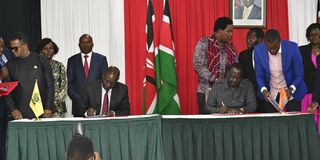
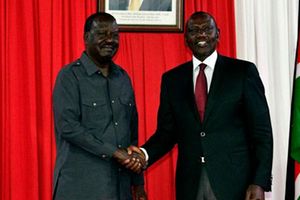
Once hailed as a masterstroke to bridge Kenya’s political divide, the truce between President William Ruto and ODM leader Raila Odinga is showing deep cracks undermined by mistrust, rogue state agents and rising political tensions.
The March Memorandum of Understanding (MoU) between the United Democratic Alliance (UDA) and ODM may have cooled public hostilities but behind the scenes, suspicions and fault lines persist.
Teacher Albert Ojwang who mysteriously died in a police cell.
Photo credit: Pool | Nation
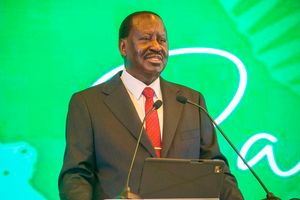
This week, Mr Odinga described Mr Ojwang’s death as part of a disturbing trend of state-sanctioned violence.
The former prime minister said it was unfortunate that Ojwang joins the “horrifying” long list of young, defenceless Kenyans whose lives have been taken in “brutal and senseless circumstances at the hands of the police”.
“While these deaths cause tremendous pain to individuals and their families, they seriously erode the authority and credibility of the police and the state; and that is a significant step towards chaos and collapse,” the ODM leader warned.
Mr Odinga’s brother, Senator Oburu Oginga, a supporter of the power-sharing deal, was more direct.
“This is a very serious situation. What I’m I going to tell the people of Homa Bay that we are in broad-based government and I don’t explain to them how their son was picked, put in a police cell and killed?” posed Dr Oginga.
Oburu: We are in broad-based government as ODM, not as individuals
President Ruto also condemned the killing, describing Ojwang’s death as “tragic, heartbreaking and unacceptable.”
“I call on the National Police Service to cooperate fully with the Independent Policing Oversight Authority and ensure a swift, transparent investigation. “As we mourn his passing, let us patiently but vigilantly follow the progress of the investigations without making premature judgments or drawing conclusions that could compromise the process and its outcome,” the Head of State said in a statement.
Ruto finally speaks on Ojwang death as NPS left to fall on its sword
ODM chairperson Gladys Wanga warned that the party would quit the government if the killers of MP Were are not brought to justice. The MP was shot dead by unknown gunmen on Nairobi's Ngong Road on April 30.
Charles Ong'ondo Were, MP for Kasipul, was killed at a red light. His killers escaped on a motorcycle.
Photo credit: File | Nation
“Let it be known we did not sign an MoU to sanction assassinations. The MoU was meant to improve the lives of Kenyans,” Ms Wanga charged.
ODM Secretary-General Edwin Sifuna, among the most vocal critics within the handshake framework, has openly questioned the alliance.
He insists the ODM-UDA MoU is “a cooperation framework on shared interests, not a political merger.”
Edwin Sifuna: ODM is not in government
“Beyond that, going into an election with any political partners requires the sharing of ideologies and points of convergence, which in my view, do not exist between us and UDA,” charged Mr Sifuna.
Following Mr Odinga’s failed AUC bid in February, many predicted the fallout would deepen. Mr Sifuna claims it reflected global skepticism about President Ruto’s leadership, not Mr Odinga’s credentials.
“The incessant blunders by the Kenya Kwanza government on the international stage have lowered our standing in the community of nations,” he said.
“That’s mere speculation. Kenya mounted a strong, dignified bid for the AUC post. It didn’t succeed and we respect the outcome of that process. Mr Odinga Raila himself spoke to it and I don’t think I’ll be adding any value in engaging in speculative conversations on this matter,” Mr Mudavadi said.
But it’s not just political disagreements straining the pact but also the growing list of mysterious deaths and enforced disappearances. ODM Deputy Leader Godfrey Osotsi said any violation of the MoU will have “consequences.”
“We signed the deal in good faith and expected our counterparts from the other side to abide by it but we are witnessing a complete opposite of our expectations,” Mr Osotsi said.
A coalition of ODM youth and grassroots leaders from Luo Nyanza has mounted pressure on the government to end abductions and targeted killings, citing them as a key grievance addressed in the 10-point agreement signed in March.
Among its commitments was a pledge to uphold justice, security reforms and equal development.
ODM leaders who once hailed the pact for bringing long-awaited development to previously marginalised regions are now pointing fingers, warning of a complete breakdown if the killings continue.
“There’s no clause in our agreement allowing for intolerance or suppression of rights. That is not who we are as a party. We’ve spoken to the president and he has assured us rogue officers will be reined in and that must happen now,” said Ms Odhiambo who is also the National Assembly Minority Whip.
Kisumu Woman Representative Ruth Odinga described the incident as “a painful reminder that many young Kenyans are at the mercy of a rogue system.”
“This isn’t about one death. It’s a pattern. We must dismantle this state violence. A young man should not die for posting on social media. This is a violation of basic freedoms. If our youth cannot express themselves without fear of death, then we have failed them as leaders,” she said.
On his part, Seme MP Dr James Nyikal said: “Ojwang’s death must not be reduced to a statistic. It must mark a red line. The state must act swiftly, prosecute those involved, and purge rogue officers from the security system.”
Green Congress of Kenya party leader Hillary Alila and UDA’s Nyanza Coordinator George Ayugi also called for swift justice.
“This is not just tragic—it’s criminal. The culture of extrajudicial killings must end. We cannot keep burying our youth because someone in uniform feels untouchable,” said Mr Alila.
“Who ordered his arrest? Who transported him? Who is responsible for his death in custody? These are not rhetorical questions. We demand answers.”